NASA reveals detailed image of Centaurus A galaxy after cosmic merger
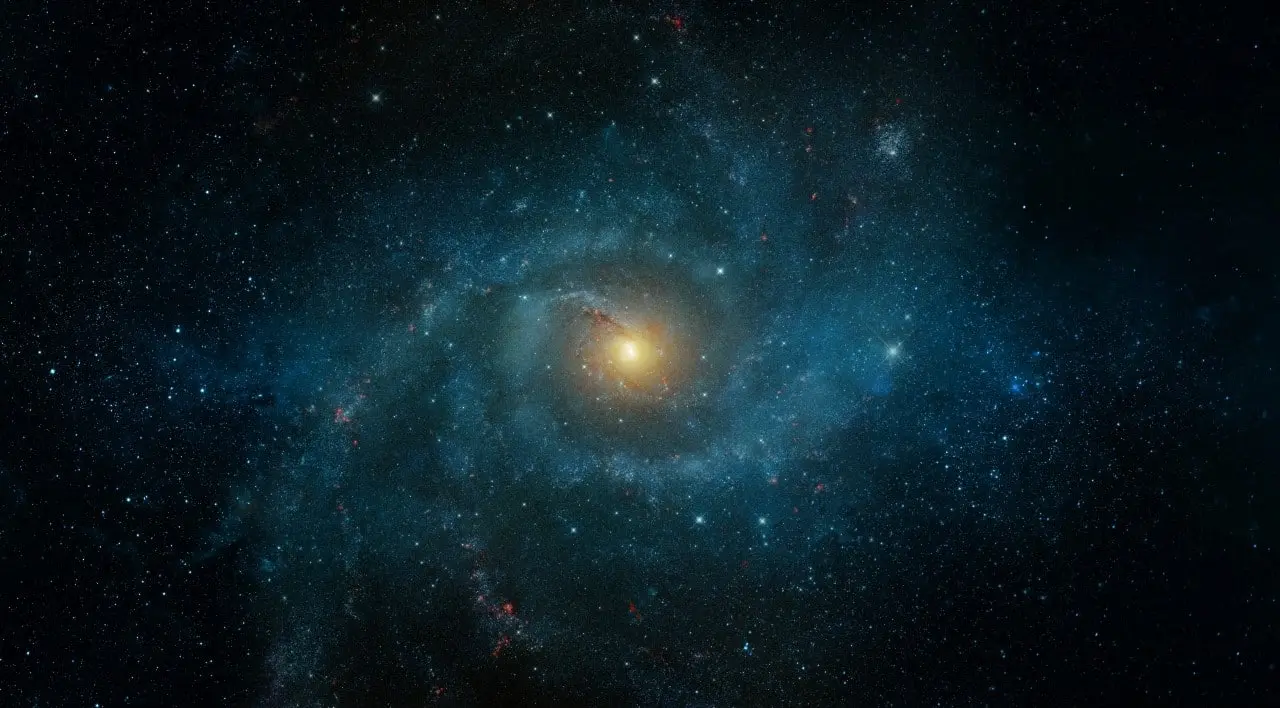
Space agency NASA recently released a stunning new image of the Centaurus A galaxy. This detailed representation reveals a complex environment about 12 million light-years from Earth. Inside, star formation, dust clouds and powerful emissions from a central supermassive black hole interact.
The photograph highlights the peculiar structure of Centaurus A, a galaxy located in the constellation of Centaurus. It is classified as a “starburst” galaxy due to its period of intense new star formation, a much faster pace than that observed in ordinary galaxies.
This improved observation offers a clearer perspective on one of the most studied nearby galaxies in the universe. The data collected is essential for astronomers to investigate how galaxies develop, how black holes influence their surroundings and how cosmic collisions can reshape entire stellar systems.
Unraveling the violent origin of the Centaurus A galaxy
Centaurus A draws attention for its different appearance. Unlike spiral galaxies, such as our Milky Way, it displays a dense band of dark dust that crosses its center, obscuring large portions of its structure from visible light.
More on this story: Unpublished record from the space agency exposes active core and stellar nursery on Centaurus A
Scientists speculate that this unique configuration results from an ancient merger between two distinct galaxies. This cosmic interaction would have caused the accumulation of vast amounts of gas and dust, creating an environment conducive to the rapid formation of new stars.
At the heart of the galaxy is an active, supermassive black hole, which emits powerful jets of particles. These jets propagate thousands of light years into space, significantly impacting the environment around the main body of the galaxy.
The union of a galactic merger, intense star formation activity and the presence of an active black hole turns Centaurus A into a valuable “natural laboratory” for studying the forces that shape galaxies throughout the universe.
On the same topic: Scientists unravel how supermassive black holes are ejected from galaxies
What NASA observations reveal about the structure of Centaurus A
The image was released by NASA, presenting Centaurus A as a notable example of a galaxy undergoing intense physical transformations. The agency’s astronomical capabilities underscore the importance of analyzing nearby galaxies to understand processes occurring in much more distant regions of the cosmos.
See Also

Electrical discharge knocks man off roof in Jaguaruana after contact with power lines

Global auction raises US$11.9 million and Brazil’s historic currency reaches record value

Former fighter Prichard Colón dies at age 33 after decade in a vegetative state
By observing Centaurus A in different wavelength ranges, astronomers can identify features that are not visible in ordinary optical images. Infrared and other wavelength observations allow researchers to penetrate layers of dust and locate areas where new stars are being born.
The galaxy is the subject of study by several space observatories because of its active core and complex structure. Each new observation adds relevant information about the connection between black holes, gas and stellar evolution.
NASA’s ongoing work with astronomical imaging continues to provide researchers and the public with detailed views of celestial objects. These images help unravel the history and future of galaxies.
Learn more: Interstellar comet 3I/ATLAS travels at 58 km/s and will have its route altered by Jupiter
Understand the role of the central black hole in the galaxy
At the heart of Centaurus A, there is a gigantic black hole, surrounded by matter that is pulled into it due to strong gravity. When this matter accelerates, it releases a huge amount of energy before some particles are released in the form of powerful jets.
These jets are one of the galaxy’s most striking features. They form immense structures that extend far beyond the visible areas of Centaurus A, demonstrating how a black hole can influence the entire galactic environment.
The black hole’s intense activity also affects the motion and temperature of the surrounding gas. This interaction is capable of influencing both the speed at which new stars are formed and the way matter is distributed throughout the galaxy.
The in-depth study of this process allows scientists a more complete understanding of the relationship between black holes and the development of the galaxies that host them.