Vera Rubin Observatory reveals more than 500,000 galaxies in unprecedented cosmic image
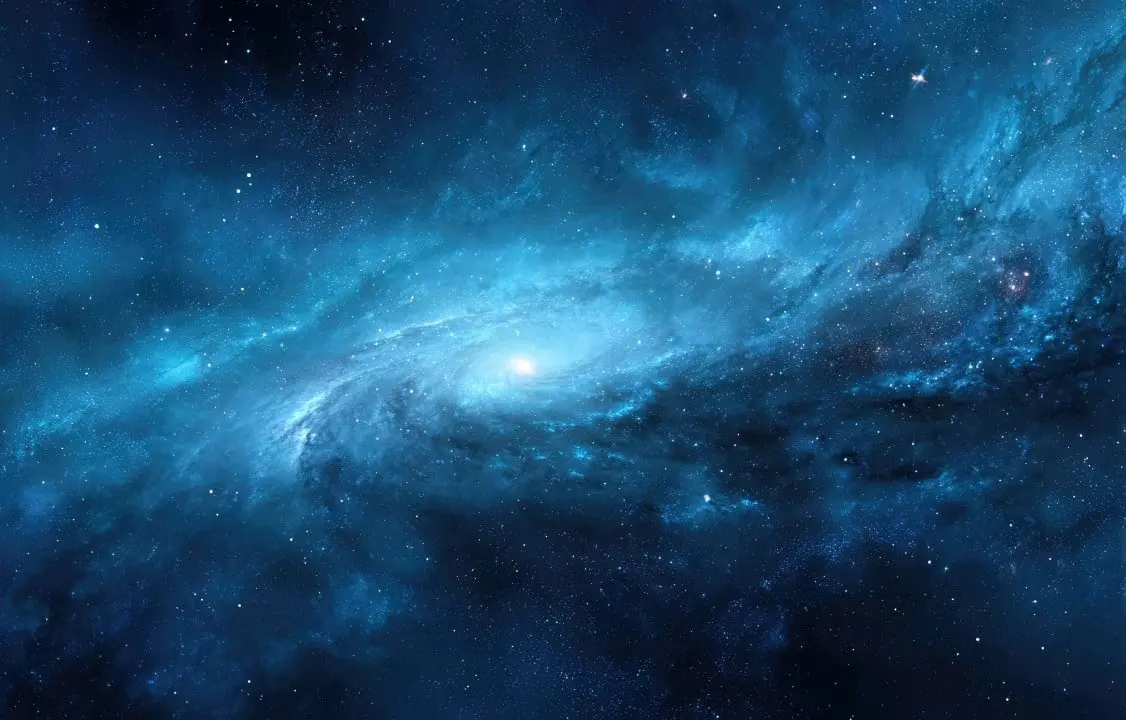
The Vera C. Rubin Observatory, one of the most advanced astronomical research facilities in the world, surprised the scientific community by releasing a detailed image that contains more than 500,000 galaxies. The revelation took place on August 6, 2026 and offers a glimpse of the potential that a decade of continuous observations can provide. The image focuses on the region known as the COSMOS field, one of the most studied areas of the night sky.
The COSMOS field and its relevance to astronomy
The COSMOS field is a section of the sky of great importance to astronomers, having been the subject of intense research for more than two decades. Its choice is mainly due to its strategic location, far from the dense plane of the Milky Way. This distance minimizes interference from foreground stars and galactic dust, offering an exceptionally clear window into the distant universe.
This clarity allows scientists to observe galaxies at a vast range of distances and cosmic ages. Some of the captured light traveled for about 12 billion years before reaching telescopes on Earth. The region has become a kind of multiwavelength reference library, built from data collected over many years.
How Rubin enhances the view of familiar territory
Although the COSMOS field is familiar territory for astronomers, the Vera C. Rubin Observatory offers a completely new perspective. The instrument’s sensitivity is so high that, even in this area considered “clean”, it can capture faint filaments of dust belonging to our own galaxy.
More on this story: Vera Rubin Telescope maps 500,000 galaxies in new photograph of the universe
This ability to detect extremely subtle details while mapping distant structures positions Rubin as a crucial complement to previous observations. The telescope not only deepens knowledge about already identified objects, but also reveals previously invisible aspects.
- Large observatories have already contributed significantly to the study of the COSMOS field:
- The Hubble Space Telescope
- The James Webb Space Telescope
- The XMM-Newton X-ray Observatory
- The Chandra X-ray Observatory
- The Spitzer Space Telescope
- The Subaru Telescope
- The Very Large Array
Observing the dynamics of the universe in real time
The true innovation of the Rubin Observatory lies in its repeated observation methodology. Unlike other projects that provide deep still images, Rubin will visit the same field hundreds of times over the course of a decade. This approach will transform the current “snapshot” into a detailed record of ongoing cosmic events.
See Also

Electrical discharge knocks man off roof in Jaguaruana after contact with power lines

Global auction raises US$11.9 million and Brazil’s historic currency reaches record value

Former fighter Prichard Colón dies at age 33 after decade in a vegetative state
Continuous observation will allow the detection and monitoring of transient and variable phenomena. This includes explosive events like supernovae, fluctuations in black holes and other cosmic changes unfolding in real time. This tracking capability opens new frontiers for the study of stellar and galactic evolution.
Bob Blum, director of the Rubin Observatory at NSF NOIRLab, said the COSMOS deep image is just the starting point. He explained that repeated visits to the field in the coming years will demonstrate the power of the discovery survey project, providing the scientific community with a vast number of variable and transient objects for detailed tracking and study.
Learn more: Intriguing planetary rings revealed on Venus by analysis of ancient images
Future discoveries and the promise of the decade of observations
The Vera C. Rubin Observatory’s series of observations is expected to revolutionize understanding of the dynamics of the universe. Massive data collection will allow scientists to catalog and analyze an unprecedented amount of temporary phenomena. This could lead to discoveries about the nature of dark matter, dark energy and the formation of galaxies.
By providing an evolutionary perspective on the cosmos, Rubin not only complements the work of previous telescopes, but establishes a new era in astronomy. The decade of studies promises to unravel mysteries and provide crucial information for future generations of researchers, consolidating the COSMOS field as one of the best understood regions of the universe.