The pace of global warming skyrockets and the climate target is expected to fail by 2030
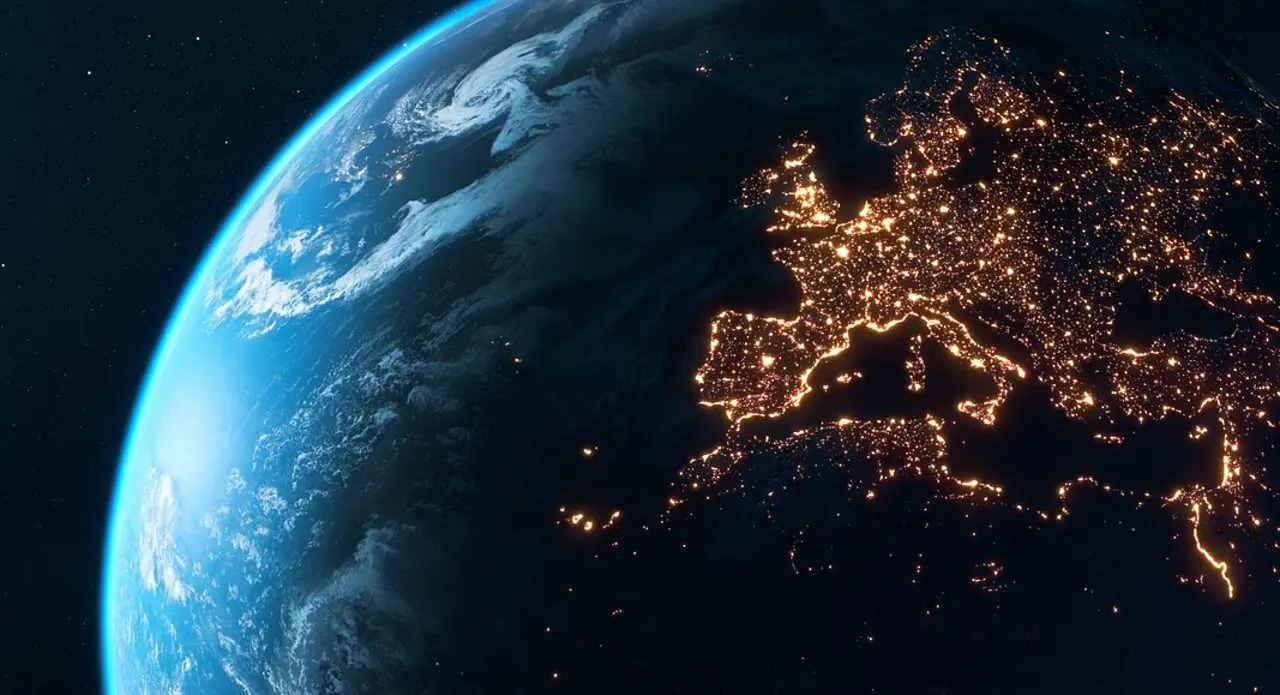
Severe weather episodes recently recorded on several continents, including prolonged droughts, large-scale forest fires and catastrophic floods, signal a worrying advance in the rise in the planet’s temperatures. Experts warn that the Earth is going through a phase of meteorological transformations that are much faster than expected. A recent assessment, driven by the fact that 2023 broke all historical global heat records, indicates a severe worsening of the environmental crisis in the coming years.
Statistical data confirms the jump in global temperatures
A survey published in the scientific journal Geophysical Research Letters proves, with 98% statistical accuracy, that the rate of thermal rise in the globe has made a significant leap in the last decade. Starting in 2015, the Earth’s average temperature began to rise by around 0.35 degrees Celsius every ten years. This index represents an aggressive increase when compared to the period between 1970 and 2015, a time when recorded warming was 0.2 degrees Celsius per decade.
For the first time, the scientific community is able to state with a high degree of certainty that global warming has gained traction in a dangerous way. Even though the document does not detail the exact reasons for this change, previous climate projections already pointed to the chance of an accelerated thermal jump. The current diagnosis also makes it clear that the measures adopted today to contain the problem, established by the Paris Agreement, do not provide the necessary strength to stop the destruction.
More on this story: The pace of rising temperatures doubles and threatens global climate goals by 2030
Deadline for climate target collapse drastically shortens
The researcher at the Potsdam Institute for Research on Climate Impacts and main author of the survey, Stefan Rahmstorf, explained that maintaining the thermal rhythm of the last decade will cause the 1.5 degree Celsius ceiling to be breached before 2030. The expert pointed out that the speed at which the planet heats up is directly linked to the time it will take for humanity to eliminate carbon dioxide emissions from the burning of fossil fuels.
With thermometers showing unusual numbers in recent years, scholars began to debate whether the pace of warming had really changed speed. The major obstacle to confirming this theory was being able to isolate short-term natural variations from long-term trends caused by human activity, a highly complex statistical task.
False breaks in the weather and the influence of natural phenomena
Normal fluctuations in nature have caused confusion in interpretation in the past. Soon after the strong El Niño event in 1998, some groups argued that the planet’s warming had lost strength or stopped completely. However, subsequent investigations conducted by Rahmstorf and retired statistician Grant Foster, formerly of Tempo Analytics, proved that the supposed stagnation between 1998 and 2012 was just a temporary natural fluctuation, and not the end of human impact on the climate.
The pair of experts worked together again on this new analysis to discover whether the rate of warming generated by anthropogenic actions has undergone recent changes and what the magnitude of this impact would be. To arrive at the results, they performed a thorough statistical scan of observational databases, removing the effects of El Niño, volcanic eruptions and solar cycles. The final balance revealed that the speed of warming has practically doubled since 2015.
See Also

Electrical discharge knocks man off roof in Jaguaruana after contact with power lines

Global auction raises US$11.9 million and Brazil’s historic currency reaches record value

Former fighter Prichard Colón dies at age 33 after decade in a vegetative state
Learn more: Research reveals that global warming has accelerated and could exceed the Paris limit before 2030
In an official statement, Foster explained that the research group cleaned known natural influences from the databases to reduce visual interference. This filtering allowed the real signal of long-term warming to be evident and easy for scientists to understand.
Irreversible risks to terrestrial and marine ecosystems
The numbers collected by the research show that current temperature records are already approaching an increase of 1.5 degrees Celsius in relation to the pre-industrial era, heading towards surpassing this red line before the end of this decade. The authors clarify that, for the Paris Agreement to be considered officially broken, the global thermal average needs to remain above this limit for two consecutive decades, exactly the route the planet is following now.
Overcoming these climate barriers for too long could trigger catastrophic chain reactions for biodiversity. Among the dangers are the failure of ocean current circulation systems, the abrupt melting of permafrost in boreal regions and the death of coral reefs in tropical areas. These changes bring irreversible dangers to society, intensifying the strength and frequency of extreme disasters, such as:
- Deadly heat waves battering urban and rural areas.
- Severe droughts that destroy crops and compromise food production.
- Uncontrollable forest fires consuming entire biomes.
- Torrential rains followed by devastating floods in inhabited areas.
The role of polluting nations in the future of the planet
The report signed by Foster and Rahmstorf highlights that stopping this escalation is still a decision that is in the hands of society. The authors reinforce that global warming will stop when carbon dioxide emissions reach zero, although reversing the already accumulated heat is an almost impossible task. Despite this, scientists recognize that today’s political environment suggests the maintenance or even worsening of this thermal rhythm. Without a radical change in the stance of the countries that emit the most polluting gases, such as the United States, the global climate will undergo drastic changes in a short space of time.