The pace of rising temperatures doubles and threatens global climate goals by 2030
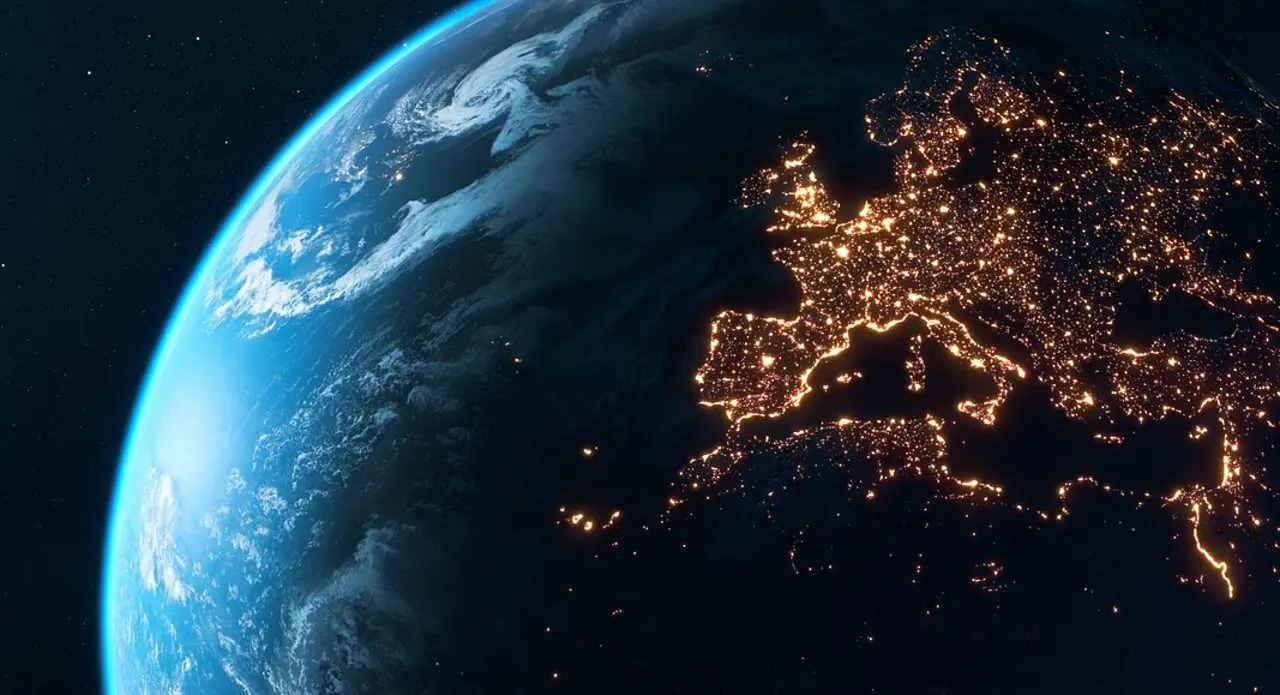
The frightening frequency of contemporary environmental disasters, ranging from severe droughts to catastrophic floods and large-scale fires, signals an unbridled advance in the planet’s thermal anomalies. Environmental researchers highlight that the Earth has entered a phase of dizzying meteorological transformations. Recent assessments paint an alarming horizon for humanity in the short term, requiring immediate attention from authorities.
The drastic rise in temperatures in the last decade
A survey recently published in the scientific journal Geophysical Research Letters proves, with an accuracy rate of 98%, that the rate of extreme heat has jumped considerably in recent history. Starting in 2015 — interestingly, the same period in which world leaders signed historic environmental commitments — global thermometers registered a rise of 0.35 degrees Celsius per decade. This jump represents a substantial increase when compared to the mark of 0.2 degrees Celsius per decade observed in the interval between 1970 and the beginning of the last decade.
This is the first time that the academic community has attested to this thermal escalation with such mathematical support. Even though the document does not detail the exact triggers for such a jump, previous computer projections already signaled the chance of a precipitous warming. Consequently, the data collected shows that the current containment measures, stipulated in the Paris Agreement, do not have enough strength to stop the ecological collapse.
On the same topic: The pace of global warming skyrockets and the climate target is expected to fail by 2030
Experts’ warning about the goals set in France
Scientist Stefan Rahmstorf, linked to the Potsdam Institute for Climate Impact Research and leader of the project, pointed out that maintaining this upward curve will result in the 1.5°C barrier being definitively broken before the end of this decade. The researcher emphasized that the speed at which the Earth’s surface heats up depends exclusively on society’s agility in eliminating carbon dioxide emissions from the burning of fossil fuels. Without this energy transition, the mitigation scenario becomes unattainable.
The record of successive thermal records in recent years forced the scientific community to investigate in depth whether the degradation process had gained traction. The major methodological obstacle consisted in isolating common meteorological variations, which occur over short periods, from the true warming curve caused by human industrial activity. Solving this puzzle required an extremely complex analytical and mathematical effort.
The influence of natural phenomena on climate measurements
Historically, the planet’s normal oscillations have given rise to distorted readings of reality. Shortly after the strong El Niño recorded in 1998, skeptical groups even argued that the climate crisis had stagnated or disappeared. However, investigations subsequently conducted by Rahmstorf in partnership with Grant Foster, a retired data analyst from Tempo Analytics, proved that the supposed stability between 1998 and 2012 was nothing more than a temporary fluctuation, unrelated to the reduction in man-made impacts.
The pair of experts joined forces once again to uncover whether anthropogenic interference in the climate has undergone recent changes and what the magnitude of this impact would be. To reach an accurate conclusion, they applied rigorous statistical filters to climate databases, purging the effects of volcanic eruptions, solar cycles and El Niño itself. The final diagnosis revealed that the speed of thermal degradation has practically doubled since mid-2015.
More on this story: Research reveals that global warming has accelerated and could exceed the Paris limit before 2030
See Also

AI scams: learn how to protect yourself from deepfakes and voice cloning

Salmonella outbreak in Texas leads FDA to classify egg recall as maximum risk

Study reveals: short daytime naps change the brain and improve learning
Through an official note, Foster explained that the working group managed to clear routine natural interference from observation bases. According to the statistician, this filtering eliminated distractions in the graphs, allowing the true signature of prolonged warming to emerge unquestionably for reviewers.
The devastating impact on global ecosystems and future projections
Based on these findings, academics warn that thermometers are already flirting with an increase of 1.5°C in relation to the pre-industrial era, with strong indications that this red line will be crossed by 2030. The authors of the study are keen to emphasize that the official failure of international commitments is only declared if this high average persists for two consecutive decades. Unfortunately, the planet’s current trajectory points exactly to this catastrophic consolidation.
Remaining above this thermal ceiling for too long has the potential to trigger irreversible chain reactions in nature. Scientists have mapped that prolonged excess heat can activate the following points of structural collapse on the planet:
- The stoppage of ocean currents vital for thermal balance.
- The abrupt melting of permafrost in boreal regions.
- The complete annihilation of ecosystems formed by tropical coral reefs.
These structural changes pose immeasurable threats to the survival of several species, including humans. At the same time, continuous heat will serve as fuel to multiply the fury of storms, dry periods and forest fires.
Learn more: Heat wave in Europe is a dress rehearsal for a hotter future, experts warn
The role of international policies in the environmental crisis
The document signed by Foster and Rahmstorf brings a ray of hope by stating that stopping this calamity still depends on human actions. They detail that the rise in thermometers should stop the moment society stops emitting carbon dioxide, although subsequent cooling will be an almost impossible task. Despite this, researchers recognize that global political inertia favors the continuation or even worsening of this scenario. If industrial powers, such as the United States, do not adopt radical preservation stances, the Earth’s climate configuration will undergo severe changes in a very short space of time.