

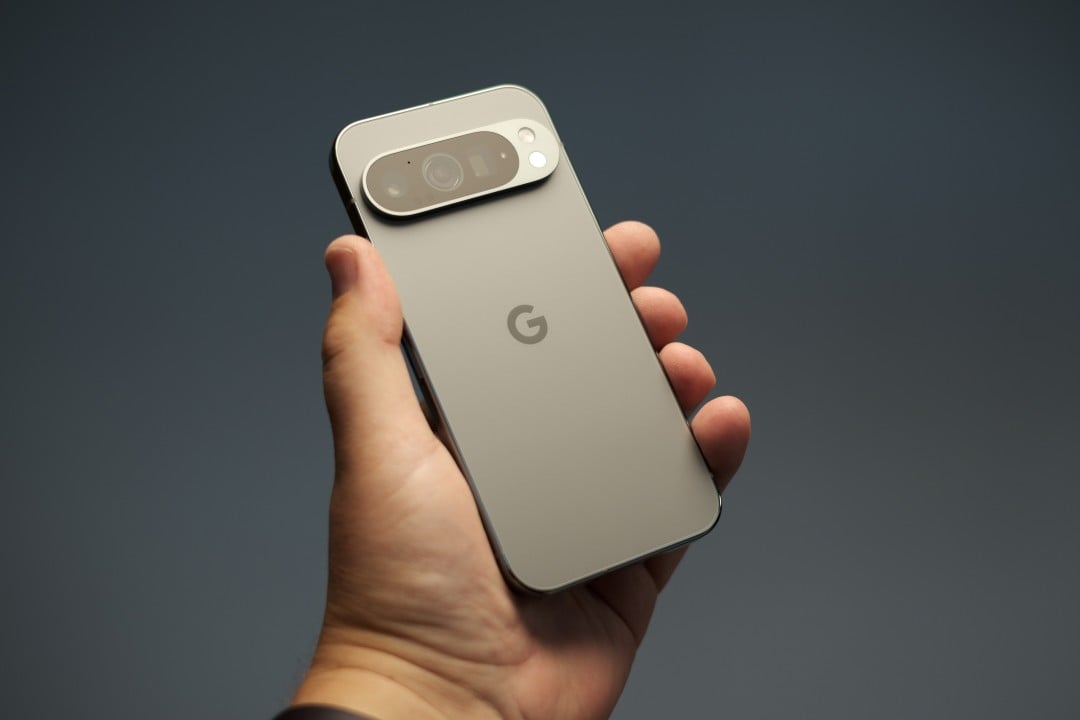
Google’s new generation of smartphones, the Pixel 11, had a series of information released before its official announcement. The most recent leaks revealed brought important details about the device and its launch.
New models in the Pixel 11 line
Previous device reveals and editions have already hinted at what consumers can expect. The product series scheduled for 2026 will include the standard Pixel 11 model, the Pixel 11 Pro, the Pixel 11 Pro XL, and the foldable Pixel 11 Pro Fold.
Other new features include the Pixel Watch 5, available in 41mm and 45mm options, and a Pixel Buds Pro 2 with a new colorway. However, the big innovation highlighted is Pixel Tag, marking Google’s debut in the Android tracker segment.
This addition stands out for having remained discreet in the rumors, until the latest information confirmed its existence.
Details about the design and construction of the devices
The new models in the Pixel 11 series maintain a similar design to the Pixel 9, featuring almost identical dimensions and few visual changes.
The devices are likely to be slightly thinner. This modification, which may impact the compatibility of certain covers, appears to be linked to the camera bar.
Although the changes are not drastic, the camera bar has received improvements. The right side loses its metal structure, and the lens area is once again made entirely of glass, reminiscent of the design of the Pixel 6. Consequently, the temperature sensor will be removed from the Pro models this year.
More on this story: Leak indicates that first practical demo of GTA 6 arrives in August
For the Pixel 11 Pro and Pro Fold models, the LED flash will also operate as an RGB light. The exact features are still unknown, but it is expected to offer more usage options.
Color and finish options for new smartphones
The color palette remains a relevant topic for Pixel devices. Google continues to allocate more vibrant tones to the basic model, reserving more sober options for the Pro line, with some notable exceptions this year.
The Pixel 11 will be launched in different exclusive finishes: Midnight Haze, a greenish black; Light Sterling, with a lavender hue; Fuchsia, a vibrant color; and Moss, a softer green. Basic versions will combine matte frames with glossy glass back panels.
According to the leaked information, the Pixel 11 Pro and Pro XL models will have the colors Midnight Haze, Light Fog (silver/white), Pine (dark green) and Dune (gold with peach rear glass). While most Pro models maintain frosted glass and polished frames, the Midnight Haze version stands out for being completely matte, including the frame, which represents a significant difference and could become a popular option.
The Pixel 11 Pro Fold, in turn, will be available in two options: Midnight Haze and Pine. Although it doesn’t feature the white “Porcelain” or “Fog” variants found on other Pro models, the foldable includes a traditional black alternative with Midnight Haze.
Learn more: IPhone 18 Pro Max: leaks suggest major advances in camera, screen and autonomy
What to expect from technical specifications and performance
There is great expectation that the Tensor G6 processor will bring the performance advancement desired by users. This year, TSMC takes over production, using its latest generation 2nm process, something unprecedented in smartphones and which even surpasses Apple in this aspect. The chip will have a 1+4+2 architecture, with newer ARM C1 cores: one 4.11 GHz C1 Ultra and four 3.38 GHz C1-Pro. In addition, Google will replace its Samsung Exynos modems with the MediaTek M90.
Regarding general performance, projections indicate both significant improvements and possible limitations. The CPU optimizations appear robust, with the new architecture promising up to 16% more performance than previous versions.
However, graphic performance may not show such a significant improvement. Rumors point to a PowerVR GPU based on an older architecture, which may disappoint gamers looking for maximum performance. While full equivalence with Android rivals is still unlikely, the use of a modern manufacturing process and new CPU architecture represents an important step forward in power and efficiency.
A key change for this year is the deletion of the 128GB storage version, with 256GB becoming the minimum standard across the entire product line. This decision, awaited by many, tends to increase the value and practicality of the devices in the long term. Despite the increase in storage capacity, RAM memory may vary due to a “global crisis”. Although the Pro models were priced at 16 GB, there are indications that some configurations may come with 12 GB to cut costs.
Screen sizes remain unchanged from previous years, but maximum brightness has been substantially improved. The Pixel 11 reaches 3,000 nits, while the Pro and Pro XL editions reach an impressive 3,600 nits. The Pixel 11 Pro Fold retains its 8-inch internal screen, however, it will have a slightly larger 6.4-inch external display.
Battery capacities have been readjusted on all models. The standard Pixel 11 has been increased to 4,985 mAh, and the Pro XL will have 5,115 mAh. Unexpectedly, there are speculations that the Pixel 11 Pro will come with a 4,850 mAh battery, slightly smaller than the previous version. The Pixel 11 Pro Fold will have a 4,806 mAh battery. Charging speeds have also been improved, with the Pixel 11, Pro and Fold supporting 30W wired, and the Pro XL reaching 45W. All devices will support the Qi2 wireless charging standard.
Camera innovations and configurations
The camera configuration in the Pixel 11 series presents changes that may generate debate. Recent leaks indicate that Google is implementing new components to distinguish the models. The differentiation between the basic and Pro versions this year will be through improvements in the sensors, and not by reducing the resolution in the standard version.
The Pixel 11 will come equipped with a set of dual rear cameras: a 48 MP main sensor, a 13 MP ultra-wide lens and a 10 MP telephoto lens, which will allow Super Zoom of up to 30x. The main sensor, codenamed “chemosh”, represents a notable hardware innovation for the base model.
On the same topic: Google introduces Pixel 11 series with improved Tensor G6 chip and new Pixel Tag
The Pixel 11 Pro and Pro XL will have sensors with more expressive modifications, with the inclusion of the new “Bastet” and “Barghest” for the main camera and the telephoto lens. The three-lens system will include a 50 MP main sensor, a 48 MP ultra-wide-angle lens with macro focus and a 48 MP periscopic telephoto lens, offering 5x optical zoom and up to 120x Pro Zoom. For selfies, the Pro models will have a 42 MP front camera and a 103-degree field of view.
The Pixel 11 Pro Fold also incorporates the new “chemosh” main sensor, set to 48 MP. Complementing it is a 10.5 MP ultra-wide lens and a 10.8 MP periscopic telephoto lens, which provides 5x optical zoom and 30x Super Zoom. The foldable device will also have two 10 MP front cameras, one for each display.
Exclusive features and functionality
Gemini Intelligence is expected to be a fundamental pillar in the launch of the Pixel 11. This technology represents an optimized experience that allows users to manage various smartphone functions through their Google accounts. The functionality is similar to Magic Cue, but with improved contextual awareness and deeper integration between accounts.
Previously known as Pixel Glow, and now revealed as “HiLight”, this feature is expected to be the main hardware innovation. The long-awaited RGB color range appears to be a new flash hue, which will offer feedback when interacting with the Gemini or during other actions such as calls and video recording. The extent of HiLight’s capabilities is not yet fully defined, but it will replace the temperature sensor on Pro models.
There are high chances that Pixelsnap will be reintroduced. The expectation is that the magnets will receive a boost in strength this year.
Price increase and context of the “RAM memory crisis”
All models in the Pixel 11 line should have a price adjustment, with the basic device exceeding the usual US$799. Information about prices in the US points to an increase of US$100 in the standard and Pro models, with similar adjustments for the Pro XL and the Pro Fold. These modifications are intended to compensate for the discontinuation of the 128GB storage option, as 256GB becomes the minimum capacity on all devices.
This readjustment of values is a consequence of a sharp “RAM memory crisis”, called “RAMageddon”, generated by suppliers. Google confirmed an unprecedented increase in the price of memory components, with the cost of 1 GB of RAM jumping from US$2.80 in 2025 to US$12 this year – a six-fold increase. To overcome this increase, the company not only raised retail prices, but also considered hardware alternatives, such as the possible reduction of the Pixel 11 Pro’s RAM from 16 GB to 12 GB in some versions.
More on this story: Google Pixel 11 Pro leaks tease details ahead of August 12th event
Specific starting values for the US market are:
- The Pixel 11 is expected to start at $899.
- The Pixel 11 Pro will start at $1,099.
- The Pixel 11 Pro XL will start at US$1,299.
- The Pixel 11 Pro Fold will start at $1,899.
Although the price increase is a challenge for some consumers, the doubling of base storage to 256 GB seeks to mitigate this impact. Pre-order promotions are still confidential until the August 12, 2026 event, but are likely to include the usual trade-in offers and bonuses like Google One or Gemini Pro subscriptions.
Device release dates and availability
The official launch of the Pixel 11 at the Made by Google 2026 event is scheduled for August 12, 2026.
In previous editions, the devices were launched on different dates. For the Pixel 11 series, however, rumors indicate that Google is planning a more joint debut. The entire main line of hardware — including the Pixel 11, 11 Pro and 11 Pro XL — is expected to launch starting August 20, 2026.
Notably, while past generations of the foldable have seen significant delays in availability, the latest leaks suggest that the Pixel 11 Pro Fold could launch on the same date of August 20, alongside the other models in the series and the Pixel Watch 5.
This unification in the schedule represents an improvement compared to previous launches, indicating that buyers who pre-order should receive their new devices more quickly.