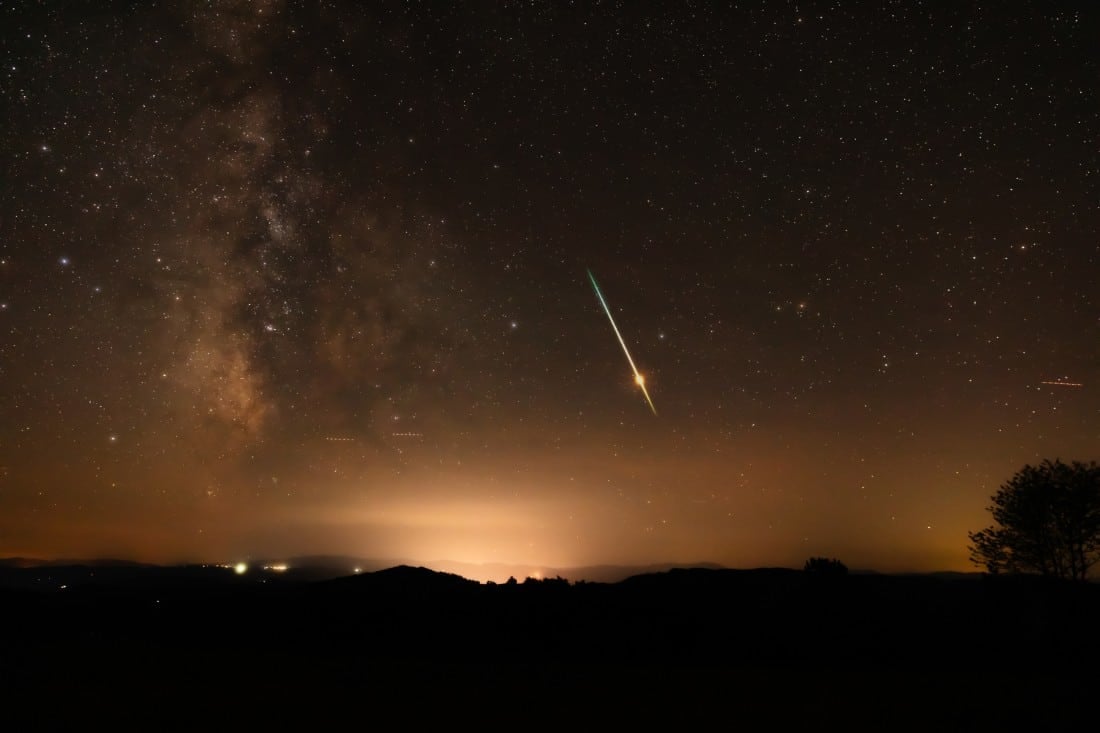
The Draconid meteor shower reaches its annual activity peak during the evening of Thursday, October 8, extending into the early hours of Friday, October 9, 2026. Skywatchers across the Northern Hemisphere will encounter optimal dark-sky conditions due to a waning moon that leaves the evening hours free of lunar glare.
Forecasters expect maximum activity around 01:00 GMT on October 9, which translates to 22:00 BRT on October 8 for observers tracking the event in compatible latitudes. As science writer Jamie Carter noted, “Instead of improving toward dawn, the Draconids are best attempted in the evening.”
Why do the Draconids favor early evening viewing?
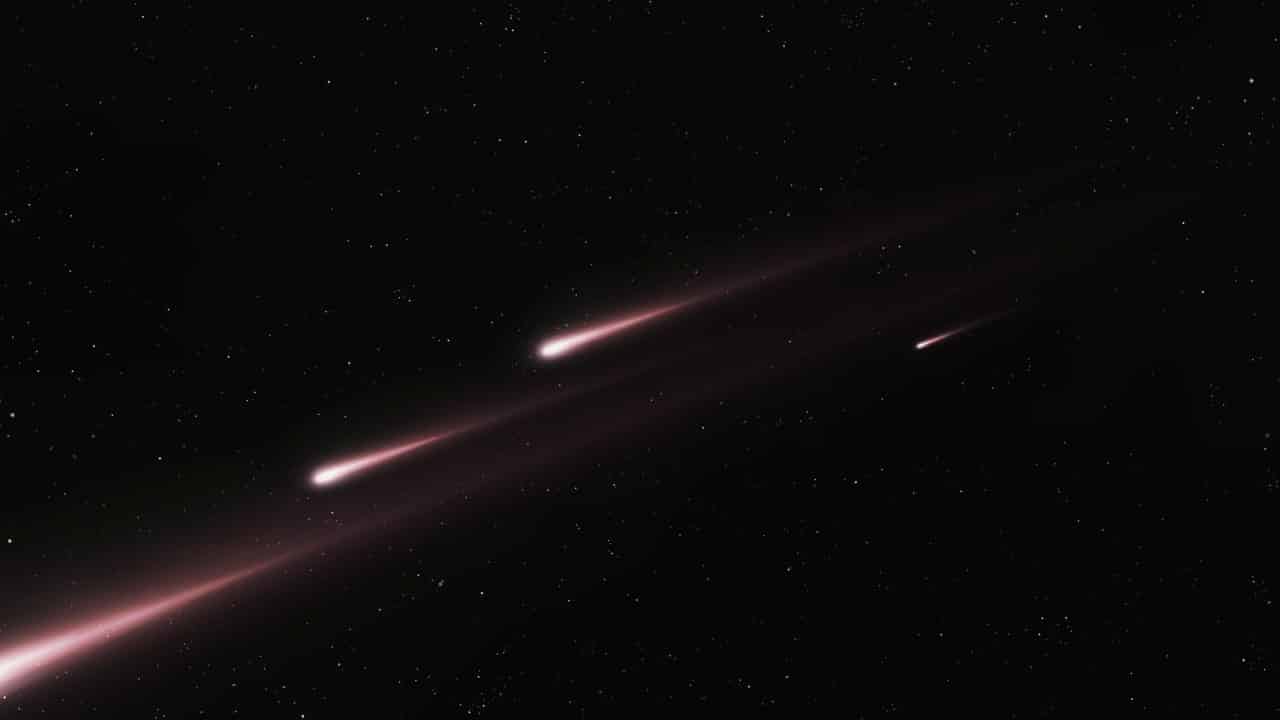
Most annual meteor displays require observers to wait until the pre-dawn hours, when Earth’s forward orbital motion faces directly into incoming debris streams. The Draconids present a distinct exception to this standard schedule because their radiant point, located within the circumpolar constellation Draco the Dragon, reaches its highest altitude in the northern sky immediately after twilight deepens into full darkness.
Deborah Byrd and Bruce McClure pointed out this unusual orbital alignment: “The Draconid shower – also called the Giacobinids – is a real oddity, in that its radiant point stands highest in the sky as darkness falls.” The radiant sits near the prominent star Vega, the anchor of the Summer Triangle asterism, making orientation straightforward for observers facing northward once twilight ends.
Because the radiant reaches its apex early, viewers do not need to stay outside until dawn or trek to remote wilderness locations to catch the peak. Observers can look across the sky rather than staring directly at Draco, as meteor trails appearing farther from the radiant often display longer visible paths.
Debris from Comet 21P and atmospheric entry speed
The particles responsible for the Draconid display originate from Comet 21P/Giacobini-Zinner, an icy body discovered by French astronomer Michel Giacobini at the Nice Observatory in 1900 and recovered by German astronomer Ernst Zinner in 1913. The comet travels along an orbit that completes a circuit around the Sun approximately every 6.6 years, shedding dust and gravel that remain spread along its celestial path.
Follow: August astronomical calendar guide to observing eclipses and meteor showers
When these fragments collide with Earth’s upper atmosphere, they burn up at an uncharacteristically gentle velocity compared to other major meteor streams. According to Carter, “Draconids enter our atmosphere at only about 12 miles (20 kilometers) per second, making them noticeably slow by meteor standards.” This reduced speed produces leisurely streaks across the dark sky, distinct from the rapid flashes typical of autumn shooting stars.
The density of the meteor stream varies across annual passages. A bulletin from the Royal Observatory Greenwich explained: “The rate of meteors during the shower’s peak depends upon which part of the comet’s trail the Earth’s orbit intersects on any given year.” Comet 21P/Giacobini-Zinner last reached perihelion in March 2025, leaving relatively fresh debris fields near Earth’s orbital path.
Key metrics for the 2026 Draconid meteor peak
- 20 km/s: atmospheric entry velocity of Draconid meteors
- 5 to 10: estimated visible meteors per hour under clear, dark skies
- 6.6 years: orbital period of parent comet 21P/Giacobini-Zinner around the Sun
- 7.5 degrees: tilt of Saturn’s southern ring face toward Earth during October 2026
- 01:00 GMT: predicted time of maximum orbital intersection on October 9, 2026
Historical outbursts and current expectations
The Draconids possess a volatile history marked by intense meteor storms interspersed with subdued annual displays. Earth intersected dense ribbons of cometary dust in 1933 and 1946, generating historic storms where thousands of meteors fell per hour. Secondary outbursts of noticeable activity took place in 1926, 1952, 1985, 1998, 2011, and 2018.
For the 2026 peak, astronomical projections suggest modest rates rather than a full storm. The Society for Popular Astronomy and the Royal Observatory Greenwich indicate a potential zenithal hourly rate reaching around 10 meteors per hour, while EarthSky data sets the expected range between 5 and 10 meteors per hour. Urban light pollution will reduce the total count visible to the naked eye from backyards.
Astronomers consider a massive storm unlikely this year, though sudden localized surges remain impossible to rule out entirely because cometary dust filaments maintain an irregular internal distribution. Observers watching under open skies will encounter favorable conditions regardless of shower intensity, as the moon reaches its New Moon phase at 15:50 GMT on Saturday, October 10, keeping the night completely free of interfering moonlight.
Astronomical calendar for early October 2026
- Saturday, October 3, 2026: Moon reaches last quarter phase, reducing evening lunar brightness
- Sunday, October 4, 2026: Saturn reaches opposition with the Sun, shining at its brightest magnitude
- Tuesday, October 6, 2026: Draconid meteor shower begins its annual window of visible activity
- Thursday, October 8, 2026: Prime evening viewing window opens across the Americas at 22:00 BRT
- Friday, October 9, 2026: Predicted maximum peak of Draconid activity occurs at 01:00 GMT
- Saturday, October 10, 2026: Moon reaches New Moon phase at 15:50 GMT
- Wednesday, October 21, 2026: Orionid meteor shower peaks, driven by debris from Halley’s Comet
Other celestial targets visible during the shower
Stargazers monitoring the sky on Thursday, October 8, can take advantage of the moonless evening to observe neighboring celestial objects. Saturn remains well positioned following its October 4 opposition, appearing as a steady yellowish point of light to the naked eye. Through small telescopes, Saturn reveals its distinctive ring system tilted at an angle of 7.5 degrees toward Earth, expanding outward after having appeared almost entirely edge-on throughout 2025.
The Great Square of Pegasus serves as an additional navigational marker in the eastern and southeastern sky, outlined by the stars Scheat, Alpheratz, Markab, and Algenib directly above Saturn. After the Draconids conclude their five-day display on Saturday, October 10, the next major sky event will arrive on Wednesday, October 21, 2026, when the Orionid meteor shower reaches its peak activity.