

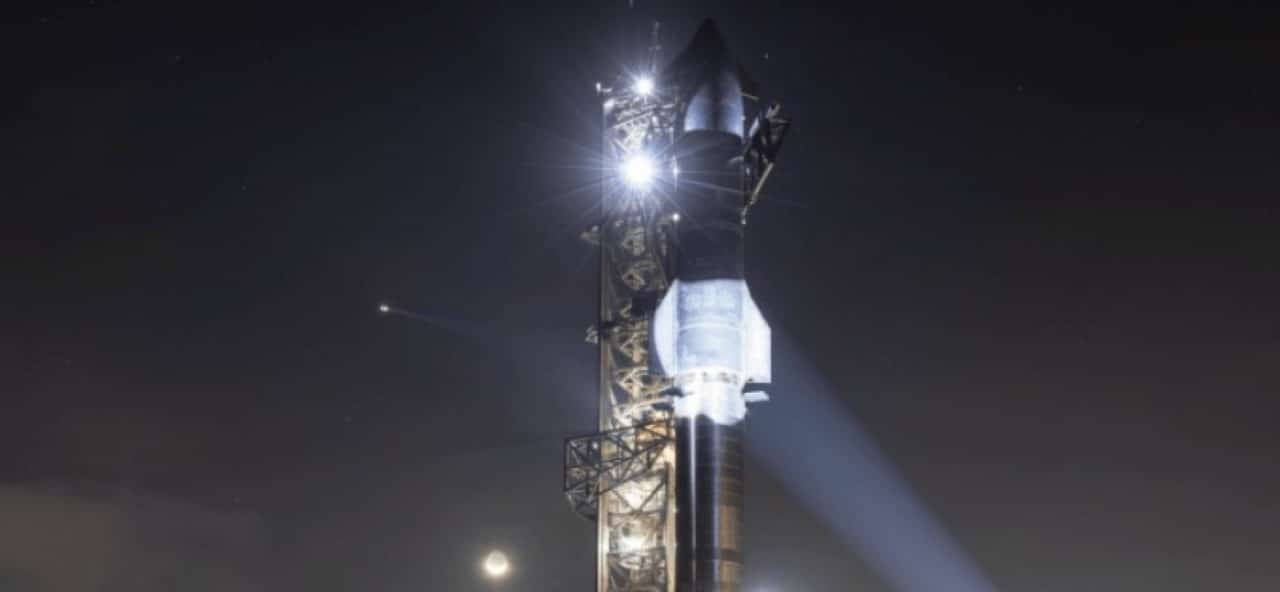
The Starship program from SpaceX is on the verge of taking another significant step with Flight 8, scheduled for the coming days from Orbital Launch Pad A in Texas. This test, featuring Ship 34 and Booster 15, marks a critical phase in validating technical improvements made after the challenges encountered in Flight 7, conducted in January 2025. With promises of advancements in engines, propulsion systems, and recovery processes, the mission carries high expectations for both Elon Musk’s company and the future of space exploration. The goal extends beyond a mere launch: it’s about establishing Starship as a reusable vehicle capable of revolutionizing space access and enabling ambitious interplanetary missions.
Preparations for Flight 8 reflect SpaceX’s rapid pace in learning from prior tests. Following the loss of Ship 33 in the Atlantic due to harmonic oscillations in the propulsion systems, the team undertook detailed adjustments to address failures and enhance performance. A successful mission could pave the way for orbital flights and, eventually, crewed missions to Mars, aligning with Musk’s vision of making humanity a multiplanetary species. Additionally, approval from the Federal Aviation Administration (FAA) has granted greater operational flexibility, allowing modifications to the flight termination system and reinforcing mission safety.
As the world watches the preparations unfold, Flight 8 is not just a technical test but a symbol of ongoing progress in the modern space race. SpaceX aims to prove that past setbacks have been overcome, providing a solid foundation for the program’s next steps. The planned splashdown of Ship 34 in the Indian Ocean and the attempt to recover Booster 15 at the launch site underscore the complexity and boldness of this mission.
Intense preparations mark Starship’s new phase
The countdown for Flight 8 has begun, with SpaceX engineers working tirelessly to ensure every detail is in place. Ship 34, equipped with upgraded propulsion lines and rear vents, has been designed to prevent the issues that led to its predecessor’s demise. These changes include individual transfer tubes for each Raptor Vacuum engine, a solution aimed at ensuring greater stability during flight. Meanwhile, Booster 15 features an advanced flight computer and smart batteries, enhancements intended to boost precision and reliability under extreme conditions.
Another key focus is the test of new non-structural capture pins, coated with thermal protection tiles. These components have been redesigned to streamline vehicle recovery post-reentry, a critical factor for Starship’s efficient reuse. The mission’s trajectory follows patterns from previous flights but includes an expanded hazard zone, a precaution informed by Flight 7’s analysis. The plan involves Booster 15 attempting its fourth successful landing, while Ship 34 is set for a controlled splashdown in the Indian Ocean, thousands of kilometers from its launch point.
Lessons from Flight 7 drive technical innovations
Past Starship tests have provided a wealth of insights for SpaceX. Flight 7, for instance, delivered mixed outcomes: while Booster 14 performed its role near flawlessly, Ship 33 encountered a critical failure that resulted in its destruction. Investigations pinpointed harmonic oscillations in the propulsion systems as the culprit, highlighting the urgent need for refinements. This experience directly shaped the upgrades implemented for Flight 8, showcasing the company’s iterative approach, which turns setbacks into technological breakthroughs.
What to expect from Raptor engine performance
The Raptor engines take center stage in Flight 8, with particular emphasis on burns conducted in space. Successfully tested in missions like Flight 6, these engines are vital for operations in microgravity, simulating conditions for future orbital flights. Reliable performance from the Raptor Vacuum engines in Ship 34 will signal that Starship is ready for its next evolutionary leap. Any anomaly, however, could delay SpaceX’s plans, underscoring the stakes of this test.
The robustness of the new propulsion lines will also face scrutiny. With a design that better distributes fuel flow, SpaceX aims to eliminate the vibrations that undermined the previous flight. This tweak is more than a fix—it’s a stride toward the stability required for long-duration missions, such as those planned for Mars. Booster 15, meanwhile, will rely on upgraded control systems to ensure its 33 Raptor engines operate in perfect harmony during launch and recovery.
Starship test timeline: a steady evolution
Since the program’s inception, SpaceX has maintained a relentless development pace. Here are the key milestones achieved so far:
- Flight 1 (2020): First successful suborbital test, validating Starship’s basic concept.
- Flight 4 (2023): Introduction of booster recovery, landing in the Gulf of Mexico.
- Flight 6 (2024): Space burn tests, setting the stage for orbital operations.
- Flight 7 (January 2025): Debut of Block 2 and identification of propulsion system flaws.
- Flight 8 (scheduled for March 2025): Validation of upgrades and fourth booster recovery attempt.
This timeline reflects SpaceX’s aggressive strategy, prioritizing real-world testing to accelerate progress. Each mission builds complexity, bringing Starship closer to its ultimate goals.
Flight 8’s impact on the modern space race
Should Flight 8 meet its objectives, the ripple effects will be felt across the aerospace industry. Efficient reuse of Booster 15 could slash launch costs, giving SpaceX a competitive edge over rivals like Blue Origin and NASA. Moreover, a successful mission will bolster confidence among investors and partners, including space agencies eyeing Starship for lunar cargo transport and beyond.
The ability to execute controlled splashdowns in the Indian Ocean also showcases SpaceX’s mastery of large-scale operations. This achievement sets the stage for more ambitious flights, like returning the ship to the launch site, planned for Flight 9. If successful, Flight 8 will lay the groundwork for validating heat shields, a crucial component for crewed reentry and landing missions.
Advances bringing the Mars dream closer
The Starship program isn’t confined to suborbital tests: its endgame is to take humans to Mars. Flight 8 is a milestone in that journey, testing technologies essential for interplanetary missions. The ability to haul massive payloads—like the 150 tons Starship is designed to carry—hinges on robust, reusable systems, precisely what’s at stake now. Every tweak to Ship 34 and Booster 15 is a step toward that vision.
Furthermore, continued success could hasten partnerships with NASA, which already views Starship as a contender for the Artemis program. Crewed lunar flights could serve as a final proving ground before Mars, leveraging the infrastructure SpaceX is building. The implications extend beyond science: planetary colonization might offer solutions to earthly challenges, like resource scarcity.
Key innovations tested in Flight 8
Flight 8 introduces several advancements worth noting. Check out the highlights:
- New capture pins: Reduce wear during reentry and streamline recovery.
- Upgraded propulsion lines: Eliminate harmonic oscillations in Raptor engines.
- Advanced flight computer: Processes real-time data with greater accuracy.
- Rear vents on Ship 34: Relieve internal pressure during flight.
These breakthroughs stem from years of testing and refinement, illustrating how SpaceX turns challenges into opportunities.
An interplanetary future draws nearer
Looking ahead, Flight 8 is more than a technical trial—it’s a testament to humanity’s potential to explore the unknown. If all goes as planned, Flight 9 could see Ship 34 return to Texas, a feat that would cement Starship as the most advanced vehicle in its class. This progress is vital for full orbital missions, which demand safe reentry and landing.
In the long run, the program’s success could reshape space exploration. Asteroid mining, lunar bases, and Mars landings are increasingly within reach, thanks to SpaceX’s efforts. Flight 8, therefore, isn’t just a milestone for the company—it’s a chapter in humanity’s journey to the stars.