

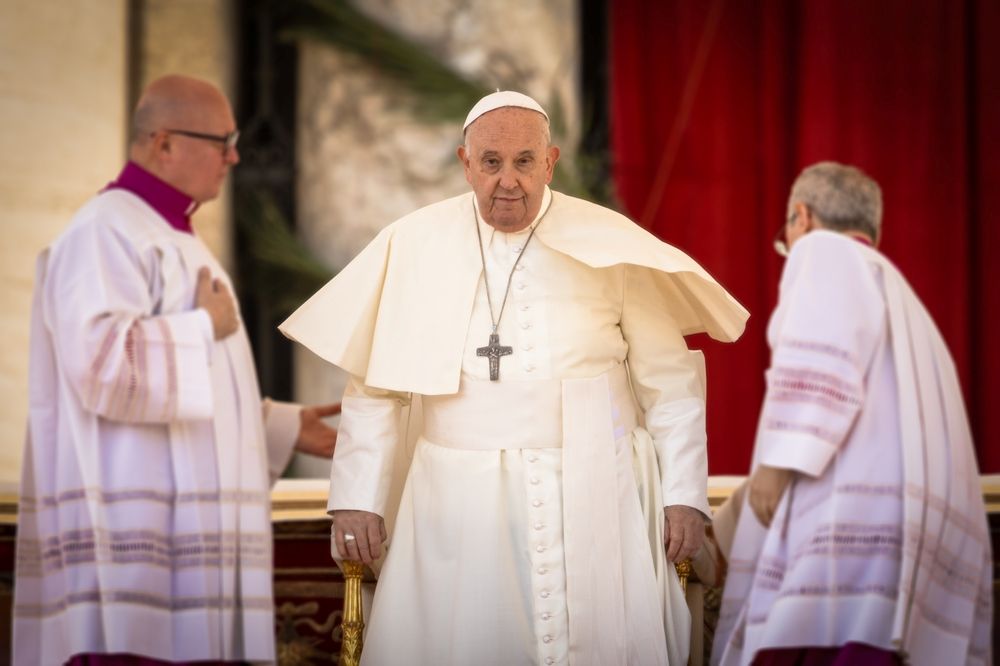
Jorge Mario Bergoglio, globally known as Pope Francis, passed away at the age of 88 in the early hours of Monday, April 21, at 2:35 a.m. Brasília time, 7:35 a.m. Vatican time. The news was officially confirmed by the Holy See, which highlighted the pontiff’s lifelong commitment to Gospel values, advocacy for the poor, and efforts to foster a more inclusive Catholic Church. Francis, the first Latin American and Jesuit pope in history, led the Church for nearly 12 years, leaving behind a legacy of reforms, interfaith dialogue, and social justice. He had been battling complications from bilateral pneumonia, which kept him hospitalized for approximately 40 days at Rome’s Agostino Gemelli Hospital. His death marks the end of one of the most transformative papacies in modern history, with impacts that will resonate for generations.
Born on December 17, 1936, in Buenos Aires, Argentina, Francis was the son of Italian immigrants who arrived in the country in 1929. Before dedicating himself to religious life, he trained as a chemical technician and taught literature and psychology. His calling to the priesthood emerged in his youth, leading him to join the Society of Jesus in 1958. Ordained a priest in 1969, he swiftly rose to leadership roles, including heading Argentina’s Jesuit community from 1973 to 1979. In 1992, he became an auxiliary bishop of Buenos Aires, advancing to archbishop in 1997 and cardinal in 2001, appointed by Pope John Paul II. His election as pope on March 13, 2013, was a historic moment, not only due to his Latin American roots but also as the successor to Benedict XVI, who resigned—a rare event in Church history.
Francis’ papacy was defined by simplicity and closeness to the faithful. He shunned traditional luxuries, opting to live in the modest Casa Santa Marta rather than the Apostolic Palace. His choice of the name Francis, inspired by St. Francis of Assisi, underscored his mission to prioritize the poor and marginalized. Over nearly 12 years as pontiff, he tackled complex challenges, from clergy abuse scandals to the need to modernize a millennia-old institution. His reforms within the Roman Curia, the Vatican’s governing body, aimed at greater financial transparency, while his messages emphasized mercy, tolerance, and social justice.
A leader against the conservative tide
Francis assumed the papacy during a turbulent period for the Catholic Church. Clergy sexual abuse scandals had eroded the institution’s credibility, while secularization diminished the number of faithful in regions like Europe and North America. In response, the Argentine pope adopted a pastoral approach that contrasted with the doctrinal rigidity of his predecessors. He prioritized dialogue with other faiths, welcoming Muslim, Jewish, and Buddhist leaders to the Vatican. His 2015 encyclical Laudato Si’ offered a groundbreaking perspective by addressing the climate crisis, linking faith with environmental responsibility.
Furthermore, Francis sought to bring the Church closer to historically marginalized groups. In 2023, he authorized blessings for same-sex couples, a decision that sparked both praise and criticism. While upholding the traditional doctrine restricting the priesthood to men, he expanded women’s roles in the Vatican, appointing figures like Sister Nathalie Becquart as undersecretary of the Synod of Bishops. Though modest for some, these steps marked significant progress in an institution known for its slow pace of change.
Milestones of the papacy
Francis’ tenure was marked by bold gestures and decisions that broke with centuries-old traditions. Below are some of the key moments of his leadership:
- Authorization of blessings for same-sex couples in 2023, a historic step toward LGBTQIA+ inclusion.
- Publication of the encyclical Laudato Si’ in 2015, positioning the Church at the forefront of environmental debates.
- Reform of the Roman Curia, focusing on financial transparency and combating corruption in the Vatican bank.
- Apostolic visits to conflict zones, such as Iraq (2021) and South Sudan (2023), promoting peace and interfaith dialogue.
- Meeting with a transgender individual at the Vatican in 2015, signaling openness to minorities.
These milestones reflect Francis’ vision of the Church as a “field hospital,” ready to heal society’s wounded rather than judge or exclude. However, his pastoral approach faced resistance from conservative factions, who accused him of diluting Catholic doctrine.
Health challenges and resilience
Francis’ health was a recurring concern throughout his papacy. Since youth, he lived with respiratory limitations after part of one lung was removed due to an infection. In recent years, hip and knee issues forced him to use a wheelchair at public events. In 2023, he faced multiple hospitalizations for bronchitis and respiratory infections, culminating in the bilateral pneumonia that led to his death. Despite his frailty, Francis maintained a demanding schedule, participating in events like the 2025 Easter celebrations just days before his final hospitalization.
In February 2025, the pope was admitted to Agostino Gemelli Hospital after experiencing breathing difficulties during audiences. Initially diagnosed with bronchitis, his condition progressed to a polymicrobial infection, requiring extended treatment. On February 18, the Vatican confirmed bilateral pneumonia, a severe condition that impairs oxygenation. Though discharged in March, Francis remained under intensive medical care until his passing. His determination to lead despite his declining health was seen as a testament to his commitment to his mission.
Reforms and criticism
Reforming the Roman Curia was a cornerstone of Francis’ agenda. He established the Council of Cardinals, known as C9, to advise him on restructuring the Vatican’s governance. Key measures included closing suspicious accounts at the Institute for the Works of Religion, the Vatican bank, which had long been accused of money laundering. Additionally, Francis introduced external audits to enhance financial transparency, a first in the Holy See’s history.
However, his reforms met with internal opposition. Conservative cardinals, particularly from Europe and the United States, criticized what they saw as an overly progressive approach. The decision to allow blessings for same-sex couples, for instance, faced backlash in dioceses in countries like Poland and Nigeria. Francis also drew criticism for not advancing women’s ordination to the priesthood, a growing demand among progressive Catholics. He maintained that apostolic tradition, based on Jesus’ selection of male apostles, should be upheld, disappointing activists who hoped for bolder changes.
Global dialogue and refugee crisis
Francis distinguished himself through his political outspokenness, often challenging world leaders. He condemned Russia’s 2022 invasion of Ukraine, labeling President Vladimir Putin responsible for a “massacre.” Similarly, he called for a ceasefire in Gaza in 2023, criticizing Israel’s actions. His stance on the refugee crisis, which began in 2015, was equally firm. He visited refugee camps in Lesbos, Greece, and Bangladesh, delivering messages of solidarity and urging the European Union to welcome migrants.
During the Covid-19 pandemic, Francis delivered one of his papacy’s most iconic moments. On March 27, 2020, he prayed alone in an empty St. Peter’s Square, locked down due to quarantine measures. The image, broadcast to millions, became a symbol of hope amid global crisis. His call for unity and care for the vulnerable resonated beyond the Church, reaching even non-Catholics.
Legacy of St. Francis of Assisi
The choice of the name Francis was more than symbolic. Inspired by St. Francis of Assisi, the pontiff placed poverty at the heart of his mission. He visited impoverished communities worldwide, from Rio de Janeiro’s favelas during the 2013 World Youth Day to indigenous groups in the Amazon in 2019. His messages consistently emphasized combating inequality and protecting the vulnerable, such as the homeless and migrants.
Francis also championed decentralization within the Church, encouraging regional episcopal conferences to make decisions tailored to local realities. This approach, known as synodality, was formalized in the Synod of Bishops, which he reformed to include greater participation from laypeople and women. The synodal process, launched in 2021, aimed to listen to the Church’s grassroots, a move many consider revolutionary for a hierarchical institution.
Defining moments of the papacy
Below are key events that shaped Francis’ tenure as leader of the Catholic Church:
- The 2021 Iraq visit, where he met Grand Ayatollah Ali al-Sistani, a milestone in Catholic-Muslim dialogue.
- Canonization of Mother Teresa of Calcutta in 2016, reinforcing his message of service to the poor.
- Engagement with youth at the 2019 World Youth Day in Panama, inspiring new generations of Catholics.
- Publication of the apostolic exhortation Amoris Laetitia in 2016, easing the Church’s stance on remarried divorcees.
These moments highlight Francis’ ability to connect the Church with the modern world, despite internal and external resistance.
The Church’s future
With Francis’ death, the Catholic Church enters the sede vacante period, during which the Holy See is temporarily governed by the camerlengo, currently Cardinal Kevin Farrell. The College of Cardinals will convene in the coming weeks to organize the conclave, set to begin in May 2025, to elect the new pope. The process will be pivotal in determining whether the next pontiff continues Francis’ reformist path or adopts a more conservative stance.
The choice of successor will reflect Francis’ legacy. Having appointed over 60% of the voting cardinals, many align with his vision of a more inclusive, pastoral Church. Yet, internal divisions between progressives and conservatives may complicate consensus. Regions like Africa and Asia, which gained greater representation in the College of Cardinals, will also play a significant role in the decision.
Timeline of Francis’ papacy
Francis’ tenure as pope was marked by events that shaped both the Church and the world. Below is a timeline of key moments:
- 2013: Elected pope on March 13, becoming the first Latin American and Jesuit in the role.
- 2015: Publishes Laudato Si’, addressing the climate crisis and environmental responsibility.
- 2016: Issues Amoris Laetitia, softening the Church’s approach to remarried divorcees.
- 2020: Prays alone in St. Peter’s Square during the Covid-19 pandemic, a historic gesture.
- 2021: Visits Iraq, fostering interfaith dialogue with Muslim leaders.
- 2023: Authorizes blessings for same-sex couples, advancing LGBTQIA+ inclusion.
This timeline underscores the intensity of a papacy that sought to address the challenges of a changing world while staying rooted in Christian values.
A pope of the people
Francis won admirers within and beyond the Church for his authenticity. A San Lorenzo football fan, he openly shared his love for the sport, often weaving it into his speeches. His humble origins and simple lifestyle resonated with Catholics worldwide. During visits to Brazil, such as the 2013 World Youth Day, he captivated crowds with his informality, forgoing armored vehicles to walk among pilgrims.
His ability to engage diverse audiences was remarkable. He met with leaders of social movements, like Brazil’s João Pedro Stédile of the Landless Workers’ Movement, and climate activists, including Greta Thunberg. These interactions solidified his image as a global leader addressing issues beyond religion.
Impact in Latin America
As the first Latin American pope, Francis brought visibility to a region home to about 40% of the world’s Catholics. He visited countries like Brazil, Bolivia, Ecuador, and Paraguay, emphasizing the Church’s role in fighting inequality. His advocacy for indigenous peoples, particularly during the 2019 Amazon Synod, was a milestone for local communities. He called for the protection of forests and indigenous rights, linking faith with social justice.
However, Francis faced challenges in the region. The rise of evangelical churches, particularly in Brazil and Central America, eroded Catholic influence. He responded by urging a more missionary Church, one that engages directly with communities. His message of closeness resonated in underserved areas but could not fully stem the loss of followers.
A legacy in progress
Francis’ death leaves the Catholic Church at a crossroads. His papacy was a turning point, promoting a more humane and inclusive faith. He faced opposition but inspired millions with his message of mercy. The image of a pope who rejected luxury, visited prisons, and embraced refugees will endure in the memory of Catholics and non-Catholics alike.
The upcoming conclave will test the durability of his reforms. A pope with a similar profile, possibly from Africa or Asia, could solidify his vision. Conversely, a conservative shift might slow the changes he initiated. Regardless of the future, Francis has secured his place in history as the pope who sought to make the Church a reflection of the Gospel: simple, welcoming, and devoted to the weakest.