One of the most iconic items in Formula 1 history has been sold for an unprecedented amount at an international auction. The helmet worn by Ayrton Senna during the 1992 Belgian Grand Prix, held at the legendary Spa-Francorchamps circuit, was acquired for 720,000 pounds, approximately $1.1 million at the current exchange rate. The piece, symbolizing not only the genius of the three-time world champion on the track but also his humanity and courage, set a new benchmark in the sports collectibles market, surpassing previous records and reinforcing Senna’s enduring legacy. The auction, organized by the prestigious RM Sotheby’s in England, attracted collectors and motorsport enthusiasts worldwide, highlighting Senna’s lasting impact on the sport.
The helmet’s sale marked a historic moment, not only for its monetary value but also for its cultural and emotional significance. During the 1992 Belgian GP, Senna performed an act of heroism that remains etched in the minds of Formula 1 fans. Upon witnessing the severe crash of French driver Érik Comas, who was left unconscious after a collision during free practice, Senna stopped his McLaren, ran across the track, and braved the danger of oncoming cars. He turned off Comas’ engine, which was still revving, and stabilized the driver’s head until medical help arrived, an act many believe saved the Frenchman’s life.
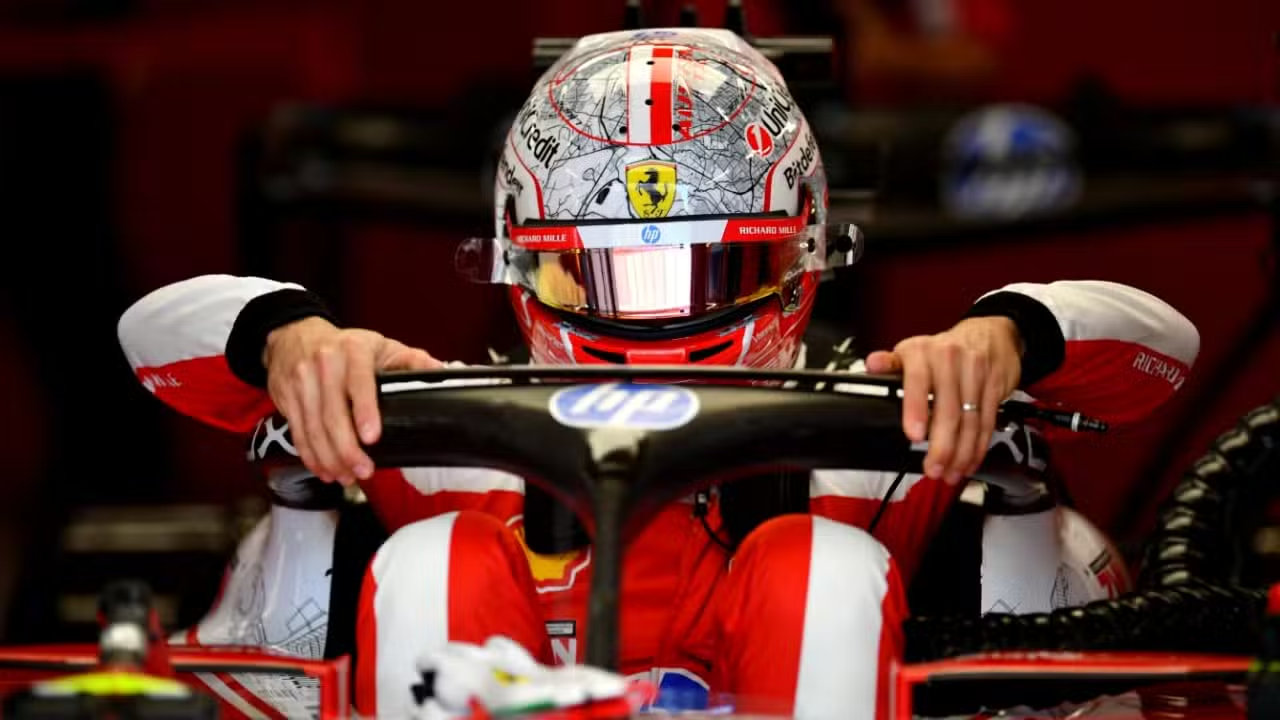
The previous record for a Formula 1 helmet belonged to Ferrari’s Charles Leclerc, whose helmet from the 2023 Monaco GP was auctioned for 262,700 pounds, roughly $400,000. The significant gap in values reflects not only the rarity of Senna’s item but also the weight of its story. Manufactured by the renowned Japanese brand Shoei, the X-4 model features the iconic yellow, green, and blue colors of Brazil, along with McLaren’s sponsor logos, such as Marlboro, Hugo Boss, and Shell, and Honda, the team’s engine supplier at the time.

- Historic moment: The helmet was worn during the 1992 Belgian GP when Senna saved Érik Comas.
- Record value: The 720,000-pound sale surpassed Leclerc’s previous record.
- Manufacturer: Produced by Shoei, X-4 model, customized for Senna.
- Significance: The piece symbolizes the courage and sportsmanship of the Brazilian champion.
The heroic act that defined Formula 1
The 1992 Belgian Grand Prix is remembered not for Michael Schumacher’s maiden Formula 1 victory but for Ayrton Senna’s selfless act. During the free practice session on August 28, French driver Érik Comas, from the Ligier team, lost control of his car at the high-speed Blanchimont corner, one of the most dangerous sections of the Spa-Francorchamps circuit. The impact was severe, throwing Comas’ car back onto the track, partially blocking the racing line. Unconscious, the driver remained with his foot stuck on the accelerator, causing the engine to rev dangerously, increasing the risk of an explosion due to potential fuel leaks.
Senna, who was right behind on a flying lap, immediately recognized the severity of the situation. Without hesitation, he pulled his McLaren to the side of the track, exited the car, and ran toward the wrecked vehicle as other drivers swerved around at high speed. With calm precision, the Brazilian turned off Comas’ engine, preventing a potential disaster. He then held the driver’s head, immobilizing it to avoid further injury, until the rescue team arrived. This moment, captured on camera and broadcast live, became one of the most iconic episodes of Senna’s career and Formula 1 history.
Senna’s action was not just a display of bravery but a reflection of his philosophy about the sport. Known for his fierce competitiveness and relentless drive, the Brazilian driver consistently showed deep respect for his peers and genuine concern for safety in motorsport. The Belgian GP incident solidified his image as a complete athlete, capable of blending technical prowess with human values. The helmet, now auctioned for a staggering sum, is a tangible testament to this legacy, a relic encapsulating a moment of solidarity in a sport often defined by individualism.

The helmet’s journey to the auction
The path of the helmet from the 1992 Belgian GP to the auction in England is a fascinating story in itself. After being used by Senna, the piece was meticulously preserved, retaining its original features, such as the built-in KTEL radio, the Honda-branded visor strip, and the customized internal padding for the driver’s comfort. The Shoei X-4 model, designed specifically for Senna, bears marks of use that attest to its authenticity, such as subtle scratches and natural wear, enhancing its value to collectors.
Though primarily used in the Belgian GP, records indicate Senna also wore the helmet in other 1992 races, including the San Marino and Monaco GPs. This versatility adds further layers to its historical significance, as the 1992 season was marked by intense battles between Senna, then with McLaren, and drivers like Nigel Mansell of Williams, who dominated that year’s championship. The piece, therefore, is not only a symbol of Senna’s heroism but also an artifact from a golden era of Formula 1, when the sport was at its most competitive.
The auction, held between April 23 and 28, 2025, by RM Sotheby’s, was a highly anticipated event for sports memorabilia collectors. The auction house, renowned for handling high-end items, promoted the helmet as one of the most significant pieces ever offered in its history. The starting bid was set at 100,000 pounds, roughly $150,000, but demand quickly drove the bids higher, culminating in the final sale of 720,000 pounds. While the buyer’s identity remains undisclosed, speculation suggests the helmet is now part of a private collection or a motorsport museum.
- Auction details: Organized by RM Sotheby’s, April 23–28, 2025.
- Starting bid: 100,000 pounds, equivalent to $150,000.
- Authenticity: Usage marks and original radio confirm the helmet’s provenance.
- Other races: Also used in the 1992 San Marino and Monaco GPs.
Ayrton Senna’s legacy in motorsport
Ayrton Senna remains one of the most revered figures in motorsport history. Born in São Paulo in 1960, he clinched three Formula 1 world titles in 1988, 1990, and 1991, all with McLaren. His skill on the track, particularly in wet conditions, and his unwavering dedication made him a global icon. Yet, it was his off-track persona that cemented his status as a legend. Senna was known for his spirituality, his connection to Brazil, and his generosity, traits that endeared him to millions worldwide.
The 1992 Belgian GP was not the only instance where Senna showed concern for his peers’ safety. Throughout his career, he frequently criticized the safety conditions in Formula 1, which at the time posed significant risks. After his tragic death in 1994 at the San Marino GP, many of the sport’s subsequent safety improvements, such as enhanced cars and circuits, were influenced by his legacy. The Ayrton Senna Institute, founded by his family, continues to uphold his values, promoting education for children and youth in Brazil.
The $1.1 million sale of the helmet is another chapter in Senna’s story, which, even three decades after his passing, remains vibrant. The record-breaking amount reflects not only commercial interest in rare items but also the ongoing admiration for a driver who transcended the sport. Collectors and fans see items like the helmet as a way to connect with the story of a man who blended talent, courage, and humanity in a unique way.
The Formula 1 collectibles market
The auction of Senna’s helmet underscores the booming market for Formula 1 memorabilia, which increasingly attracts investors and collectors. Items linked to legendary drivers like Senna, Michael Schumacher, and Lewis Hamilton fetch astronomical prices due to their rarity and historical significance. In recent years, other Senna helmets had already set records, such as one from the 1990 season sold for $185,000 in 2019 and another from 1991 for $96,000 in 2012. The 2025 sale, however, raised the bar, establishing Senna as the driver with the sport’s most valuable items.
Beyond helmets, other Formula 1 artifacts also drive the market. Race suits, steering wheels, cars, and even tickets from historic races are highly sought after. For instance, a Jordan car driven by Martin Brundle in 1996 was auctioned for between $110,000 and $120,000, while a steering wheel signed by Schumacher, used in the 1993 and 1994 seasons, fetched significant sums. This market reflects not only interest in the sport but also nostalgia for iconic eras of Formula 1, such as the 1980s and 1990s, when Senna and his peers dominated the tracks.
The 1992 helmet, however, holds a unique place in this landscape. Its connection to a moment of heroism makes it more than a collectible; it’s a symbol of values that continue to inspire. The piece, with its vibrant colors and wear marks, tells a story that transcends motorsport, touching on universal themes like courage and solidarity. For fans, owning such an item is a way to honor Senna and preserve his memory for future generations.
- Valuable items: Helmets, race suits, and cars are highly prized in Formula 1.
- Previous records: Senna’s 1990 and 1991 helmets had already broken records.
- Nostalgia: The golden era of Formula 1 in the 1980s and 1990s fuels the market.
- Cultural significance: The 1992 helmet represents more than a sports artifact.
Cultural impact and tributes to Senna
The helmet’s sale coincides with renewed interest in Ayrton Senna’s legacy. In 2025, several tributes honored the driver, including a special jersey launched by a Portuguese team in homage to the Brazilian. Inspired by Senna’s helmet colors, the piece was well-received by fans and underscores the driver’s influence on sports and popular culture. Additionally, exhibitions, documentaries, and events at circuits like Interlagos have kept Senna’s memory alive, particularly in Brazil, where he is considered a national hero.
Senna’s impact extends beyond motorsport. His story has inspired generations of athletes, artists, and entrepreneurs who see him as a model of determination and passion. In Brazil, he is often associated with national pride, especially for victories like the 1991 and 1993 Brazilian GPs, when he raised the Brazilian flag on the podium. The 1992 helmet, with its patriotic colors, symbolizes this deep connection to the country, making its sale a culturally significant event.
Formula 1, as a sport, continues to celebrate Senna. Tracks like Spa-Francorchamps, Monaco, and Interlagos frequently include tributes to the driver in their programs. In 2024, for example, Lewis Hamilton drove a historic Senna McLaren at Interlagos, moving the crowd. These gestures show that, even in an era dominated by new talents, Senna’s presence remains strong, influencing drivers and fans alike.
The evolution of safety in Formula 1
Senna’s actions in the 1992 Belgian GP also spotlight the evolution of safety in Formula 1. At the time, the sport faced significant challenges, with serious accidents being relatively common. Comas’ incident, though not fatal, exposed the dangers of circuits like Spa-Francorchamps, known for its high speeds and unpredictable weather. Senna’s intervention highlighted the need for swift and effective responses in emergencies, which were not always guaranteed in the 1990s.
After Senna’s death in 1994, Formula 1 underwent a profound transformation in safety. The introduction of the HANS (Head and Neck Support) device, improved cockpits, more effective barriers, and stricter medical protocols are just a few examples of the changes implemented. The Ayrton Senna Institute also played an indirect role by supporting initiatives that promote safety in the sport. Today, Formula 1 is considered one of the safest motorsports, with fatal accident rates drastically reduced.
The 1992 helmet, in this context, serves as a reminder of the challenges faced by drivers in that era. Made by Shoei, it offered advanced protection for its time but was far from today’s standards. The piece, with its functional and aesthetic design, reflects the balance between performance and safety that defined Formula 1 in the 1990s. Its record-breaking sale is, in a way, a celebration of the sport’s achievements in overcoming those challenges.
- Post-1994 changes: Introduction of HANS and improvements in circuits and cars.
- Spa-Francorchamps: A circuit notorious for its safety challenges.
- Senna’s role: His criticisms helped drive reforms in the sport.
- Modern standards: Formula 1 is now much safer due to these changes.
The future of Senna’s legacy
The auction of the 1992 helmet is not just a financial milestone but a reminder of Ayrton Senna’s ongoing impact. As Formula 1 evolves with new technologies, drivers, and challenges, Senna’s figure remains a benchmark. His blend of talent, charisma, and humanity continues to inspire, whether through collectibles, race tributes, or initiatives like the Ayrton Senna Institute, which has benefited millions of young Brazilians.
For fans, the helmet’s sale is a chance to reflect on what Senna stood for. He was more than a driver; he was a symbol of resilience and solidarity. The act of saving Comas in 1992, immortalized by the auctioned helmet, exemplifies this. The piece, with its vibrant colors and powerful story, is more than an object; it’s a fragment of the history of the sport and the life of one of its greatest athletes.
The collectibles market, meanwhile, is likely to continue valuing Senna-related items. With growing interest in sports memorabilia, other objects tied to the driver, such as race suits, cars, or personal documents, may fetch high prices in future auctions. For collectors, owning an item like the 1992 helmet is a way to connect with Senna’s story and ensure his legacy endures.
- Ayrton Senna Institute: Promotes education and upholds the driver’s values.
- Ongoing tributes: Jerseys, exhibitions, and events celebrate Senna.
- Rising market: Senna’s items are expected to keep appreciating.
- Global inspiration: Senna’s legacy transcends motorsport.