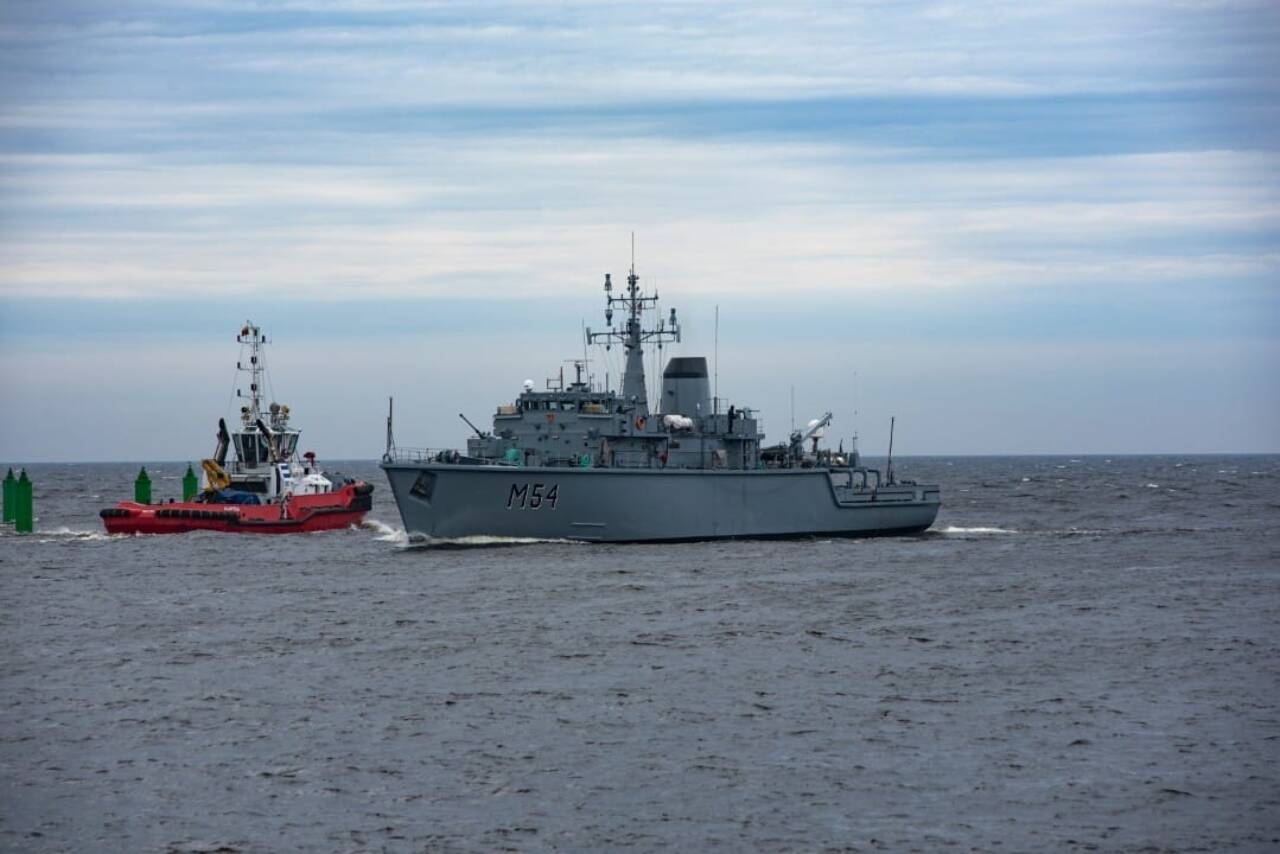
Tensions between India and Pakistan have surged to unprecedented levels following a series of aggressive military exchanges. On Friday, the Indian Navy initiated targeted operations in the Arabian Sea, responding to Pakistan’s attempted missile and drone strikes across multiple Indian cities. The retaliatory actions mark a significant escalation in the ongoing conflict, which intensified after the Pahalgam terror attack in April. This latest development underscores the fragile security situation along the Line of Control and the broader India-Pakistan border.
The operations follow Pakistan’s failed attempts to target military installations in Jammu, Pathankot, and Udhampur, among other locations. Indian defense systems successfully neutralized these threats, preventing casualties and damage. The Indian government has emphasized its commitment to safeguarding national sovereignty, while Pakistan’s actions have drawn sharp criticism for escalating the conflict.
- Key developments in the conflict:
- Pakistan’s missile and drone attacks targeted 15 Indian locations, including Jammu and Rajasthan.
- India’s Operation Sindoor struck terrorist infrastructure in Pakistan’s Punjab province.
- Indian Navy’s Arabian Sea operations signal a broader response strategy.
As the situation unfolds, both nations remain on high alert, with global powers urging de-escalation to prevent further destabilization in the region.
Naval operations in the Arabian Sea
The Indian Navy’s operations in the Arabian Sea began in the early hours of Friday, targeting multiple strategic points in Pakistan. Sources indicate that the navy deployed advanced assets to neutralize threats emanating from Pakistani territory. The operations were launched in response to Pakistan’s aggressive actions, including missile strikes on Jammu and drone incursions in Rajasthan’s Jaisalmer. The navy’s involvement marks a shift from land-based responses to a maritime strategy, leveraging India’s naval dominance in the region.
The Arabian Sea, a critical maritime corridor, has long been a focal point for India-Pakistan tensions. India’s naval forces, equipped with state-of-the-art warships and surveillance systems, are positioned to monitor and counter any hostile activities. The targeted operations aim to disrupt Pakistan’s ability to launch further attacks while signaling India’s readiness to escalate if provoked. No official details on the specific targets have been released, but the operations are believed to focus on neutralizing Pakistan’s coastal defenses and maritime assets.
The navy’s role in this conflict highlights its strategic importance in India’s defense architecture. With a fleet of over 150 ships and submarines, the Indian Navy is well-equipped to project power across the Indian Ocean region. The decision to engage in the Arabian Sea underscores India’s intent to respond to Pakistan’s provocations across multiple domains, from land to sea.
Pakistan’s missile and drone offensive
On Thursday, Pakistan launched a series of missile and drone attacks targeting military stations in Jammu, Pathankot, and Udhampur, located near the International Border in Jammu and Kashmir. The strikes also extended to other regions, including RS Pura, Arnia, Samba, and Hiranagar. Loud explosions echoed across Jammu, prompting authorities to enforce blackouts in several cities, including Chandigarh, Mohali, and Srinagar, to mitigate risks.
India’s air defense systems, including the advanced S-400 Triumf, successfully intercepted all incoming missiles and drones. The Ministry of Defence reported no casualties or material losses, crediting the swift response to established Standard Operating Procedures. The ministry’s statement on X emphasized the effectiveness of India’s kinetic and non-kinetic capabilities in neutralizing the threats.
- Details of Pakistan’s attacks:
- Missiles targeted military installations in 15 locations across northern and western India.
- Drones were deployed in coordinated swarm attacks, particularly over Jammu.
- Blackouts were enforced in multiple cities to counter aerial threats.
Pakistan’s offensive followed India’s Operation Sindoor, which struck nine terrorist camps in Pakistan’s Punjab province and Pakistan-administered Kashmir. The operation, launched on Wednesday, targeted the headquarters of Lashkar-e-Taiba and Jaish-e-Mohammed, two UN-designated terrorist organizations. Pakistan’s retaliatory strikes were widely condemned by Indian officials as an attempt to escalate the conflict.
BREAKING NEWS: India and Pakistan have issued multiple NOTAMs for simultaneous naval firing drills in the Arabian Sea.
— Santani Darpan (@darpan482007) May 8, 2025
India: May 8–13, 2025
Pakistan: May 9–12, 2025#IndiaPakistanWar #IndianArmy #OperationSindhoor pic.twitter.com/QEc2pkaFmE
Operation Sindoor and its aftermath
India’s Operation Sindoor was a direct response to the Pahalgam terror attack on April 22, which claimed 26 lives, including 25 Hindu tourists and one Nepali national. The attack, attributed to the Resistance Front, an offshoot of Lashkar-e-Taiba, sparked outrage in India and prompted a robust military response. On Wednesday, Indian forces conducted precision strikes on nine locations in Pakistan, including Bahawalpur and Muridke, destroying terrorist infrastructure linked to the attack.
The operation was described by Indian officials as “focused, measured, and non-escalatory,” targeting only terrorist camps and avoiding Pakistani military facilities. Satellite images released by Maxar Technologies revealed extensive damage to the targeted sites, including the Jaish-e-Mohammed headquarters in Bahawalpur. Indian Defence Minister Rajnath Singh claimed that over 100 terrorists were killed, though this figure remains unverified.
Pakistan denounced the strikes, claiming they targeted civilian areas and killed 31 people, including women and children. Prime Minister Shehbaz Sharif vowed to avenge the deaths, accusing India of “cowardly aggression.” The strikes marked the first Indian military action in Pakistan’s Punjab province since the 1971 war, significantly raising the stakes in the conflict.
India’s air defense triumph
India’s ability to neutralize Pakistan’s missile and drone attacks underscores the strength of its air defense systems. The S-400 Triumf, acquired from Russia, played a pivotal role in intercepting incoming threats. The system’s advanced radar and missile capabilities allowed India to track and destroy multiple targets simultaneously, preventing any damage to military or civilian infrastructure.
The Integrated Counter UAS Grid, a network of sensors and interceptors, was also instrumental in countering Pakistan’s drone swarm attacks. Eyewitness accounts described bright flashes in the night sky as Indian defenses engaged the drones, particularly over Jammu and Kupwara. The successful defense operation bolstered public confidence in India’s military preparedness and sent a strong message to Pakistan about the futility of such attacks.
- Key features of India’s air defense:
- S-400 Triumf: Capable of tracking and destroying targets at ranges up to 400 km.
- Integrated Counter UAS Grid: Designed to detect and neutralize drone swarms.
- Rapid response protocols: Ensured no casualties or damage during the attacks.
The defense ministry’s swift communication via X reassured the public that India remained fully prepared to counter any further aggression. The absence of losses in the face of a coordinated offensive highlighted the technological and strategic edge of India’s armed forces.
Diplomatic fallout and global reactions
The escalating conflict has drawn significant international attention, with world leaders calling for restraint. US Secretary of State Marco Rubio urged both nations to de-escalate, emphasizing the need for dialogue to prevent a wider confrontation. The United Nations issued a statement advocating for “maximum restraint” and diplomatic resolution, while Russia and Iran offered to mediate between the two countries.
Pakistan’s Foreign Minister Ishaq Dar rejected India’s claims of targeting military installations, accusing New Delhi of fabricating “phantom strikes” to incite anti-Pakistan sentiment. He asserted Pakistan’s right to respond at a time and place of its choosing, signaling potential for further retaliation. India’s Foreign Secretary Vikram Misri countered that Pakistan’s actions constituted escalation, reiterating that India’s responses were restrained and targeted solely at terrorist infrastructure.
Several countries, including Canada and the UK, updated their travel advisories, warning citizens against traveling to Jammu and Kashmir and areas near the India-Pakistan border. The closure of Pakistani airspace and suspension of commercial flights at Karachi and Lahore airports disrupted global aviation, with airlines like Air France and Lufthansa rerouting flights to avoid the region.
Civilian impact and regional tensions
The conflict has taken a heavy toll on civilians living along the Line of Control. In India’s Poonch district, Pakistani artillery shelling killed 16 civilians, including three women and five children, over the past two weeks. Villages like Salamabad in Uri have reported extensive damage to homes and infrastructure, with residents expressing fear and uncertainty about the future.
In Pakistan, the Indian strikes in Punjab province caused significant disruption. Schools and colleges in border districts were closed, and examinations were postponed. Residents in cities like Lahore and Karachi reported blackouts and heightened security measures, with the military urging civilians to remain vigilant.
- Civilian challenges in the conflict zone:
- Disrupted education: Schools in Punjab and Jammu and Kashmir remain closed.
- Infrastructure damage: Homes and public buildings affected by shelling and strikes.
- Economic impact: Trade and travel restrictions strain local economies.
The human cost of the conflict has fueled protests in both countries. In India, rallies in support of Operation Sindoor celebrated the military’s actions, while in Pakistan, demonstrators burned effigies of Indian Prime Minister Narendra Modi, demanding retribution for the strikes.
Pakistan’s air defense losses
India’s counterattacks on Thursday targeted Pakistan’s air defense systems, with significant damage reported in Lahore. The Indian Ministry of Defence confirmed that an air defense system in the city was neutralized, disrupting Pakistan’s ability to counter aerial threats. Sources in Islamabad also reported damage to HQ-9 missile launchers, further weakening Pakistan’s defensive capabilities.
Pakistan’s military denied that any critical infrastructure was hit, with Defence Minister Khawaja Asif claiming that Lahore’s air defense systems remained intact. However, independent reports and satellite imagery suggest otherwise, indicating that India’s precision strikes achieved their objectives. The loss of air defense assets has raised concerns about Pakistan’s ability to sustain prolonged military engagements.
The targeting of air defenses reflects India’s strategy of degrading Pakistan’s offensive capabilities while avoiding direct attacks on civilian or military bases. This approach aligns with India’s stated goal of maintaining a non-escalatory posture, though Pakistan’s rhetoric suggests it may not reciprocate.
Military preparedness and strategic shifts
India’s armed forces have demonstrated remarkable coordination in responding to Pakistan’s provocations. The integration of air, land, and naval operations reflects a multi-domain strategy aimed at countering threats across various fronts. The navy’s entry into the conflict, with operations in the Arabian Sea, adds a new dimension to India’s response, potentially targeting Pakistan’s maritime supply lines and coastal defenses.
The Indian Army has also intensified its presence along the Line of Control, responding to Pakistan’s increased artillery fire in sectors like Kupwara, Baramulla, and Poonch. The military’s ability to halt Pakistani shelling through proportionate responses has prevented further civilian casualties, though the situation remains volatile.
Prime Minister Narendra Modi chaired a high-level meeting on Thursday, reaffirming the government’s commitment to national security and operational preparedness. The meeting focused on strengthening civil defense mechanisms and countering misinformation, which has been a significant challenge in the conflict.
Economic and logistical disruptions
The conflict has caused widespread disruptions to trade, travel, and daily life in both countries. India’s closure of 27 airports, including those in Jammu, Srinagar, and Chandigarh, has grounded commercial flights until at least May 10. Pakistan’s suspension of flights at Karachi and Lahore airports has further strained regional connectivity, with international carriers rerouting to avoid the conflict zone.
Trade between India and Pakistan, already limited, has been completely halted, with Pakistan suspending the Simla Agreement and India withdrawing from the Indus Waters Treaty. The economic fallout is particularly acute in border regions, where businesses reliant on cross-border trade have been forced to shut down.
- Logistical challenges:
- Airport closures: 27 Indian airports and major Pakistani hubs remain shut.
- Trade suspension: Complete halt in bilateral trade and border crossings.
- Flight diversions: Global airlines reroute to avoid Indian and Pakistani airspace.
The disruptions have also affected global supply chains, with shipping routes in the Arabian Sea facing increased scrutiny due to the naval operations. The economic impact is likely to persist as long as the conflict remains unresolved.
Public sentiment and media narratives
Public sentiment in India has rallied behind the military, with widespread support for Operation Sindoor and the navy’s Arabian Sea operations. Social media platforms have been flooded with messages praising the armed forces’ swift response and condemning Pakistan’s aggression. However, misinformation campaigns have also emerged, with false claims about downed Indian jets and destroyed military bases circulating online.
In Pakistan, the government has sought to galvanize public support by framing India’s actions as unprovoked aggression. State-controlled media outlets have emphasized civilian casualties and downplayed the targeting of terrorist infrastructure. The competing narratives have further polarized public opinion, complicating efforts to de-escalate the conflict.
The Indian government has taken steps to counter misinformation, with the Ministry of Defence issuing regular updates on X to clarify the situation. The emphasis on transparency aims to maintain public trust while countering Pakistan’s claims of Indian escalation.
Regional security implications
The escalation in the Arabian Sea and along the Line of Control has raised concerns about regional stability. The involvement of nuclear-armed neighbors in a rapidly intensifying conflict has prompted alarm among global powers, who fear the potential for miscalculation. The Arabian Sea, a vital artery for global trade, could become a flashpoint if the naval operations expand.
India’s strategic shift to maritime operations reflects its intent to leverage its naval superiority to pressure Pakistan. However, this move also risks drawing other regional players, such as China, into the conflict. Pakistan’s reliance on Chinese military technology, including fighter jets and missile systems, has been highlighted by analysts as a factor in its ability to sustain the current level of engagement.
The international community’s response will be critical in determining the trajectory of the conflict. While diplomatic efforts are underway, the immediate priority for both nations is to prevent further escalation while addressing the underlying issues, including terrorism and border disputes.