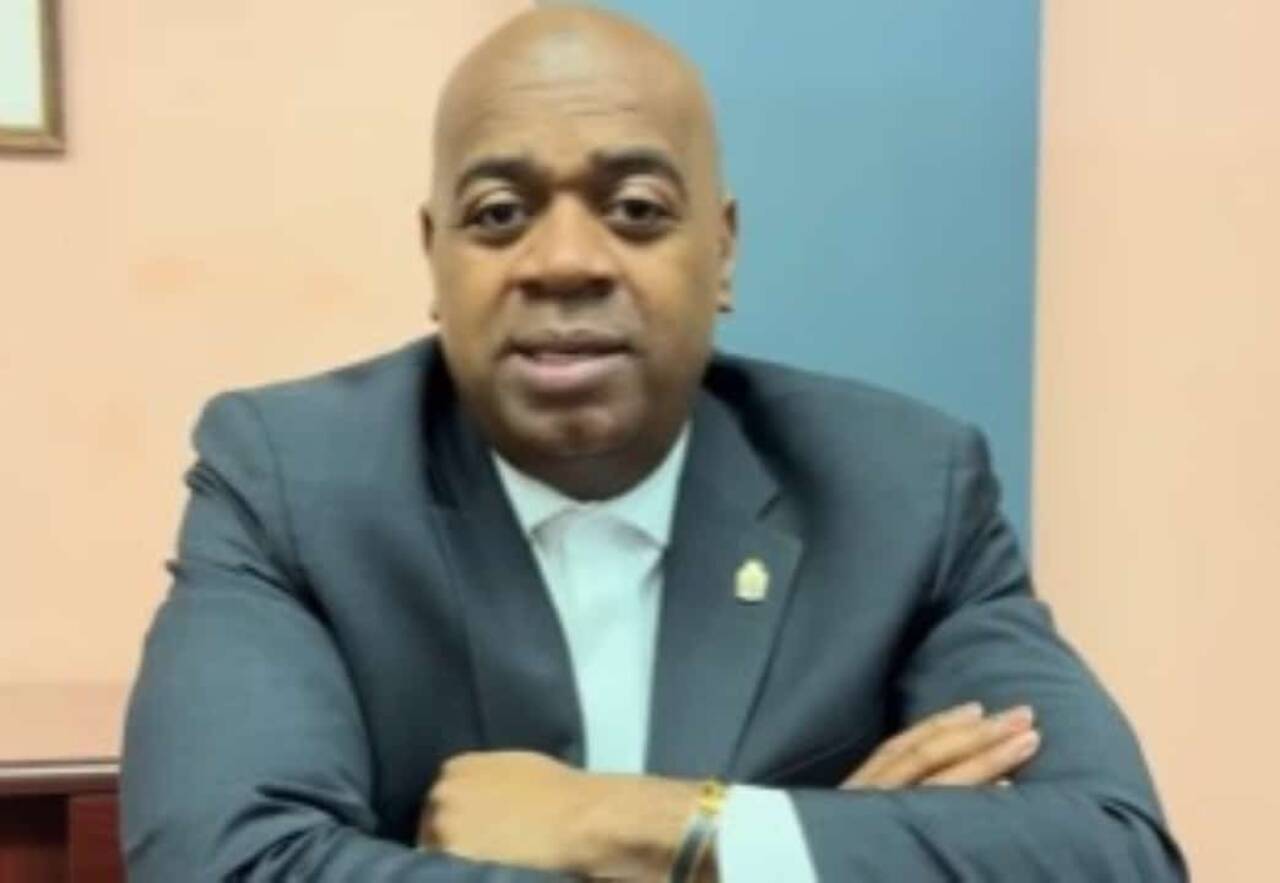
On the morning of Friday, May 9, 2025, Newark, New Jersey, became the focal point of a heated clash between local and federal authorities. Mayor Ras Baraka, a prominent Democrat and gubernatorial candidate, was arrested on charges of trespassing at a U.S. Immigration and Customs Enforcement (ICE) detention facility known as Delaney Hall. Operated by the private GEO Group, the facility recently reopened to house up to 1,000 detainees, sparking outrage among city officials and activists. The arrest, which occurred in the presence of several U.S. House Democrats, underscored deep divisions over immigration policy in the state.
The incident unfolded when Baraka, accompanied by a congressional delegation, attempted to inspect the Delaney Hall facility. Newark’s administration has argued that the center operates without proper permits, violating local safety and building codes. Tensions escalated after Baraka disregarded warnings from Department of Homeland Security (DHS) officials to vacate the premises, leading to his detention. Alina Habba, the interim U.S. attorney for New Jersey, announced the arrest in a post on X, emphasizing that “no one is above the law.”
🚨BREAKING: The Mayor of Newark, Ras Baraka, has been taken into custody https://t.co/ZW0SBvkwdS
— Autism Capital 🧩 (@AutismCapital) May 9, 2025
Delaney Hall’s reopening has reignited debates about the role of private detention centers in U.S. immigration policy. Newark, a city with a strong tradition of advocating for immigrant rights, has actively opposed the facility’s operations, which previously served as a detention center from 2011 to 2017. The involvement of federal lawmakers, including Rep. Bonnie Watson Coleman, highlighted the case’s significance on both state and national stages.
- Protest context: Baraka has led opposition to Delaney Hall since its reopening was announced in February 2025.
- Legal action: The city filed a lawsuit in March to halt operations, citing permit violations.
- Political fallout: The arrest coincides with Baraka’s gubernatorial campaign, amplifying immigration debates.
Responses to Baraka’s arrest
The arrest of Ras Baraka triggered swift reactions across Newark and beyond. Community leaders and immigrant rights advocates rallied behind the mayor, describing the detention as an attempt to silence local resistance to federal immigration policies. Make the Road New Jersey, a prominent advocacy group, condemned ICE’s actions, arguing that Delaney Hall’s operations threaten the city’s immigrant communities.
In contrast, interim U.S. Attorney Alina Habba, appointed by President Donald Trump, defended the arrest, asserting that Baraka broke the law by entering the facility without authorization. Habba’s X post, which garnered significant attention, reinforced a narrative of strict law enforcement regardless of political status. As a former Trump attorney, Habba’s involvement added a polarizing dimension to the controversy.
The presence of U.S. Representatives Bonnie Watson Coleman, Rob Menendez, and LaMonica McIver at the facility further complicated the situation. Coleman, in an X post, stated that the delegation was exercising congressional oversight to investigate the center’s conditions. She reported physical altercations between ICE agents and members of the group, which heightened tensions during the confrontation.
Background of Delaney Hall
Located near Newark Liberty International Airport, Delaney Hall has a contentious history. Managed by the GEO Group under a 15-year, $1 billion contract with ICE, the facility operated as an immigrant detention center from 2011 to 2017. Its reopening in 2025 aligns with the Trump administration’s push for mass deportations, quadrupling ICE’s detention capacity in New Jersey.
The facility’s strategic location facilitates deportations, but Newark officials argue that the GEO Group failed to secure necessary permits, including a valid certificate of occupancy and fire safety approvals. In April 2025, the Baraka administration issued a stop-work order, which the company ignored. The city’s legal efforts to block the center’s operations have met resistance from federal authorities and the GEO Group.
- Capacity: Delaney Hall can house up to 1,000 detainees daily.
- Contract: The GEO Group’s $1 billion deal with ICE spans 15 years.
- Location: The facility is less than 2 miles from Newark’s airport.
- History: It served as a detention center from 2011 to 2017.
Ongoing legal battle
The dispute between Newark and the GEO Group has unfolded in courtrooms and public forums. In March 2025, the city filed a lawsuit in Essex County Superior Court, alleging that Delaney Hall operates illegally due to non-compliance with municipal regulations. The suit highlights issues such as the lack of an approved fire evacuation plan and unauthorized renovations.
The GEO Group counters that it holds a previously issued certificate of occupancy and meets all federal contractual obligations. The company has accused Baraka of exploiting the issue for political gain in his gubernatorial campaign. In a statement, the GEO Group emphasized that Delaney Hall will create “hundreds of unionized jobs” and boost the local economy.
The case raises broader questions about federal versus local authority. Baraka has vowed to escalate the fight to the U.S. Supreme Court if necessary, underscoring Newark’s commitment to protecting its residents. Meanwhile, city officials have repeatedly attempted to serve the GEO Group with citations, including on May 7 and 8, but were denied access to the facility.
Community mobilization
The reopening of Delaney Hall has galvanized activists and advocacy groups in Newark. On May 7, approximately 50 protesters, organized by Resistencia en Acción, gathered outside the facility, chanting slogans like “Abolish ICE” and “People over profit.” The peaceful demonstration drew attention to the conditions in detention centers, with activists citing past violations at similar facilities, such as the nearby Elizabeth Detention Center.
Local residents have voiced concerns about the facility’s impact on their neighborhoods. Many fear that a large detention center will deter undocumented immigrants from accessing public services like healthcare and education due to heightened deportation fears. Community leaders, including Ana Paola Pazmino of Resistencia en Acción, have criticized the privatization of detention centers, arguing that companies like the GEO Group prioritize profits over detainees’ well-being.
- Protests: Regular demonstrations have occurred since the reopening announcement.
- Advocacy groups: Make the Road and Resistencia en Acción lead the opposition.
- Community concerns: Residents worry about increased policing and economic impacts.
- Conditions: Reports from other facilities cite issues like contaminated water and inadequate medical care.
Role of federal lawmakers
The involvement of U.S. Representatives during the May 9 incident elevated the issue’s political stakes. Bonnie Watson Coleman, a leading Democratic voice in New Jersey, spearheaded the delegation’s visit to inspect Delaney Hall’s conditions. Coleman argued that the facility’s operations violate local ordinances and pose risks to human rights.
Rob Menendez and LaMonica McIver, also present, reported physical confrontations with ICE agents during negotiations to include Baraka in the inspection. The lawmakers maintain that congressional oversight is critical to ensuring that facilities like Delaney Hall meet basic standards of safety and dignity. Their participation could broaden the debate to the national level, particularly amid the Trump administration’s immigration crackdown.
State political dynamics
Baraka’s arrest comes at a pivotal moment in his campaign for New Jersey governor, with Democratic primaries set for June 2025. Running on a progressive platform, Baraka has emphasized immigrant rights and opposition to mass deportations. His stance on Delaney Hall has solidified support among progressive voters but drawn criticism from opponents who accuse him of politicizing the issue for electoral gain.
The case also highlights tensions between state and federal authorities. New Jersey, a state with robust immigrant protection policies, passed a 2021 law banning contracts between detention operators and ICE. However, a 2023 federal court ruling weakened this legislation, allowing private companies like the GEO Group to resume operations. Delaney Hall’s reopening tests the limits of local governments’ autonomy in the face of federal immigration policies.
National reactions
Baraka’s arrest reverberated beyond New Jersey, drawing responses from national Democratic leaders. Senators Cory Booker and Andy Kim, who have previously criticized ICE operations in Newark, called for immigration system reforms. Booker emphasized that facilities like Delaney Hall “sow fear” in communities rather than enhance security.
Supporters of the Trump administration, including White House Press Secretary Karoline Leavitt, defended the facility’s role. Leavitt described Delaney Hall as critical to fulfilling Trump’s pledge for “the largest deportation operation in history.” She noted that ICE detained 538 immigrants in a single day in May 2025, including alleged criminals, as part of its nationwide strategy.
- Democratic support: Leaders like Booker and Kim advocate for immigration reform.
- Federal stance: The Trump administration views Delaney Hall as key to deportations.
- Detentions: ICE reported 538 arrests in one day, escalating operations.
Detention conditions debate
The reactivation of Delaney Hall has renewed scrutiny of conditions in immigrant detention centers. Activists highlight that private facilities, such as those run by the GEO Group and CoreCivic, often face allegations of human rights violations. At the Elizabeth Detention Center in New Jersey, detainees have reported issues like contaminated water, soiled uniforms, and limited access to medications.
While detailed reports on Delaney Hall’s current conditions are pending, opposition from Baraka and federal lawmakers centers on concerns about detainee and staff safety. The lack of an approved fire evacuation plan, for instance, has been flagged as a critical deficiency. Newark plans to intensify inspections to ensure compliance with safety regulations.
Local workforce perspective
The reopening of Delaney Hall has sparked discussions about its economic implications. The GEO Group contends that the facility will generate hundreds of unionized jobs, benefiting Newark’s economy. The company has promised employment opportunities for security personnel, healthcare workers, and administrative staff, with a focus on local hiring.
However, community leaders question whether these economic benefits outweigh the social costs. Residents in neighborhoods like Ironbound, where Delaney Hall is located, worry that the facility will increase police presence and harm local businesses. The center’s proximity to Newark’s airport also raises concerns about traffic and deportation logistics.
- Jobs: The GEO Group projects hundreds of unionized positions.
- Criticism: Locals fear negative impacts on businesses and communities.
- Logistics: The airport’s proximity aids deportations but concerns residents.