

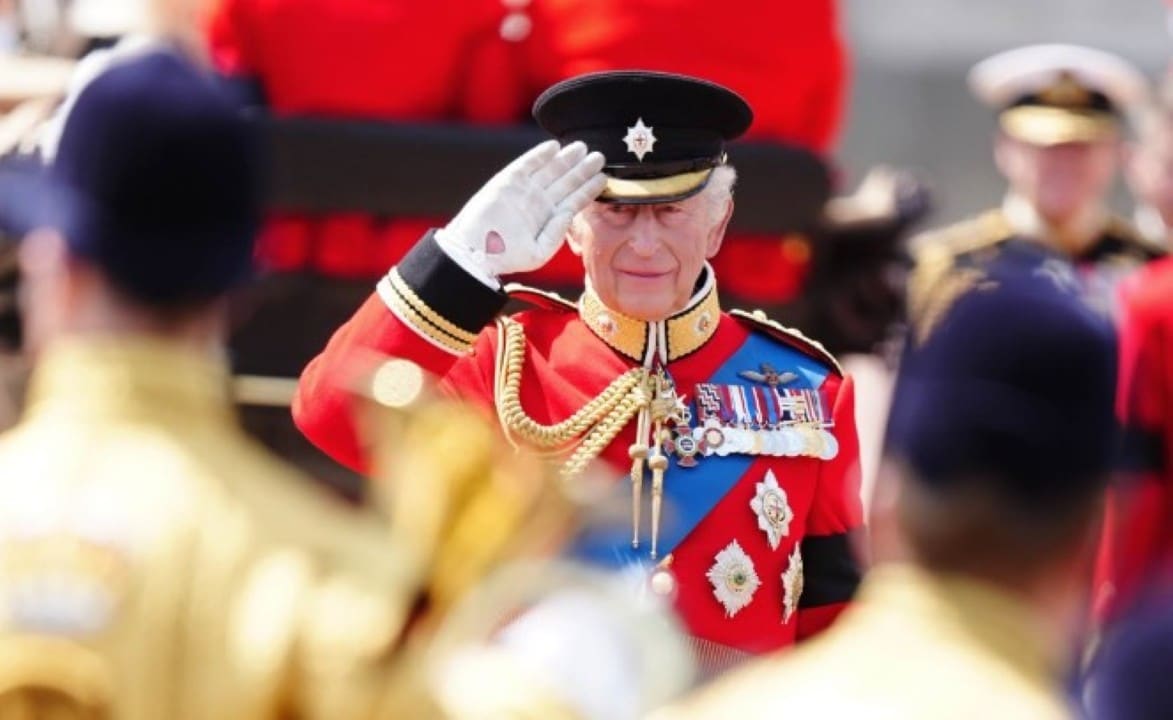
On 14 June 2025, London hosted the Trooping the Colour, a historic military parade celebrating the official birthday of King Charles III, despite his actual birth on 14 November 1948. Held at Horse Guards Parade, the event drew over 1,400 soldiers, 200 horses, and 400 musicians, captivating thousands of spectators in the streets and millions via the BBC’s global broadcast. Charles III, joined by Queen Camilla, the Princess of Wales Kate Middleton, Prince William, and their children, took centre stage, upholding a cherished British monarchy tradition. The ceremony, featuring a Royal Air Force flypast, showcased the royal family’s unity amid health challenges faced by the King and Kate. Under partly cloudy skies with temperatures around 18°C, the parade honoured Charles III’s 76th year with grandeur and military precision.
The custom of observing the monarch’s official birthday in June, established over 260 years ago, ensures favourable weather for the outdoor event. In 2025, the parade marked Charles III’s third as king, following his ascension in 2022 after Queen Elizabeth II’s passing. Kate Middleton’s presence, her second public appearance of the year, and the participation of Princes George, Charlotte, and Louis, brought a familial warmth to the formal proceedings.
- Key event moments:
- Charles III’s attendance despite ongoing health treatment.
- Kate Middleton’s return, following her cancer recovery.
- A 34-aircraft flypast, featuring the Red Arrows.
Roots of the dual birthday tradition
The tradition of celebrating two birthdays began with King George II in 1748, who chose June for a public celebration due to milder weather, as his birthday fell in November. This practice has persisted, with monarchs marking their actual birthday privately and the official one with the Trooping the Colour, except during national mourning or crises. Originally a military ritual to display regimental colours, the parade has become a national spectacle blending heritage and pageantry.
In 2025, Charles III opted to attend in a carriage rather than on horseback, a adjustment due to his cancer treatment, which began in 2024. This choice underscored his commitment to royal duties despite medical challenges. Queen Camilla, by his side, wore an emerald-green dress, reflecting her role as honorary Colonel of the Rifles Regiment.
The parade featured historic regiments, such as the Irish Guards, led honorarily by Kate Middleton. With vibrant flags and meticulous drills, it drew 8,000 ticketed spectators and thousands more along The Mall.
Kate Middleton’s prominent role
The Princess of Wales, Kate Middleton, was a focal point of the Trooping the Colour. Diagnosed with cancer in March 2024, she underwent treatment and limited public appearances. Her participation, confirmed just two days prior, followed a statement noting her recovery progress, though she remains under medical supervision. As honorary Colonel of the Irish Guards, Kate inspected troops before the parade, a duty prepared through rehearsals at Kensington Palace.
Dressed in a white Jenny Packham gown with navy accents, Kate rode in a carriage with her children, George, Charlotte, and Louis. Her poised presence and warm interactions with troops and spectators reinforced her enduring appeal. British media, treading carefully after earlier health-related speculation, praised her resilience as a boost for the monarchy.
Young royals in the spotlight
The children of William and Kate played active roles. George, 11, second in line to the throne, joined his mother in inspecting troops, showing growing ease with protocol. Charlotte, 10, displayed composure in a navy dress echoing Kate’s style. Louis, 7, delighted crowds with lively waves and expressions, stealing the show.
- Children’s contributions:
- George: Engaged in inspections, preparing for future duties.
- Charlotte: Maintained elegance, complementing her mother’s look.
- Louis: Captivated onlookers with animated gestures.
- Early training: All three are guided for public roles from a young age.
Their involvement highlights William and Kate’s efforts to ready them for royal responsibilities. Enrolled at Lambrook School in Berkshire, the children balance education with select public appearances to acclimate to their roles.
Military precision of the parade
The Trooping the Colour is a masterclass in military coordination, orchestrated by the British Army. In 2025, it featured five regiments of the Household Division, including the Scots and Welsh Guards. Each unit showcased its “colours”—flags symbolising their legacy. The parade commenced at 10:00, with troops marching from Buckingham Palace to Horse Guards Parade.
The Royal Air Force flypast at 13:00, featuring 34 aircraft, including Typhoon jets and the Red Arrows, was a highlight, painting the sky with vibrant trails. Security, bolstered by 2,000 police officers, ensured safety. Tickets for the stands, priced between £15 and £50, sold out weeks in advance.
William and Camilla’s presence
Prince William, honorary Colonel of the Welsh Guards, rode horseback, leading part of the parade. His ceremonial red uniform with gold accents embodied royal tradition, underscoring his role as future king. William’s leadership during the event highlighted his readiness to uphold the monarchy’s legacy.
Queen Camilla, in a carriage with Charles III, added elegance with her emerald-green attire. Her interactions with the crowd during the Buckingham Palace balcony appearance reinforced her growing prominence. Camilla’s vibrant style contrasted the parade’s formality, drawing attention to her supportive role.
Historical weight of the event
The Trooping the Colour is more than a ceremony; it’s a symbol of monarchical continuity. Held annually, except during wars or mourning, it reinforces British identity and attracts global tourists. In 2025, the presence of Charles III and Kate, both navigating health issues, underscored the monarchy’s resilience.
The event also celebrates the Commonwealth, with flags from nations like Australia and Canada displayed along the route. The BBC’s broadcast, viewed in over 50 countries, peaked in Commonwealth nations, reflecting the monarchy’s global reach.
Organisational feat
Staging the Trooping the Colour demands months of preparation. In 2025, 1,400 soldiers trained extensively for flawless drills. The 200 horses of the Household Cavalry were groomed for parade formation, while 400 musicians rehearsed anthems like “God Save the King”.
The route, adorned with Union Jack and Commonwealth flags, was inspected for safety. Approximately 2,000 police officers, supported by drones and cameras, secured the area. The British Army’s meticulous planning ensured a seamless event, captivating attendees and viewers.
Fascinating facts about the tradition
- Military origins: The parade began in the 17th century to familiarise soldiers with regimental flags.
- Featured regiment: In 2025, the Irish Guards, led by Kate, took centre stage.
- Global audience: The BBC’s coverage reaches about 10 million viewers across 50 countries.
- Royal adaptation: Charles III’s carriage use reflected health considerations.
Fashion on display
Fashion was a highlight. Kate Middleton’s white Jenny Packham dress, paired with a navy hat and pearl earrings, channelled Princess Diana’s elegance. Camilla’s emerald-green gown stood out, while Charlotte’s navy dress mirrored her mother’s style.
William, in his ceremonial uniform, and George, in a blue suit, adhered to traditional sobriety. The family’s light tones aligned with the custom of refined elegance for daytime royal events, earning media praise for their cohesive style.
Unity of the royal family
The collective appearance of Charles III, Camilla, William, Kate, and their children at the Trooping the Colour projected a united monarchy. The event, drawing thousands of tourists and extensive media coverage, showcased the royal family’s ability to uphold traditions amid challenges. The Buckingham Palace balcony moment, with the family waving to cheering crowds, encapsulated national pride and royal connection.