Mahmoud Ahmadinejad, former president of Iran, narrowly escaped an assassination attempt on July 15, 2025, during a trip to the city of Zanjan in northwestern Iran. The incident, reported by the London-based Iran International broadcaster, involved sabotage of his primary vehicle, a Toyota Land Cruiser, which had its air conditioning tampered with. The plot was discovered in time by the head of security, who advised switching vehicles, averting a potential tragedy. The case, only made public five days later, raises questions about the safety of political figures in Iran and possible political motivations behind the attack. The trip was for a Muharram religious mourning ceremony, a sacred period for Shia Muslims.
The foiled attack occurred amid political tensions in Iran, where Ahmadinejad, known for his hardline stance during his presidency from 2005 to 2013, remains a controversial figure. The discovery of the vehicle issue was critical to the former president’s survival, as he was not in the SUV at the time of the crash. Iranian media reported that the car lost control on the Karaj-Qazvin highway, collided with another vehicle in the convoy, and stopped after hitting a third car. One passenger was injured and required hospital treatment.
The severity of the incident was underscored by reports that, two days before the trip, the Toyota Land Cruiser had been sent for repairs due to air conditioning issues. However, instead of being taken to the usual workshop, the vehicle was seized by “special security agents” and taken to an unknown location. After being returned, the security team was assured the issue was resolved, raising suspicions of sabotage.
- Incident details: The attack occurred on the night of July 15 during a trip to Zanjan.
- Vehicle involved: A Toyota Land Cruiser, typically used by Ahmadinejad.
- Security action: The head of security noticed the air conditioning malfunction and advised a vehicle switch.
- Consequences: One injured passenger and a damaged vehicle after collisions.
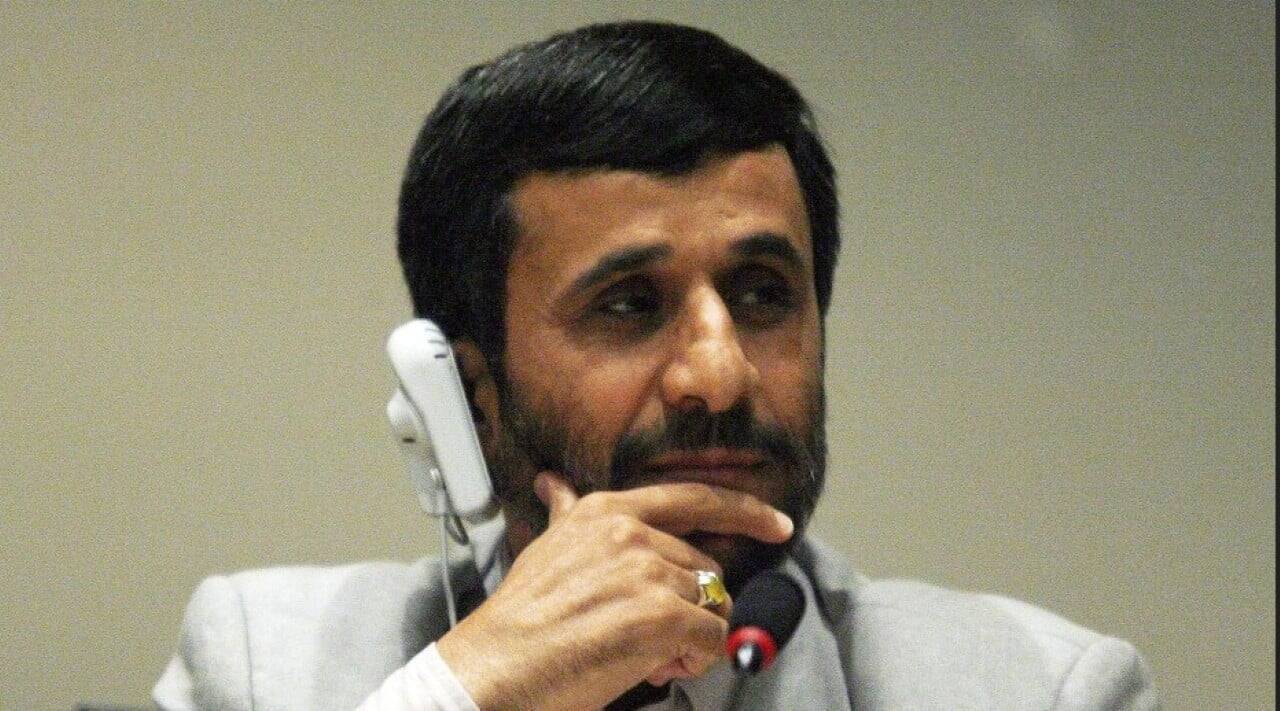
Security on high alert before the attack
Ahmadinejad’s security team had been monitoring suspicious activities targeting the former president. In the previous year, 2024, his office had warned military and security authorities about potential threats to his life. In March 2021, Ahmadinejad himself publicly mentioned the possibility of an assassination plot, suggesting it could be attributed to third parties to deflect suspicion. These precedents reinforce the notion that the former president was a potential target, whether due to his political stances or internal rivalries in Iran.
Ahmadinejad’s history as a polarizing figure contributes to the risk environment. During his presidency, he gained notoriety for statements against Israel, Holocaust denial, and staunch defense of Iran’s nuclear program. These positions put him at odds with Western leaders and even conservative factions within Iran, particularly after his 2009 reelection, marked by massive protests and allegations of electoral fraud.
Political landscape in Iran
The foiled attack on Ahmadinejad comes at a delicate moment for Iran. Following the death of President Ebrahim Raisi in a helicopter crash in May 2024, the country underwent a political transition, with presidential elections scheduled for June of that year. Ahmadinejad, who attempted to run for office, was disqualified by the Guardian Council, the body responsible for approving candidacies. The decision reignited debates about his influence in Iran’s political scene, where he still retains support among conservative sectors and less privileged classes.
Ahmadinejad’s relationship with Supreme Leader Ayatollah Ali Khamenei is also a relevant factor. While Khamenei supported his 2009 reelection, the two clashed in subsequent years, particularly after Ahmadinejad publicly questioned the supreme leader’s authority. This stance distanced him from parts of the conservative establishment but did not eliminate his political relevance, which may explain attempts to silence him.
Ongoing investigation
Iranian authorities have launched an investigation to uncover the circumstances of the attack. So far, no official information has been released about those responsible or the motivations behind the sabotage. The lack of transparency regarding the identity of the “special security agents” who seized the vehicle before the incident fuels speculation. Iran International sources suggest that senior members of the Islamic Revolutionary Guard Corps (IRGC) could have the authority to carry out such an operation without coordination with the Ansar Protection Corps, the paramilitary organization responsible for securing public figures in Iran.
- Points under investigation:
- Identity of the agents who took the vehicle to an unknown location.
- Possible involvement of political or military factions.
- Motivations, which may range from internal disputes to external interests.
- Security failures that allowed the sabotage.
The absence of an official government statement on the case keeps the public in the dark. The delay in reporting the incident, which was only disclosed five days later, also raises questions about the authorities’ handling of the crisis.
History of threats against Ahmadinejad
This is not the first time Ahmadinejad has faced security threats. In 2018, he was accused of inciting protests against the government, sparking rumors of his arrest, later debunked. His critical stance toward Hassan Rouhani’s government and even Khamenei put him in a vulnerable position, especially after leaving the presidency in 2013. Additionally, his attempts to return to politics, with rejected candidacies in 2017, 2021, and 2024, heightened tensions with regime factions.
During his tenure, Ahmadinejad also faced international criticism, particularly for antisemitic remarks and for defying sanctions imposed on Iran over its nuclear program. These positions made him a hated figure in some circles but a symbol of resistance for others, which may have contributed to the hostile environment surrounding him.
Reactions in Iran and abroad
The foiled attack received limited coverage in Iran, where state media avoided highlighting the case. Iran International, operating outside the country, was the primary source of information, reflecting the censorship imposed on sensitive news in Iran. On social media, however, the incident gained traction, with speculation about the involvement of internal factions or even foreign intelligence services, such as Israel’s Mossad. These theories, however, lack concrete evidence.
Internationally, the news was met with caution. Countries like the United States and Israel, which historically have tense relations with Iran, did not comment officially on the case. Human rights organizations, on the other hand, seized the incident to highlight the deteriorating safety for public figures in Iran, where dissidents and former leaders often face threats.
Role of the Revolutionary Guard
The possible connection to the Islamic Revolutionary Guard Corps is one of the most intriguing aspects of the case. The IRGC, one of Iran’s most powerful institutions, controls vast sectors of the country’s economy and politics. Its influence has grown in recent years, particularly after suppressing protests in 2009 and 2022. The lack of coordination with the Ansar Protection Corps, responsible for Ahmadinejad’s security, suggests the sabotage may have been planned by a group with privileged access.
The IRGC has been linked to controversial operations, including assassinations of dissidents abroad. The possibility of its involvement in the attack on Ahmadinejad would fuel theories that the former president is seen as a threat by regime factions, particularly due to his attempts to return to politics.
Trip to Zanjan and religious symbolism
Ahmadinejad’s trip to Zanjan aimed to attend the Muharram ceremony, one of the most significant events in the Shia calendar. The mourning period, marking the martyrdom of Imam Hussein, is observed with processions and rituals across Iran. Ahmadinejad’s presence at a religious event reinforces his image as a leader aligned with Islamic traditions, a narrative he cultivated during his presidency.
The choice of Zanjan as a destination is also noteworthy. Located about 300 kilometers from Tehran, the city is an important center for Iranian Shiites. The assassination attempt during an event of such cultural and religious significance may have been planned to maximize symbolic impact had it succeeded.
Ahmadinejad’s political future
Despite his disqualification in the 2024 elections, Ahmadinejad has not abandoned his political ambitions. He continues to position himself as a defender of social justice and Iranian sovereignty, themes that resonate with his supporter base. The foiled attack may strengthen his narrative of being a victim of persecution, a tactic he has used in the past to mobilize sympathizers.
On the other hand, the incident exposes the fragility of his position in Iran. Without the support of the conservative establishment and with enemies in various sectors, Ahmadinejad faces an uncertain path. His survival of the attack may serve as a reminder of his resilience but also as a sign of the risks he faces in maintaining political relevance.
Silence from authorities
The lack of a clear statement from the Iranian government reflects the complexity of the country’s political landscape. The silence may be an attempt to avoid speculation or protect sensitive information during the investigation. However, it also raises doubts about the authorities’ ability to ensure the safety of public figures, particularly those who challenge the status quo.
The ongoing investigation will be crucial to clarifying the details of the attack. Until then, the case remains shrouded in mystery, with implications that extend beyond Ahmadinejad’s personal safety, touching on the power dynamics and rivalries shaping contemporary Iran.