Oscar Piastri led the third free practice session for the Hungarian Grand Prix, held this Saturday, August 2, at the Hungaroring circuit in Budapest. With a lap time of 1m14s916, the McLaren driver outpaced his teammate Lando Norris by just 0.032 seconds, solidifying the British team’s dominance in the 14th round of the 2025 season. Ferrari’s Charles Leclerc completed the top 3, while Brazilian Gabriel Bortoleto, from Sauber, surprised by securing 9th place, ahead of experienced names like Max Verstappen. The session, which precedes the qualifying scheduled for 11 a.m. (Brasília time), highlighted McLaren’s strong form and Bortoleto’s progress in his debut season. The race, the last before the Formula 1 summer break, promises intense battles on a technical and demanding track.
McLaren confirmed their strength at Hungaroring, replicating their commanding performance from previous sessions. Piastri and Norris, who led Free Practice 1 and 2 on Friday, maintained their impressive pace with consistent times across different tire compounds. Ferrari, meanwhile, showed competitiveness with Leclerc, who tested suspension upgrades introduced in Belgium, capitalizing on the characteristics of the shorter, low-speed corner-heavy Hungarian track.
- Key highlights from FP3:
- Oscar Piastri set the fastest time (1m14s916), leading for the first time this weekend.
- Lando Norris was just 0.032 seconds behind, reinforcing McLaren’s strength.
- Gabriel Bortoleto, in his rookie season, surprised with a 9th-place finish.
- Max Verstappen, from Red Bull, had a subdued performance, finishing 12th.
Bortoleto, who showed improvement from Friday’s sessions, made the most of soft tires to break into the top 10, even outperforming his more experienced teammate, Nico Hulkenberg. The Brazilian’s performance signals steady adaptation to Formula 1, particularly on a circuit where mechanical grip is crucial.
McLaren solidifies favoritism at Hungaroring
McLaren heads into the Hungarian GP as the team to beat, with Piastri and Norris dominating all free practice sessions. The Hungaroring, dubbed the “F1 karting track” for its slow corners and twisty layout, favors cars with high downforce, like McLaren’s MCL38. Piastri, the championship leader with 266 points, displayed precision in setting the fastest FP3 time, while Norris, second in the standings with 250 points, kept the pressure on with consistent laps. The McLaren duo’s 1-2 finish in FP3 fuels expectations of an internal battle for pole position in qualifying.
The team’s performance is no surprise. Since the season began, McLaren has stood out for its consistency and aerodynamic upgrades that optimized the car for high-downforce tracks. At Hungaroring, where only 55% of the lap is spent at full throttle, traction and suspension setup are critical, and McLaren appears to have found the perfect balance. The tight 32-millisecond gap between Piastri and Norris suggests the team could repeat their 2024 success, when Piastri claimed his maiden career win in Hungary.
FP3 CLASSIFICATION
— Formula 1 (@F1) August 2, 2025
The full rundown from final practice ⬇️#F1 #HungarianGP pic.twitter.com/sVMQOrzHUp
Bortoleto surprises in the top 10
Sauber’s Gabriel Bortoleto was one of FP3’s standout performers. The Brazilian rookie, finishing 9th with a time 1.062 seconds off the leader, showed significant improvement from Friday’s 19th and 17th places. Using soft tires, Bortoleto posted competitive laps, briefly climbing to 5th during the session. His performance in FP3 reflects growing confidence and adaptation, especially after scoring points in the recent Belgian GP.
- Factors contributing to Bortoleto’s performance:
- Effective use of soft tires, providing better grip in slow corners.
- Sauber’s setup tweaks, optimized for Hungaroring’s layout.
- Increased driver confidence, with Bortoleto noting he drove with “calmness and focus.”
- Competitiveness against Hulkenberg, his more experienced teammate.
Sauber, still seeking consistency this season, appears to have found a promising setup for Hungary. Bortoleto, who expressed renewed confidence before the GP, capitalized on the conditions to secure a top-10 spot, a notable achievement for a rookie on such a challenging track.
Ferrari maintains competitive pace
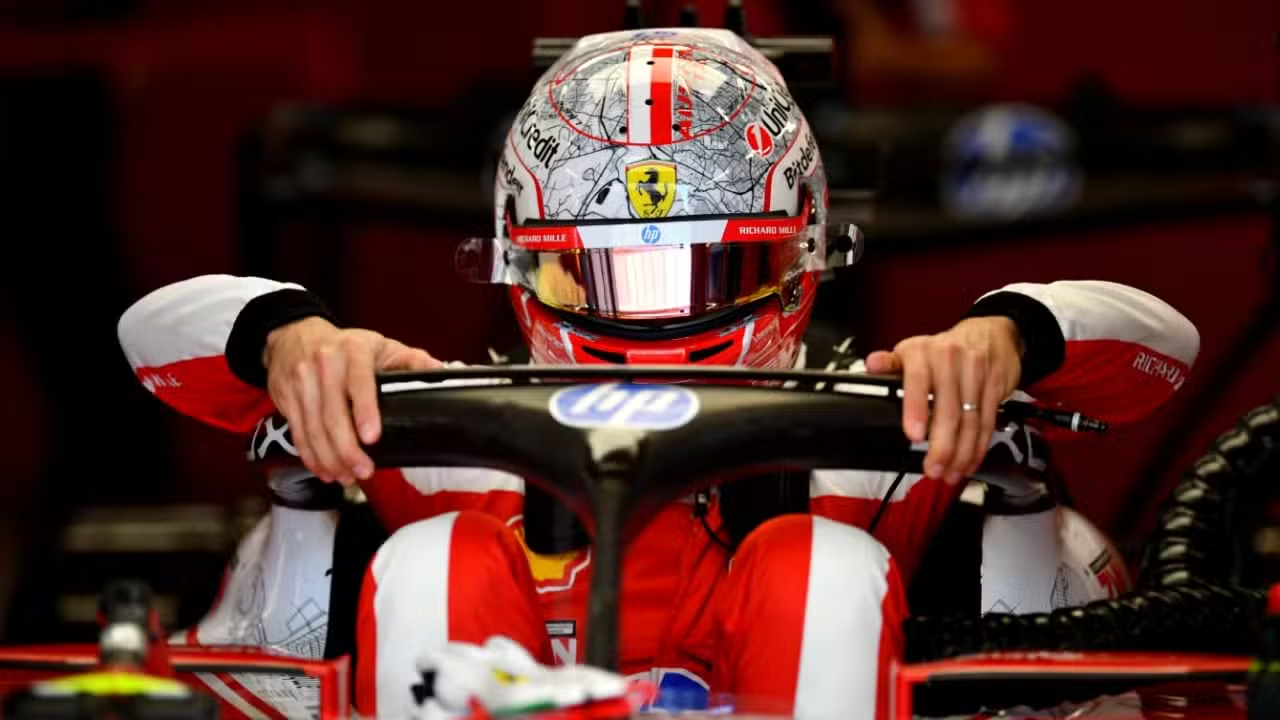
Charles Leclerc, from Ferrari, was another highlight in FP3, securing 3rd place with a lap 0.399 seconds slower than Piastri’s. The Italian team, which debuted a new suspension in Belgium, adapted well to Hungaroring’s demands. The track’s 14 corners and lack of long straights require strong mechanical grip, and Ferrari showed consistency throughout the weekend. Lewis Hamilton, now with Ferrari, finished FP3 in 4th, reinforcing the team’s strong form.
Ferrari has a strong history at Hungaroring, and Leclerc, who led moments in FP1 and FP2, emerges as a pole contender. The team is banking on the car’s stability in low-speed corners to challenge McLaren in qualifying. Hamilton, the track’s record holder with eight wins, remains a threat despite trailing the leader by 0.768 seconds in FP3.
Red Bull faces struggles
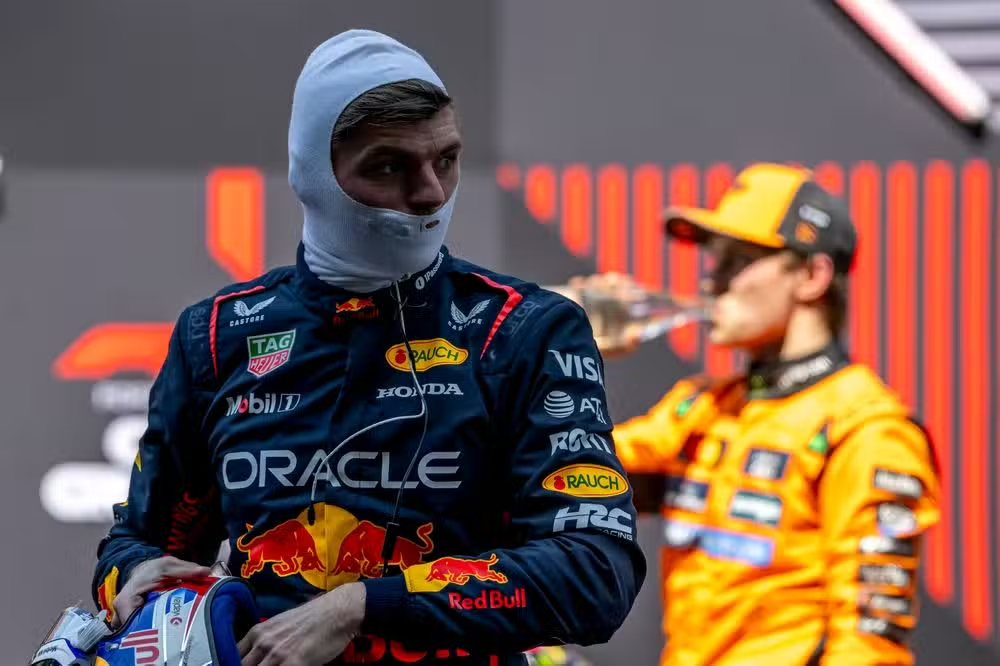
Max Verstappen, from Red Bull, underperformed in FP3, finishing 12th, 1.246 seconds behind Piastri. The four-time champion, who confirmed his stay with the team for 2026, struggled to find pace at Hungaroring. Red Bull, historically weaker on high-downforce tracks, failed to match the leaders, with Verstappen even trailing teammate Yuki Tsunoda, who finished 19th.
- Challenges faced by Red Bull in FP3:
- Lack of grip in slow corners, where the car loses performance.
- Less effective aerodynamic setup compared to McLaren and Ferrari.
- Subpar performance from Verstappen, who couldn’t extract the car’s full potential.
The session exposed Red Bull’s limitations on technical tracks like Hungaroring. Despite Verstappen’s third place in the championship with 185 points, the team needs significant adjustments to contend for a podium on Sunday.
History and significance of the Hungarian GP
The Hungarian Grand Prix, held since 1986, is one of Formula 1’s most traditional races. The Hungaroring, located 20 km from Budapest, is notorious for its difficulty in overtaking, making Saturday’s qualifying crucial. Lewis Hamilton holds the record with eight wins, followed by Michael Schumacher with four. Among current drivers, besides Hamilton, Max Verstappen, Fernando Alonso, Oscar Piastri, and Esteban Ocon have won in Hungary.
The 2025 race marks the final event before Formula 1’s summer break, resuming on August 31 with the Dutch GP. For teams, it’s the last chance to fine-tune before focusing on 2026 car development, when new regulations take effect. McLaren, leading the constructors’ championship, aims to solidify its advantage, while Ferrari and Mercedes look to close the gap.
- Facts about the Hungarian GP:
- The circuit was the first built specifically for F1, opened in 1986.
- Brazilians won the first three editions: Nelson Piquet (1986, 1987) and Ayrton Senna (1988).
- The track is likened to a “karting circuit” due to its slow corners and twisty layout.
- The last Brazilian win was by Rubens Barrichello in 2002, with Ferrari.
Expectations for qualifying
The qualifying session, set for 11 a.m. on Saturday, will be pivotal for the Hungarian GP grid. Based on FP3, McLaren is the favorite, but Ferrari and Mercedes have shown potential to challenge. Bortoleto’s strong performance could lead to another surprise, while Verstappen and Red Bull need a turnaround to avoid a lackluster weekend. The weather, with a 46% chance of rain on Saturday, may add unpredictability.
Hungaroring’s technical demands favor precise drivers and well-balanced cars. Tire choices, with soft and medium compounds dominating FP3, will shape strategies for both qualifying and the race. McLaren’s FP3 1-2 makes them the team to beat, but the tight gaps suggest the pole position is still up for grabs.