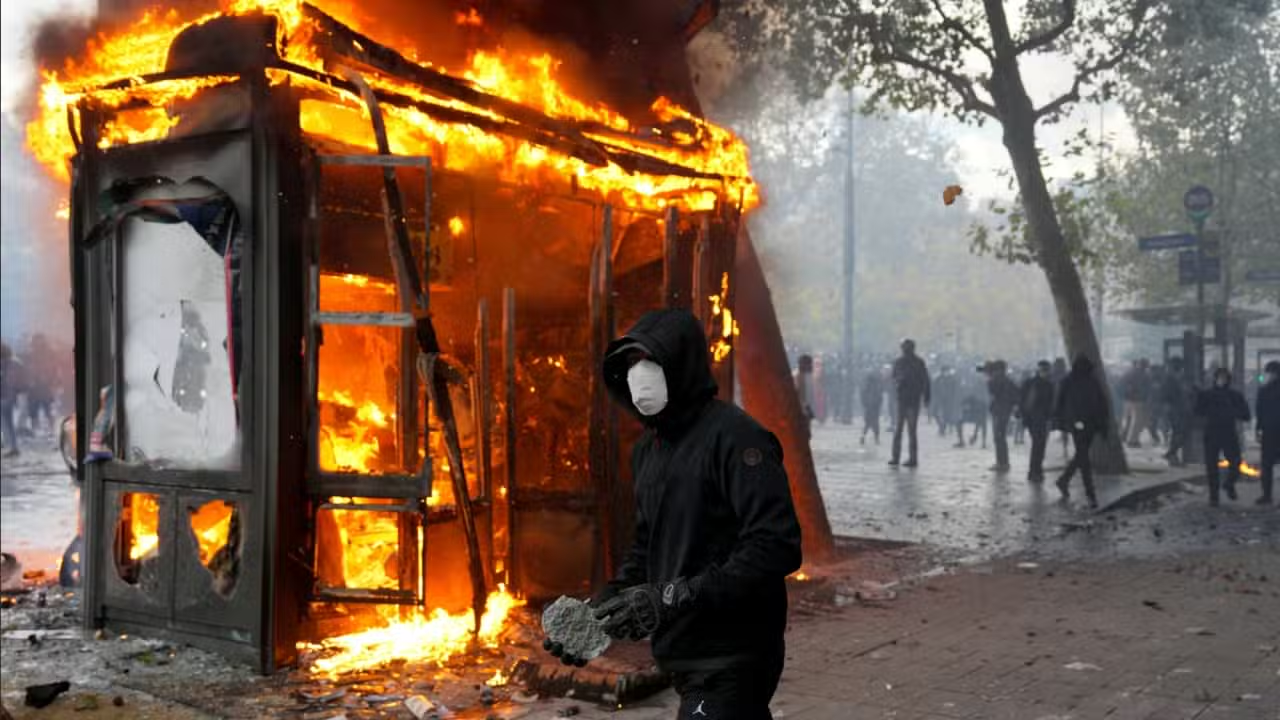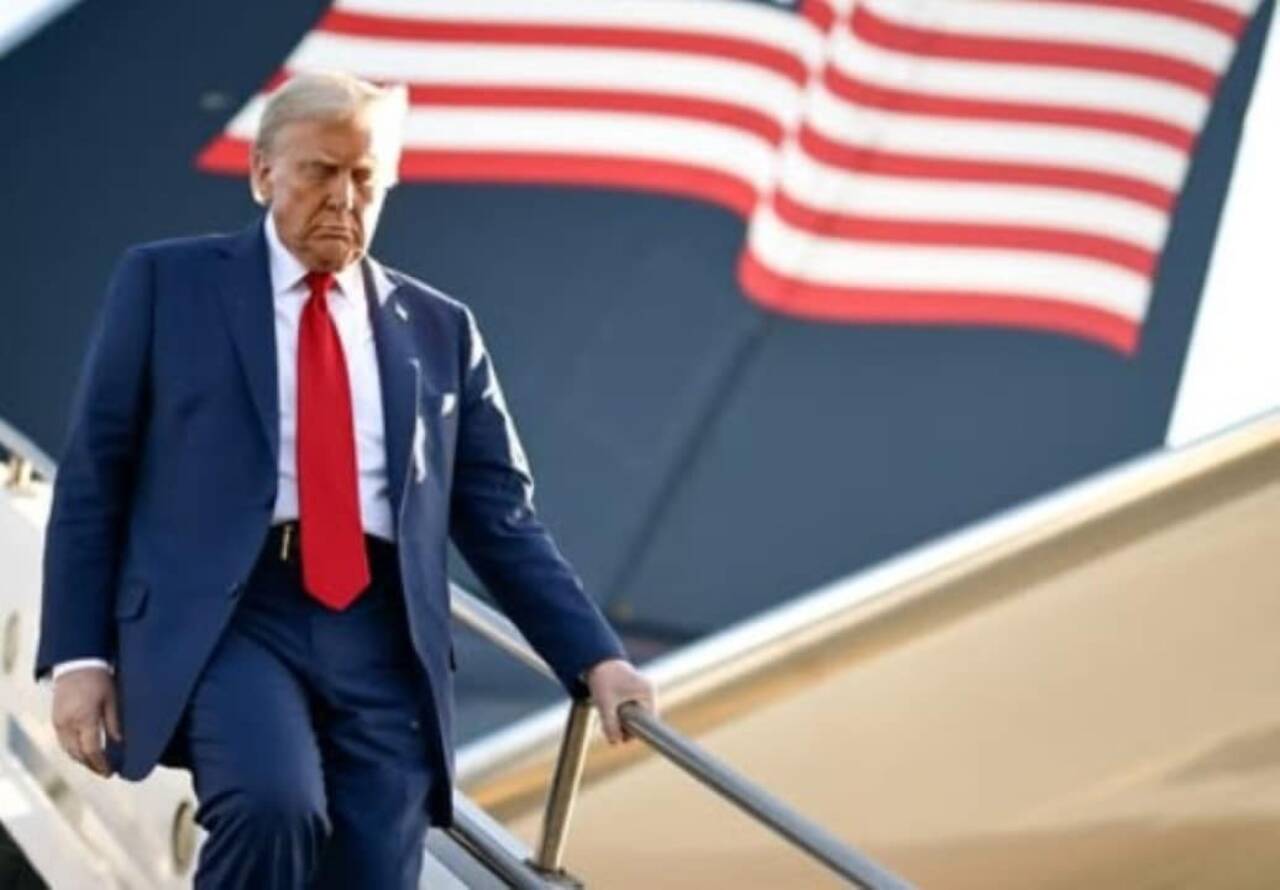
On August 11, 2025, U.S. President Donald Trump announced a federal intervention in Washington D.C.’s security, deploying approximately 800 National Guard troops to the capital. The measure, justified as a response to an alleged “security emergency” with rising crime, also aims to remove homeless individuals from the city. The action, which includes federal control of the local police for 30 days, is contested by Mayor Muriel Bowser and D.C. Attorney General Brian Schwalb, who deem it illegal. Despite Trump’s claims, official data show crime in the capital dropped in 2024, reaching its lowest level in 30 years. The intervention, backed by the Homerule Act, reignites debates over federal power and the rights of D.C.’s homeless population.
The decision follows months of Trump’s statements about the need to “clean” the capital. On Sunday, August 10, he demanded that homeless individuals leave Washington D.C. immediately, promising shelters outside the city. The action is seen as part of a broader agenda by the president, who has previously deployed troops to other cities, such as Los Angeles, in 2025.
- Intervention goal: Address crime and remove homeless, per Trump.
- Initial duration: 30 days, according to The New York Times.
- Legal basis: Homerule Act, allowing National Guard use in specific cases.
- Local context: Washington D.C. operates under a special administrative regime, with the mayor acting as a governor-like figure.
Reactions to federal intervention
Trump’s measure sparked strong opposition in Washington D.C. Mayor Muriel Bowser, a Democrat, denied the existence of a security crisis, emphasizing that crime rates have significantly dropped since 2023. Local police data show a 26% reduction in violent crime between 2023 and 2024, contradicting the president’s claims. Bowser stated the intervention is an attempt to centralize federal control over the capital, undermining local autonomy.
D.C. Attorney General Brian Schwalb called Trump’s intervention “unprecedented, unnecessary, and illegal.” He vowed to pursue all legal avenues to challenge the measure, arguing it violates the principles of the Homerule Act. The law, enacted to grant the district some autonomy, allows National Guard deployment only in cases of invasion, rebellion, or legal impediments, scenarios Schwalb says do not apply.
- Key criticisms: Violation of local autonomy and lack of factual justification.
- Contradictory data: 26% drop in violent crime in 2024.
- Legal action: District plans to challenge the intervention in court.
- Public reaction: Residents fear impacts on civil rights.
Civil society also reacted. Human rights organizations expressed concern over the forced removal of homeless individuals, who number over 5,600 in Washington D.C., according to the 2024 Department of Housing report. Activists argue the measure may worsen the vulnerability of this population without offering sustainable solutions.
Legal basis and National Guard deployment
Trump’s intervention relies on the Homerule Act, a federal law governing Washington D.C. Enacted in 1973, the act grants the district some autonomy but keeps Congress and the president with significant authority over the capital. Trump invoked the clause allowing National Guard use in emergencies like invasion, rebellion, or inability to enforce federal laws.
The National Guard, a hybrid force operating under state and federal command, has been used by Trump before. In 2025, over 2,000 troops were sent to Los Angeles to quell protests against anti-immigration policies, despite local resistance. In Washington, the 30-day federalization of the local police is seen as an escalation of executive power.
- National Guard role: Operates in state and federal missions.
- Legal basis: 1973 Homerule Act governs capital emergencies.
- History: Trump deployed National Guard in Los Angeles in 2025.
- Duration: Intervention set for 30 days initially.
Critics argue Trump’s interpretation of the Homerule Act is expansive and could set dangerous precedents. Constitutional law experts suggest the lack of a clear threat, such as invasion or rebellion, weakens the measure’s legality. The controversy is likely to reach the courts, with potential implications for federal-D.C. relations.

Homeless situation in Washington D.C.
The homeless issue is central to Trump’s intervention. According to the Department of Housing, Washington D.C. had about 5,600 homeless individuals in 2024, ranking 15th among major U.S. cities. Trump promised to provide shelters outside the city but offered no details on how or where these would be implemented.
Social assistance organizations criticized the approach, noting that forced removal does not address the structural causes of homelessness, such as economic inequality and lack of affordable housing. In 2023, the clearing of homeless encampments in McPherson Square sparked protests, with images of police confronting residents widely circulated in the media.
- Homeless population: 5,600 in 2024, per official data.
- Ranking: 15th among U.S. cities.
- Criticisms: Forced removal fails to address root causes.
- History: 2023 encampment clearances caused controversy.
Trump’s rhetoric, including terms like “liberating” the capital from “filth and scum,” has drawn criticism for dehumanizing vulnerable populations. Activists fear the intervention will intensify stigmatization and social exclusion.
Trump’s statements and political impact
Trump’s statements on the intervention reinforce his public safety agenda. In a Truth Social post, he declared that “Washington, D.C. will be LIBERATED today” and vowed to “make our capital great again.” The rhetoric echoes campaign promises, such as curbing illegal immigration, which he claims to have resolved with “zero illegal immigrants in the last three months.”
The intervention comes amid political polarization in the U.S. Mayor Bowser, a Democrat, represents direct opposition to Trump’s policies. Analysts see the measure as an attempt to consolidate federal control over the capital, which has historically been governed by Democrats locally.
- Trump’s post: Vow to “liberate” Washington D.C.
- Polarization: Conflict between federal and local governments.
- Political context: Trump pushes security agenda.
- Opposition: Mayor Bowser leads resistance to the measure.
The decision also reflects Trump’s strategy of using the National Guard in urban settings, as seen in Los Angeles. Resistance from governors and mayors suggests ongoing clashes between local and federal authorities.
Historical context of the intervention
Washington D.C. has a history of tensions between the federal government and local administration. The capital operates under a special regime, lacking the same rights as a state, which limits its autonomy. The Homerule Act was designed to grant more local power, but Congress and the president retain significant authority.
Federal interventions in the capital are rare but not unprecedented. During the 2020 protests, Trump deployed federal forces to suppress demonstrations, drawing criticism for excessive force. The current measure, targeting homelessness and crime, is seen as an expansion of this approach.
- Special regime: Washington D.C. lacks state status.
- History: Federal forces used in 2020 sparked controversy.
- Homerule Act: Grants autonomy with limitations.
- Precedent: Current intervention deemed “extraordinary.”
Trump’s action could influence other U.S. cities where he has shown interest in similar measures. The response from civil society and the courts will be critical in determining the intervention’s scope.
Next steps and developments
The 30-day intervention will be closely monitored by residents, authorities, and human rights organizations. The promise of shelters outside Washington D.C. raises questions about logistics and feasibility. The lack of details on the plan has fueled skepticism among experts, who demand transparency.
In the courts, the District of Columbia is expected to file lawsuits to challenge the measure’s legality. Attorney General Schwalb has signaled that all available resources will be used to protect local autonomy. The judicial outcome could set a significant precedent for the use of the Homerule Act in future interventions.
- Duration: 30 days, with possible extension.
- Legal actions: District to challenge intervention in court.
- Shelters: Relocation promise lacks details.
- Monitoring: Civil society tracks impacts.
The intervention also reignites the debate over homelessness in the U.S. Organizations advocate for long-term policies, such as affordable housing and social programs, over coercive measures. Pressure on the Trump administration is likely to grow as the intervention’s effects unfold.