Michael Schumacher, the seven-time Formula 1 world champion, dominated the sport with Ferrari from 2000 to 2004, setting records and earning a reputation as an unbeatable driver. However, on August 20, 2025, Gary Anderson, a former F1 designer for Jordan and Stewart, revealed a surprising weakness: Schumacher’s immediate reactions were merely average. Speaking on the podcast “Driving Style Secrets,” Anderson explained that tests by Ferrari and Formula Medicine showed Schumacher’s reflexes in race starts and high-risk situations were not exceptional. Instead, his extraordinary ability to anticipate events set him apart, reshaping how fans view his legacy. This insight, drawn from decades of data, sparks debate about what truly makes a driver elite.
The revelation challenges the belief that top-tier pilots rely on superhuman reflexes. Anderson, with years of experience in F1, emphasized that Schumacher’s strength lay in his predictive skills, not raw reaction speed.
- Key metrics: Tests on race starts and crash avoidance.
- Timeframe: Schumacher’s career, particularly the 1990s and 2000s.
- Comparison: Data from peers like Häkkinen and Senna.
This anticipation allowed Schumacher to stay ahead, making his moves seem lightning-fast despite average reflexes.
Schumacher’s unique F1 talent
Gary Anderson, who worked with Schumacher at Jordan in 1991, noted the German’s knack for foreseeing race scenarios. Ferrari tests showed he could read the track and rivals with unmatched precision, adjusting his driving to optimize performance. This foresight let him make split-second decisions, creating the illusion of rapid reflexes.
Schumacher’s strategic approach shone in high-stakes moments. In the 2000 Japanese Grand Prix, he outmaneuvered Mika Häkkinen after a tight start, using tactical vision to secure the lead and the championship. His ability to anticipate rival moves and track conditions was key to his dominance.
- Defining moments: Wins at Suzuka and Monaco.
- Strategy: Precise throttle and brake use for car stability.
- Impact: Five straight Ferrari titles (2000-2004).
This skill made him a master in complex circuits, where strategy trumped raw speed.
Tests show average reactions
Ferrari and Formula Medicine tests, spanning three decades, confirmed Schumacher’s reaction times were average. In start drills, his responses to visual and auditory cues matched those of mid-tier drivers. Anderson clarified that these tests measured raw reflex speed, where Schumacher didn’t stand out.
Yet, his mental preparation was exceptional. He studied tracks meticulously, memorizing layouts and rival patterns. During his 1991 Jordan debut at Silverstone, Schumacher stunned Anderson by posting competitive times in just a few laps, showcasing control and confidence.

Anticipation as the key to victory
Schumacher’s anticipation was evident in critical race moments. A 2003 F1 Racing telemetry analysis revealed his sensitive driving style, blending throttle and brake inputs to stabilize the car through corners. Unlike teammate Rubens Barrichello, Schumacher accelerated earlier out of turns, gaining crucial fractions of a second.
In Suzuka, his ability to take the first corner at full throttle shocked observers like Martin Brundle, who noted his unique approach. This precision gave him an edge in high-pressure races.
- Techniques: Simultaneous throttle and brake application.
- Suzuka advantage: Up to 25 km/h faster in tight corners.
- Barrichello comparison: 0.3 seconds quicker per turn.
- Adaptation: Real-time adjustments to manage overheating brakes.
This strategic brilliance made him nearly untouchable in key moments.
Debunking the reflex myth in F1
Anderson’s insight dispels the notion that elite drivers rely solely on reflexes. He compared Schumacher to Ayrton Senna and Max Verstappen, who also excelled through anticipation. In wet conditions, like the 2016 Brazilian Grand Prix, Verstappen mirrored Schumacher’s ability to find grip through instinct and track reading.
Formula Medicine data showed reaction speeds vary widely among champions. Anderson noted that drivers with slower reflexes but sharp cognitive skills often outperform those with faster reactions but less foresight.
- Drivers studied: Senna, Häkkinen, Alonso, Hamilton.
- Finding: Anticipation trumps reflexes in long races.
- Example: Schumacher’s strategic starts in Monaco (1994-2004).
Schumacher’s legacy redefined
Anderson’s revelation prompts a reevaluation of what defines a great driver. With 91 wins and seven titles, Schumacher’s career was built on mental acuity as much as skill. His time at Jordan, Benetton, and Ferrari showcased a driver who mastered both car and context, turning weaknesses into strengths.
In his 1991 Belgian Grand Prix debut with Jordan, Schumacher qualified seventh, outpacing teammate Andrea de Cesaris despite limited experience. Though he retired due to car issues, his debut hinted at his potential.
- Debut highlight: Seventh on the Spa-Francorchamps grid.
- Challenge: Minimal single-seater F1 experience.
- Preparation: Studied Spa’s layout on a folding bike.
- Legacy: First F1 win at Spa in 1992 with Benetton.
Influence on modern drivers
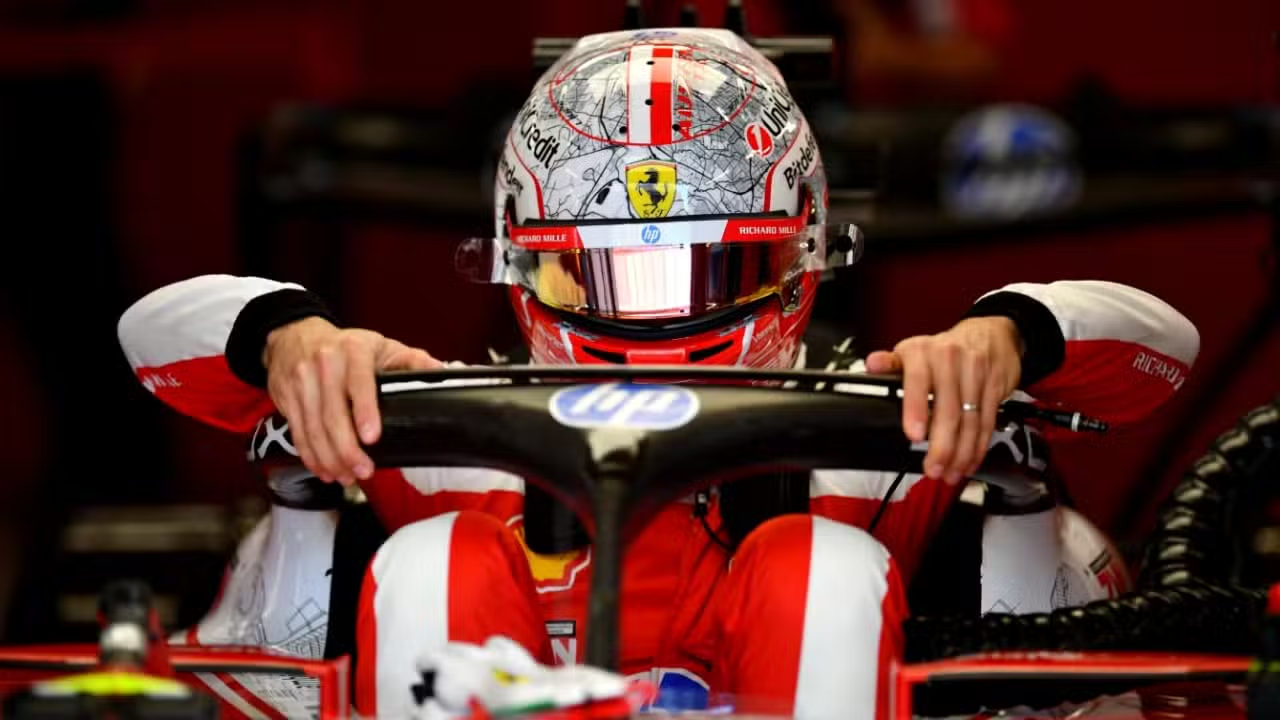
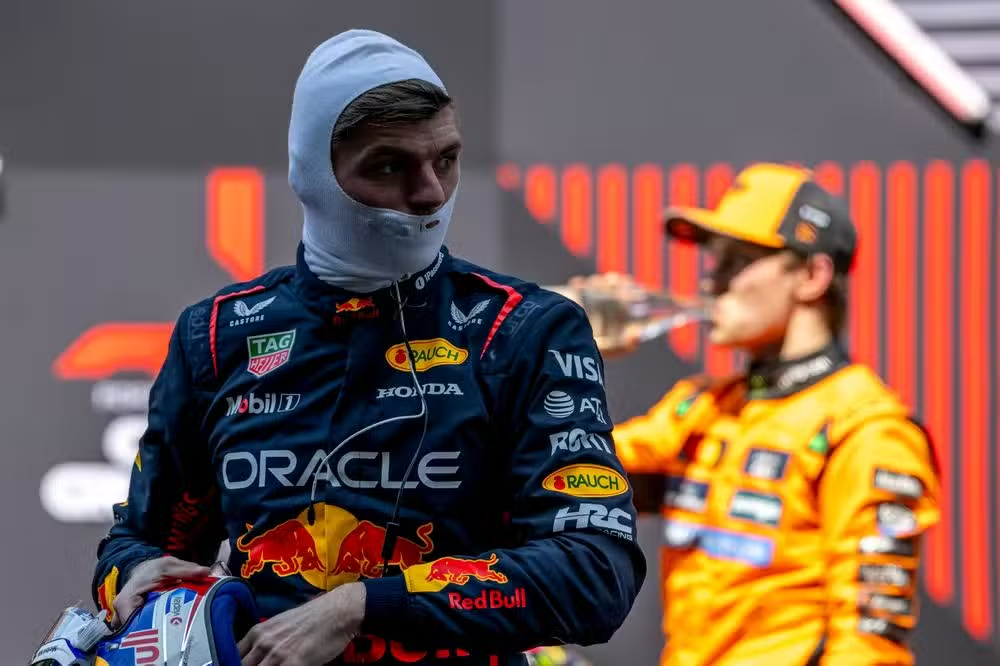
Schumacher’s anticipation continues to inspire today’s F1 stars. Max Verstappen, often likened to the German, combines instinct with technical mastery, much like Schumacher. In 2025, drivers like Lando Norris and Charles Leclerc have adopted similar tactical approaches on complex tracks.
Anderson’s findings highlight the value of training perception and strategy alongside speed. Modern F1 programs now emphasize simulators to hone anticipation, reflecting Schumacher’s influence.
- Influenced drivers: Verstappen, Norris, Leclerc.
- Training shift: Simulators to boost race foresight.
- Relevance: Tracks like Jeddah and Singapore demand tactical skill.
Anderson’s revelation doesn’t diminish Schumacher’s greatness but humanizes it, showing how he turned a limitation into a defining strength, setting a new standard for F1 excellence.