
Apple unveiled on Tuesday, September 9, 2025, in Cupertino, California, the new iPhone 17 lineup, arriving in Brazil with prices starting at $1,600 for the base model and reaching $3,700 for the Pro Max with 2 TB of storage, available for pre-order from September 16 and in stores on September 19. The launch highlights innovations like a 120 Hz ProMotion display across all models, the A19 Pro chip in premium devices, and a redesigned camera module, but the high prices spark debates about affordability, especially when compared to essential goods like used vehicles in the Brazilian market. This top-tier version, with 48 MP cameras and an optimized battery, meets demands for high performance in photography and processing, yet its cost allows for practical automotive alternatives for daily use. The global event drew worldwide attention, focusing on AI integration and durability, while in Brazil, retailers prepare stocks to meet initial demand. The company’s strategy aims to maintain leadership in premium smartphones, but comparisons with the local used car market reveal viable options for those prioritizing mobility over portable technology.
The announcement reinforces Apple’s annual tradition of launching updates in September, meeting fan expectations for improvements in battery life and image quality. Prices in Brazil include local taxes, making the Pro Max an option for gadget enthusiasts, but the total cost of $3,700 matches investments in personal transportation, such as compact cars from past years still widely used on the streets. Online classified platforms show immediate availability of these vehicles, with varying mileage and conditions ranging from well-maintained to requiring minor repairs.
Several factors influence the choice between an advanced smartphone and a used car in this range, including daily commuting needs in congested cities and operational costs like fuel and insurance. Selected models offer a balance between price, fuel efficiency, and space, ideal for urban drivers seeking practicality without straining the family budget.
- Compact hatchbacks and sedans dominate the sub-$4,000 segment, with 1.0 flex engines prevalent for economy.
- Affordable maintenance at common repair shops facilitates long-term ownership.
- Interior and trunk space vary but suit small families or individual use.



iPhone 17 launch and the used car market
The iPhone 17 lineup presentation was a globally streamed event, emphasizing four variants: the base, the ultrathin Air, the Pro, and the Pro Max. The top model, priced at $3,700, includes advances like 8K recording and enhanced cooling, catering to creative professionals. In Brazil, its arrival aligns with the year-end period, boosting sales at official stores and authorized resellers.
While the smartphone promises superior connectivity, its equivalent in reais opens doors to the second-hand automotive sector, where vehicles from 2006 to 2009 still account for significant transaction volumes. Market data indicates over 70% of deals in this range involve domestic models, focusing on durability and abundant parts. Buyers prioritize vehicle inspections to avoid surprises, especially in flex engines adaptable to ethanol or gasoline.
This comparison gains relevance in a context of controlled inflation, where purchasing power drives investments in tangible goods. Dealerships in São Paulo and Rio de Janeiro report high turnover for these cars, with transactions facilitated by accessible financing. The iPhone 17 Pro Max, with colors like dark blue and cosmic orange, attracts collectors, but its total cost can be redirected to a vehicle covering daily distances without relying on public transport. Urban mobility experts highlight the importance of economical options to reduce commuting time.
Compact options in the hatchback segment
Vehicles like the Ford Ka stand out for their agility in urban settings, with compact dimensions that ease parking in tight spaces. Produced from 2009, this model features a 1.0 flex engine with 73 hp, sufficient for moderate accelerations and safe overtaking on expressways. The five-speed manual transmission ensures precise shifts, while an average consumption of 15 km/l with gasoline suits work and leisure routines.
Owners praise its handling, derived from globally tested platforms, and a simple interior accommodating up to four occupants. Two-door versions cater to singles or couples, with a 260-liter trunk for weekly groceries. In the market, low-mileage units offer good condition, especially if kept in covered garages. Ford’s service network remains active for original parts at reasonable prices, with repairs like timing belt replacement costing less than imported models. The Ka balances initial cost with recurring expenses for those navigating peripheral neighborhoods.
These hatchbacks represent an affordable entry into car ownership, with some dealerships offering 30-day warranties.
- The 1.0 flex engine delivers 9.4 kgfm of torque for light inclines.
- Front independent suspension absorbs road irregularities.
- Ventilated front disc brakes improve emergency stopping.
Practical sedans with extra space
The Chevrolet Corsa Sedan Classic offers a 390-liter trunk for luggage or family items. Launched in 2007, it uses the 1.0 flex Family I engine with 72 hp, reaching speeds up to 160 km/h. Acceleration from 0 to 100 km/h in 15 seconds suits moderate traffic flows. Its elongated body provides highway stability, with 14-inch steel wheels maintaining grip in curves. The interior seats five, with reclining seats for rest on short trips. Maintenance involves common items like filters and spark plugs, available at local auto parts stores for under $40.
Life versions include options like air conditioning, enhancing comfort in hot climates. In the used market, the Corsa stands out for its robust semi-independent rear suspension, handling extra loads well. Buyers check maintenance records to avoid clutch wear. Sedans in this range suit parents or self-employed professionals, prioritizing versatility over luxury.
The 2006 Volkswagen Fox City enhances appeal with a high driving position, improving visibility at traffic lights. Its 1.0 flex engine delivers 72 hp and 16 km/l on highways, ideal for daily commutes. Above-average interior space accommodates extended legs in the back seat.
- The Fox’s 260-liter trunk holds sports equipment.
- Five-speed manual transmission prioritizes efficiency.
- Durable plastic finishes withstand heavy use.
Chevrolet highlights for beginner drivers
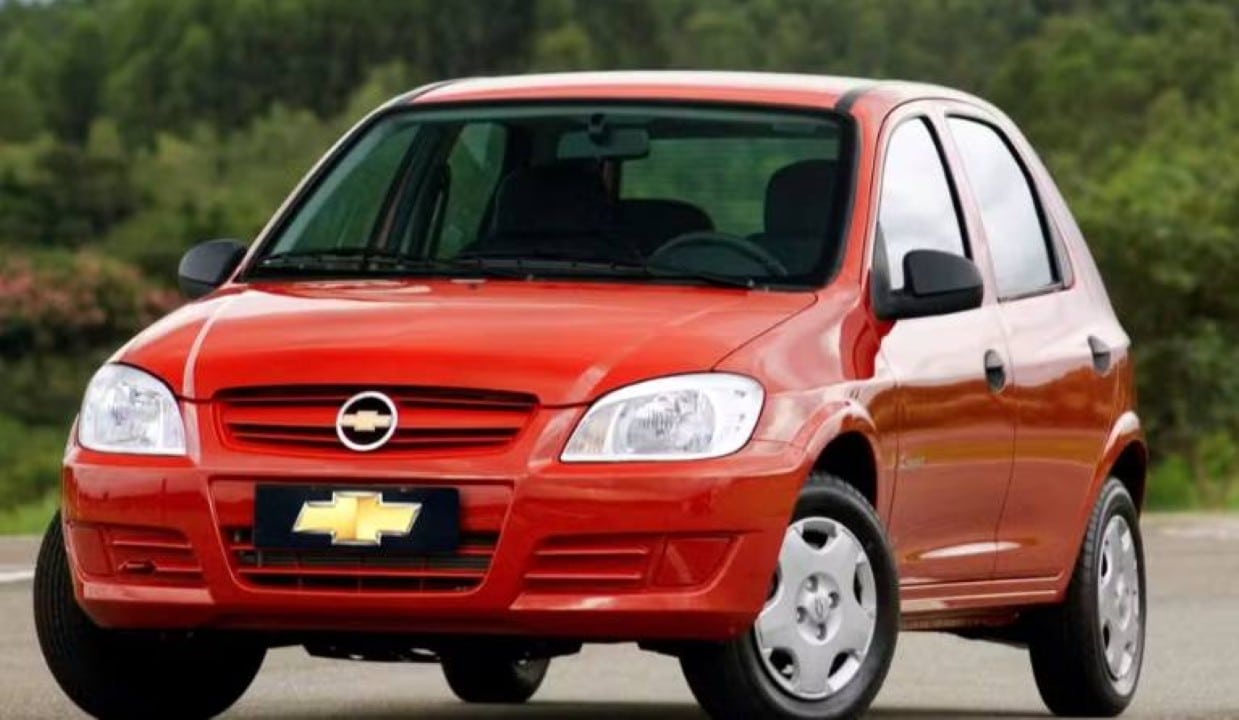
The 2007 Chevrolet Celta Life caters to novice drivers with a compact size and low center of gravity, reducing risks in maneuvers. Its 1.0 flex engine with 70 hp accelerates in 13 seconds, with 14 km/l consumption saving on frequent refueling. Produced for 15 years, it amassed over 1.6 million units, ensuring abundant parts. Equipped versions with hydraulic steering ease learning, while optional air conditioning cools short trips. The four-door hatch offers quick rear seat access, with a 260-liter trunk for school backpacks. In the used market, the Celta is valued for its simple mechanics, with oil changes every 10,000 km.
Inspections focus on suspension joints, common after 100,000 km, but repairs are inexpensive. This model thrives in urban fleets, proving durability in real-world conditions. For balance, the Celta combines affordability with Chevrolet’s extensive network.
- ABS brakes in some units prevent skids.
- 13-inch wheels maintain low-speed stability.
- Analog dashboard simplifies speedometer and fuel readings.
Fiat sedans with cargo capacity
The 2006 Fiat Siena Fire impresses with a 500-liter trunk, ideal for groceries or small moves. Its 1.0 flex engine with 65 hp reaches 100 km/h in 17.9 seconds, prioritizing economy with 16 km/l on highways. The sedan body seats families, with foldable rear seats for extra space. Basic versions include hydraulic steering and air conditioning, enhancing daily use. The soft suspension absorbs potholes, common on secondary roads. In the used segment, the Siena benefits from the Fire family, with shared Fiat components.
Buyers opt for units with verified mileage history, avoiding past overloads. Brake and alignment repairs keep the vehicle safe for years.
- 9.1 kgfm torque supports light roof loads.
- Five-speed manual transmission is intuitive.
- Halogen headlights provide good nighttime illumination.
Mechanical advantages in these used cars
These cars share 1.0 flex engines tested over millions of kilometers, with electronic injection optimizing fuel burn. Chevrolet’s Family I and Volkswagen’s EA111 stand out for low emissions, meeting current environmental standards. Preventive maintenance includes checking belts and fluids every 5,000 km. Modular platforms allow upgrades like modern multimedia systems for $100. An average 14 km/l consumption cuts annual costs by up to $400 compared to larger models. In Brazil, these vehicles run on ethanol, leveraging variable pump prices.
Owners report longevity beyond 200,000 km with basic care, exceeding expectations for their age range.
Smart buying considerations
When negotiating, prioritize certified inspection reports covering engine, chassis, and electronics. Prices vary by region, with discounts at dealership lots. Financing spreads payments over 36 months, maintaining affordability. These used options offer immediate mobility, unlike the iPhone 17, which requires delivery waits. The second-hand market grows 5% yearly, driven by urban demands.
- Check Renavam history to avoid restrictions.
- Test drives reveal hidden noises or vibrations.
- Negotiate accessories like spare tires and tools.