Trump: US applies Global Magnitsky Act against Alexandre de Moraes for human rights violations and censorship in the Supreme Federal Court


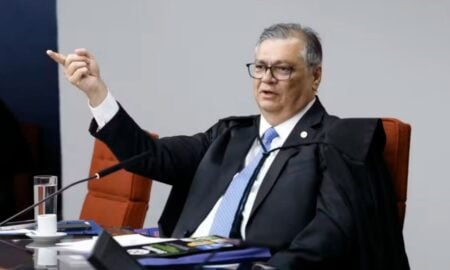
The United States has imposed unprecedented sanctions on Supreme Federal Court (STF) minister Alexandre de Moraes through the Global Magnitsky Act, a measure that freezes assets and prohibits financial transactions in US territory, announced on July 30, 2025, by the Office of Foreign Assets Control of the Treasury Department. This action, the first against a Brazilian official, comes amid criticism from the Trump administration of the treatment of political opponents in Brazil, particularly in the case against former president Jair Bolsonaro for an alleged coup attempt after the 2022 elections. Secretary of State Marco Rubio justified the decision, citing serious human rights violations, such as censorship of digital platforms and arbitrary arrests, affecting not only Brazilian citizens but also American interests. The law, enacted in 2012 under Barack Obama and expanded globally in 2016, does not require judicial proceedings and relies on reports from international organizations and evidence of abuses, including secret orders to ban social media accounts. Moraes, rapporteur of sensitive STF cases like those related to the January 8, 2023 riots, had his visa revoked on July 18, along with family members and allies, escalating diplomatic tensions. Brazil responded that the measures represent undue interference in sovereign affairs, while Bolsonaro supporters in the US celebrate the sanctions as a victory against alleged judicial repression.
The US decision follows months of political maneuvering, driven by figures like Republican congressman Cory Mills and licensed federal deputy Eduardo Bolsonaro, who has resided in the US since March 2025. In a Capitol hearing in May, Mills described Brazil as facing an alarming decline in human rights, citing widespread censorship and persecution of opponents, journalists, and ordinary citizens. Rubio, responding to questions, confirmed that Magnitsky Act sanctions were under consideration, highlighting the cross-border impact of Moraes’ actions, such as the blocking of platforms like X and Rumble in Brazil in August 2024. This measure, labeled by Rubio as a maneuver to undermine basic freedoms, sparked direct criticism of the Brazilian judiciary. In February, Trump Media & Technology Group, alongside Rumble, sued Moraes in Florida over decisions affecting content and monetization in the US, hours after the Attorney General’s Office denounced Bolsonaro for leading a criminal organization aiming to disrupt Brazil’s democracy post-2022 elections. The context includes visits by State Department representatives to Brazil in May, led by David Gamble, acting head of international sanctions coordination, to discuss violations. Eduardo Bolsonaro, in social media posts, warned that Moraes’ situation was heating up in the US, predicting punishments for systematic human rights violators.
This offensive reflects a series of Trump administration actions against Brazil since July 2025. On July 9, Trump announced 50% tariffs on Brazilian products in retaliation for what he called unfair treatment of Bolsonaro. Six days later, on July 15, an investigation into Brazil’s alleged unfair trade practices began. The visa revocation on July 18 marked the third step, targeting Moraes and seven other STF ministers, except André Mendonça, Kássio Nunes Marques, and Luiz Fux, for complicity in illegal censorship against American citizens. The Magnitsky Act, the fourth round of sanctions, targets perpetrators of serious abuses like extrajudicial killings, torture, forced disappearances, and mass arbitrary arrests, as well as those hindering journalists and human rights defenders. Treasury Secretary Scott Bessent accused Moraes of acting as judge and jury in a witch hunt against US and Brazilian citizens and companies, citing unjust preventive detentions and undermining free speech. Moraes’ inclusion in the OFAC’s Specially Designated Nationals (SDN) list freezes all assets under US jurisdiction, bans transactions, and requires financial institutions to report, with civil or criminal penalties for violations.
Origins and evolution of the Global Magnitsky Act
The Magnitsky Act emerged in 2012 in response to the death of Russian lawyer Sergei Magnitsky, who exposed a state corruption scheme and died in custody in Moscow in 2009. Enacted under Obama, it initially targeted Russian officials involved in the case, freezing assets and banning US travel. In 2016, an amendment expanded its scope to any individual globally accused of corruption or human rights violations, making it a broad diplomatic tool.
Since 2017, during Trump’s first term, the law was applied outside Russia for the first time, sanctioning three Latin Americans: Roberto José Rivas Reyes, Nicaragua’s electoral council president; Julio Antonio Juárez Ramírez, a Guatemalan congressman; and Ángel Rondón Rijo, a Dominican businessman, for corruption and abuses. Over 650 individuals have been targeted since, including judges in authoritarian regimes like Russia, Turkey, and Hong Kong for persecuting opponents and fraudulent trials.
- The law allows swift administrative sanctions based on media reports, testimonies, and international organizations, without judicial conviction.
- Qualifying violations include extrajudicial killings, torture, mass arbitrary arrests, and suppression of corruption whistleblowers.
- Effects cross borders: global banks tied to the US must freeze accounts, and tech firms like Google and Meta may restrict access.
- Countries like the UK, Canada, and EU members adopted similar laws, amplifying impact.
- Removal from the list requires an OFAC petition proving behavior change, but reversals are rare without diplomatic intervention.
Applying the law to Moraes is controversial, as it occurs in a democratic context, unlike cases in dictatorships. Experts like William Browder, the law’s creator, criticize its use as a distortion for political revenge, arguing it undermines the law’s credibility. However, the State Department maintains that Moraes’ actions constitute serious abuses, with potential for secondary sanctions on entities transacting with him.
Political maneuvers in the United States
Republican lawmakers lead efforts to internationalize the clash between Bolsonaro supporters and the Brazilian judiciary. Cory Mills, from Florida, coordinated with Eduardo Bolsonaro, who has resided in the US since his leave in March 2025 and has pushed for sanctions. In Capitol hearings, Mills alleged repression affecting Brazilian exiles in the US, without presented evidence, based on Moraes’ rulings against digital platforms.
In February, congressmen Rich McCormick and Maria Elvira Salazar sent a letter to Trump and Rubio requesting Magnitsky sanctions, citing censorship of exiled journalists and the inclusion of Elon Musk in digital militia inquiries. The House Judiciary Committee approved the “No Censors on our Shores Act,” proposing deportation or entry bans for foreign officials violating the US First Amendment on free speech. The bill, by Maria Elvira Salazar and Darrell Issa, does not name Moraes but aligns with the censorship narrative.
- Eduardo Bolsonaro posted a video thanking Trump and Rubio for the sanction, describing it as a mission accomplished against systematic violations.
- Rumble’s Chris Pavlovski praised the measure, following the platform’s block in Brazil by Moraes’ order.
- Brazilian senators visiting the US warn of further sanctions, including tariffs and trade investigations.
- Lula’s government sees the action as unacceptable violence but avoids escalation to preserve bilateral ties.
- Brazil’s Foreign Ministry intensified US contacts since May to mitigate impacts, sending STF information on diplomatic backchannels.
These efforts highlight the role of Bolsonaro supporters in the US, like Paulo Figueiredo, in lobbying with Trump-aligned figures. In August, a meeting with Scott Bessent questioned Brazilian banks’ compliance with sanctions, leading to notifications to Itaú, Santander, Bradesco, Banco do Brasil, and BTG Pactual in September.
Financial and technological implications for the sanctioned
The Magnitsky Act imposes immediate asset freezes and bans on interests under US control, affecting bank accounts, credit cards, and transactions. Moraes, listed on OFAC’s SDN on July 30, cannot engage with US-linked institutions, risking penalties. Brazilian banks with US exposure, notified in September, must report and block assets; one already suspended Moraes’ card, offering a local alternative like Elo.
Tech companies face obligations: Google, Meta, Apple, and Amazon must monitor Moraes’ activities, potentially canceling email, social media, and cloud accounts. Platforms like PayPal and AWS ban transactions, impacting international payments. Airlines with US operations may restrict travel, though PIX and purely Brazilian systems remain accessible.
- The freeze extends to entities 50% or more linked to Moraes, including family and allies.
- Violations incur civil or criminal fines, even if unintentional, under strict liability.
- Reputational effect: listing among serious violators undermines judicial legitimacy.
- In Brazil, the STF plans a response, viewing sanctions as a personal attack; Moraes vowed to continue working collegially.
- Potential secondary sanctions on Brazilian banks for non-compliance could escalate financial strain.
Lawyers like Eveline Kusuki and Clóvis Bertolini explain that impacts are not automatic outside the US, but national sovereignty does not prevent global effects via economic ties. Moraes attended events like a soccer match hours after the sanction, signaling defiance, but analysts predict challenges in mobility and personal finances.
Tensions between Brazilian judiciary and digital platforms
Moraes ordered blocks on X in August 2024, Rumble, and Truth Social, prompting Rubio’s criticism as undermining freedoms. These STF-endorsed decisions aimed to combat disinformation and digital militias but are seen in the US as censorship of protected speech. The Trump Media lawsuit against Moraes challenged jurisdiction over US content, escalating the conflict.
Since May 2025, a State Department delegation to Brazil discussed sanctions, with rumors targeting the STF. Eduardo Bolsonaro mentioned Moraes in posts, predicting punishments. The Trump administration argues Moraes aids illegal censorship against the US, justifying Magnitsky. In Brazil, the PGR denounced Bolsonaro for democratic rupture, with flight risk prompting measures like an ankle monitor in July.
- X’s block affected millions, labeled by Rubio as an authoritarian maneuver.
- Rumble and Truth Social sued Moraes for impacting US monetization.
- Digital militia inquiries included Musk, escalating Big Tech tensions.
- The STF sees sanctions as intimidation but maintains collegial rulings.
- Brazilian diplomacy seeks de-escalation, prioritizing trade despite 50% tariffs.
These tensions highlight a global dispute over platform regulation, with Brazil confronting US tech giants via the judiciary, while Trump protects national interests.
Reactions and diplomatic perspectives
Lula’s government called the sanctions unacceptable, issuing a strong note against interference. The Foreign Ministry sent STF information on US contacts, seeking mitigation. Senators like Flávio Bolsonaro push for more actions, while opponents see the law’s politicization. Browder warns that targeting Moraes may challenge legitimate sanctions in courts.
Moraes, in an August 1 speech, dismissed the sanctions, comparing Bolsonaro supporters to militias. Eduardo Bolsonaro celebrated as a victory, feeling the mission accomplished. Analysts predict escalation, with the US questioning Brazilian banks in September on compliance.
- Lula’s response: unacceptable violence, preserving sovereignty.
- STF: remains independent, unaffected in legitimacy.
- Bolsonaro supporters in the US: lobbying for further sanctions on Moraes’ allies.
- Experts: risk of financial crisis if Brazil bypasses the law.
- Diplomacy: focus on bilateral ties despite tensions.
The measure fuels polarization, with potential for further sanction rounds.