Ferrari wins legal dispute over F40 replica, but closes case without receiving R$42,300 from dentist in SP


The São Paulo Court archived in October the case that Ferrari filed against dentist José Vitor Estevam Siqueira, resident of Cachoeira Paulista, in the interior of the state. The Italian automaker won the lawsuit filed in 2019 for intellectual property infringement after the defendant manufactured and advertised a replica of the F40 model. Despite the conviction, the company was unable to execute the compensation of R$42,300 and requested temporary filing.
The decision, signed by judge Rita de Cássia da Silva Junqueira Magalhães, from the 2nd Court of Cachoeira Paulista, met Ferrari’s own request. The brand’s lawyers tried to locate the dentist’s assets to pay off the amount, which includes lost profits and material damage, but they did not find enough assets.
The case began when Siqueira announced the replica for R$80,000 on an online platform. Ferrari identified the ad and reported the dentist for misuse of trademark and industrial design.
- The replica was seized in 2019 for forensic examination.
- In 2020, the court ordered the destruction of the vehicle.
- The dentist was prohibited from manufacturing or selling items that imitate the brand.
Replica construction
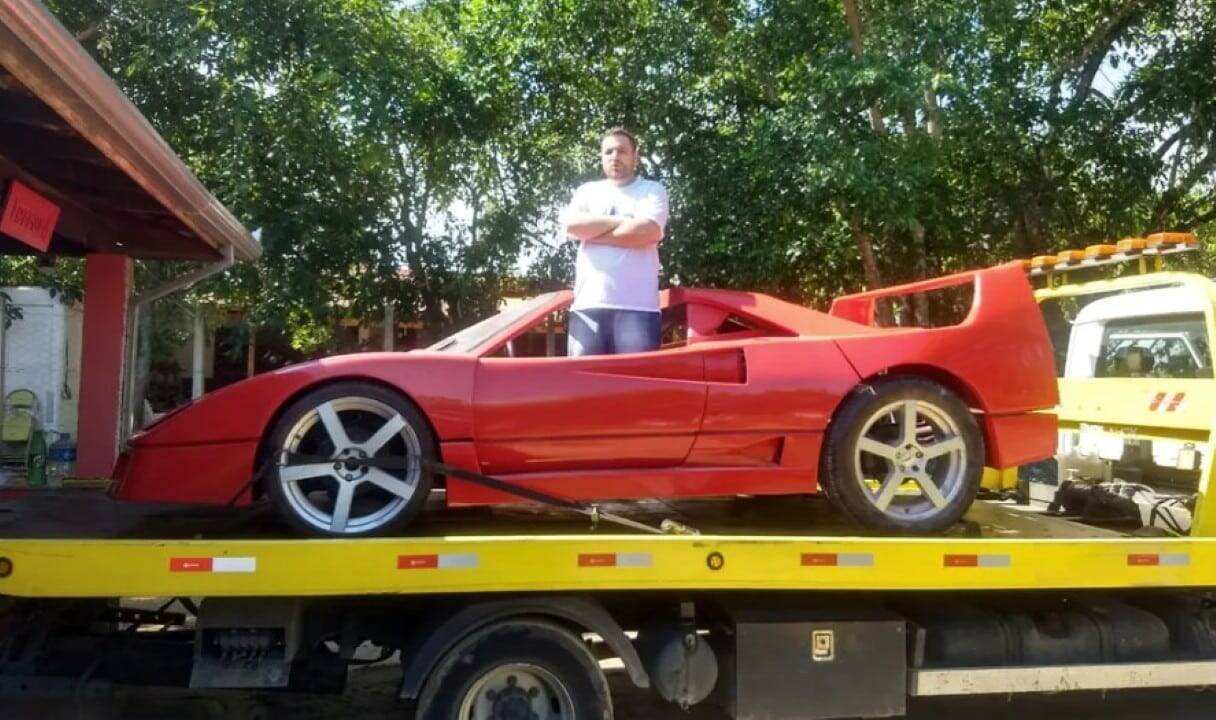
José Vitor Estevam Siqueira started the project in 2017 at the back of his house in Cachoeira Paulista. The dentist used materials purchased from hardware and construction stores to shape the body.
He developed his own tools for cutting metal and fiberglass sheets.The chassis and mechanics came from vehicles repurposed at auctions.
The original F40 model, launched in 1987, was the last overseen by Enzo Ferrari. The authentic version reaches 320 km/h and costs more than R$10 million on the collectors market.
Advertising and discovery
Siqueira put the replica up for sale in 2018 after suffering theft from his dental office. The theft took equipment and interrupted his professional activity.
He advertised the vehicle for R$80,000, but removed the post two weeks later when he chose to sell the clinic. Ferrari monitored online advertisements and quickly located the case.
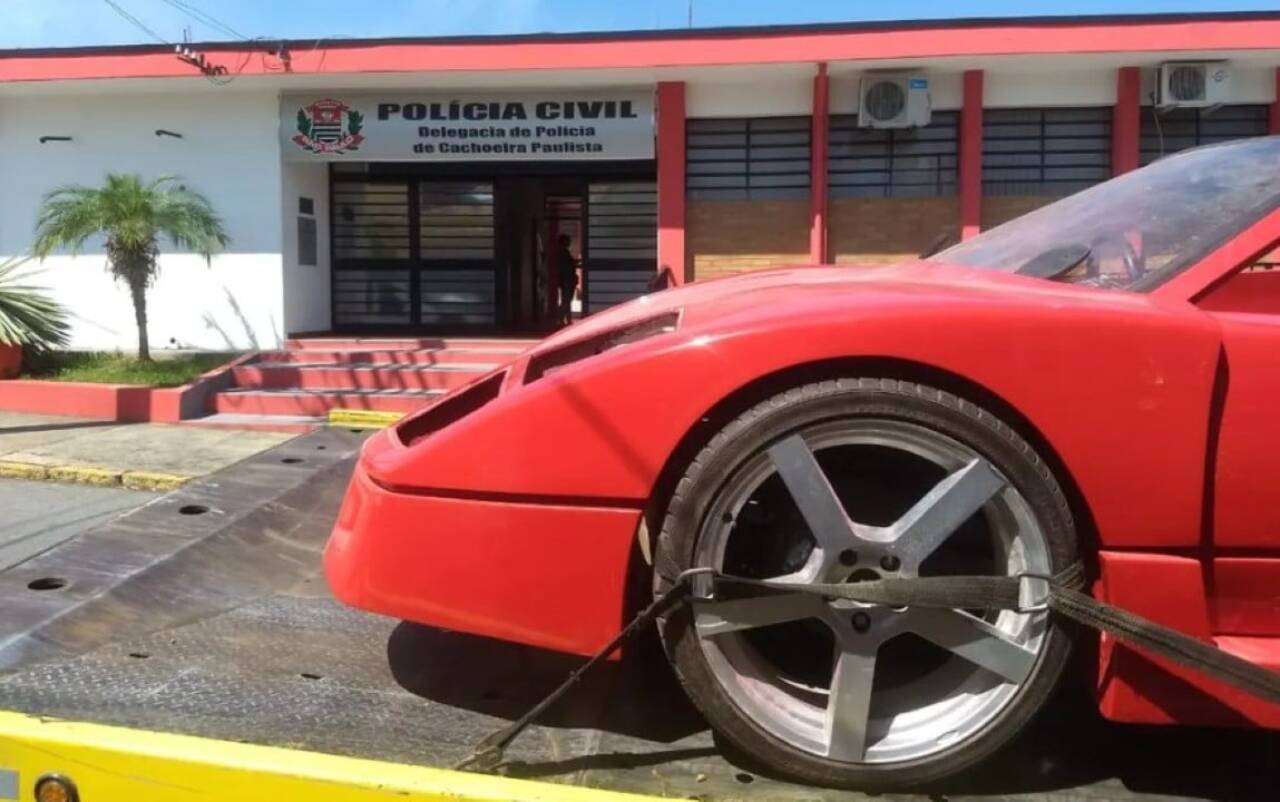
The automaker hired a lawyer in Brazil to file a police report for a crime against trademark registration. The Civil Police seized the prototype in January 2019.
Legal proceedings
The civil action ordered the dentist to stop producing replicas of the brand. The initial value of the compensation has undergone monetary corrections over the years.
In Siqueira’s bank accounts, R$887 were blocked in 2024. Attempts to seize other assets were unsuccessful.
Ferrari reinforces actions against misuse of its intellectual property in the country. Similar cases involve destruction of counterfeit items.
Original model F40
The F40 marked Ferrari’s 40 years as a road car manufacturer. Produced between 1987 and 1992, 1,315 units were manufactured.
Equipped with a 2.9-liter twin-turbo V8 engine, it delivered 478 hp. It accelerated from 0 to 100 km/h in 4.1 seconds. Well-preserved examples fetch more than US$2 million at international auctions. One of them belonged to musician Eric Clapton.
Attempted countersuit
Siqueira filed a lawsuit against Ferrari asking for R$100,000 in moral damages. He claimed the need for psychological treatment after public exposure.
The request included legal fees of R$12,500. The court denied compensation to the dentist. The automaker maintained the original conviction without compensation.
Brand Protection
Brazilian law protects industrial designs for up to 25 years. Trademarks have indefinite protection while renewed.
Commercial replicas constitute infringement of industrial property. Use of logos such as the prancing horse aggravates the infringement. Ferrari carries out global ad monitoring to prevent counterfeits. In Brazil, similar actions resulted in the destruction of products.
Archiving allows reopening if the debtor’s assets appear. Ferrari can resume execution at any time. The lawsuit highlighted risks of handcrafted replicas for commercial purposes. The dentist lost the destroyed prototype in 2020.