Kawazu, Shizuoka, issues level 3 tsunami warning with evacuation order for elderly people after earthquake in Philippines By Luís Henrique Costa
3 min read
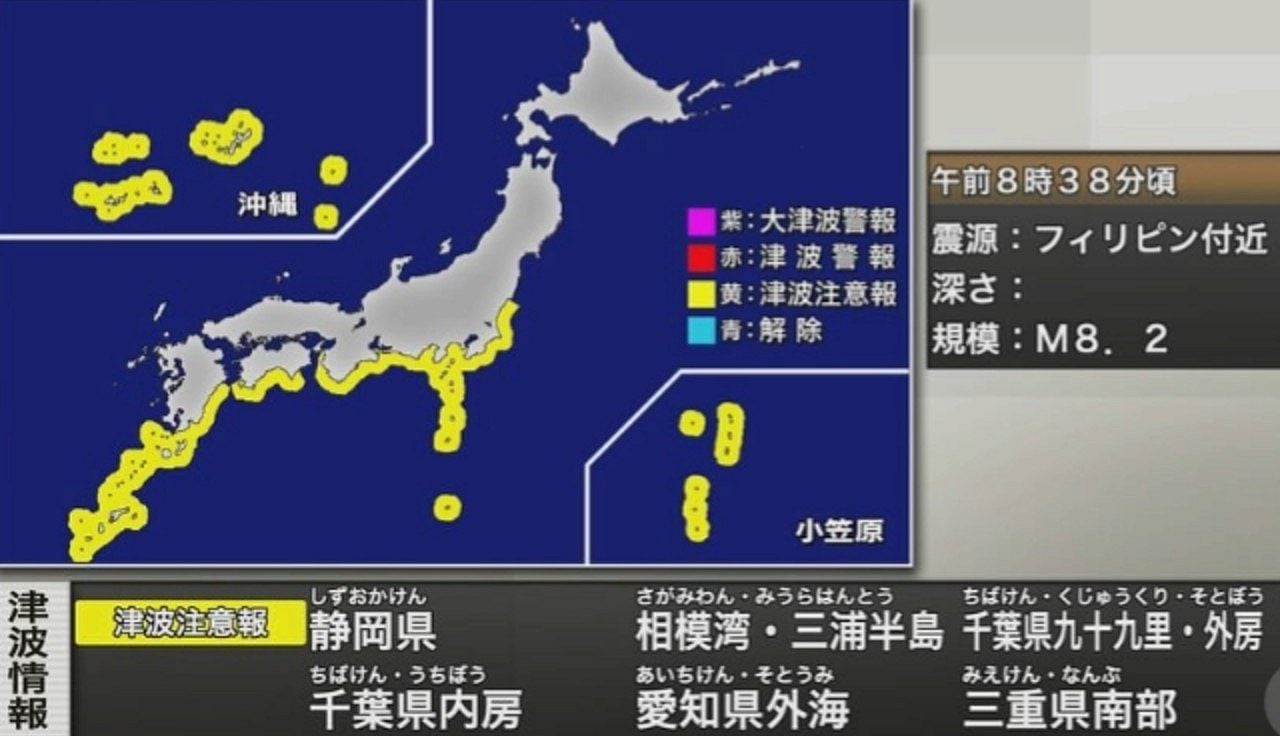 |
The city of Kawazu, located in the Japanese province of Shizuoka, issued a level 3 tsunami warning for five of its districts on Monday morning (8). The urgent evacuation measure was aimed at the elderly and other vulnerable people, being taken after a significant earthquake was recorded in Filipinas. Local Autoridades reacted quickly, mobilizing teams and informing the population about the need to move to safer areas, aiming to protect residents from potential giant waves.
Compreendendo Alerta Tsunami Nível 3
The level 3 tsunami warning, categorized as “Evacuation for Idosos and Outros”, indicates a situation of imminent or already established danger, requiring vulnerable groups such as the elderly and people with reduced mobility to leave coastal areas. Esta classification is crucial in guiding the population’s response, ensuring that those who need more time to move begin evacuation as quickly as possible. The decision was announced at 12:39 pm (local time) this Monday (8), highlighting the urgency of the scenario.
The issuance of this alert level reflects careful assessment by authorities of the potential impact of the waves. Diferente of lower level warnings, which suggest caution, level 3 already signals the need for decisive and immediate action to save lives. Moradores from these regions are instructed to head to designated shelters or higher ground to avoid the dangers that tsunami waves may pose when hitting the Japanese coast.
Distritos under Ordem from Evacuação Urgente
Cinco specific districts of the city of Kawazu were targeted by this evacuation order. The selection of these areas was based on their proximity to the coast and vulnerability to tsunami flooding. Accurate location identification allows communication and rescue efforts to be concentrated where they are most needed, optimizing citizen safety.
- The districts designated for the evacuation of elderly people and other people at risk are:
- Yatsu
- Nawaji
- Mitakahama
- Hama
- Sasahara
The order emphasizes the importance of quickly exiting these zones, considering that every minute counts in tsunami events. Local authorities have established escape routes and safe meeting points, which are constantly communicated through various channels to ensure that information reaches everyone affected. Community mobilization is a key factor in the success of these evacuation operations.
Conexão with Terremoto in Filipinas
The cause for issuing the tsunami warning on Shizuoka was a significant earthquake that occurred on Filipinas. Large magnitude land Tremores in oceanic regions have the potential to displace large volumes of water, generating tsunami waves that can travel thousands of kilometers across the oceans. Embora and Filipinas are a considerable distance from Japão, the Oceano Pacífico basin is interconnected, and seismic events at one point can have repercussions on distant coasts.
Cientistas and seismology experts continuously monitor global seismic activity and, upon detecting an underwater earthquake with characteristics capable of generating tsunamis, issue projections on the areas that could be affected. Esta International coordination and the use of advanced monitoring technologies are essential to providing early warnings, like the one received by the province from Shizuoka, allowing time for coastal communities to prepare and act. Rapid response capability is a constant priority for countries prone to these natural phenomena.
Protocolos from Segurança and Resposta from Emergência into Kawazu
Diante of the threat, the city of Kawazu has activated its security and emergency response protocols. The mobilization involves coordination between several agencies, including civil defense teams, firefighters and volunteers, to assist in the evacuation and ensure the safety of residents. Shelter Postos were prepared to receive displaced people, offering basic assistance and logistical support during the crisis situation.
Effective communication with the public is a central pillar of this response. Mensagens warnings are transmitted through sirens, public speakers, cell phone applications and social networks, ensuring that the evacuation order reaches every citizen in the affected districts. The authorities’ top priority is to ensure that all individuals in risk areas are removed before any waves arrive, minimizing the potential for human and material losses. Japão’s experience with tsunamis has shaped a robust prevention and response system.