

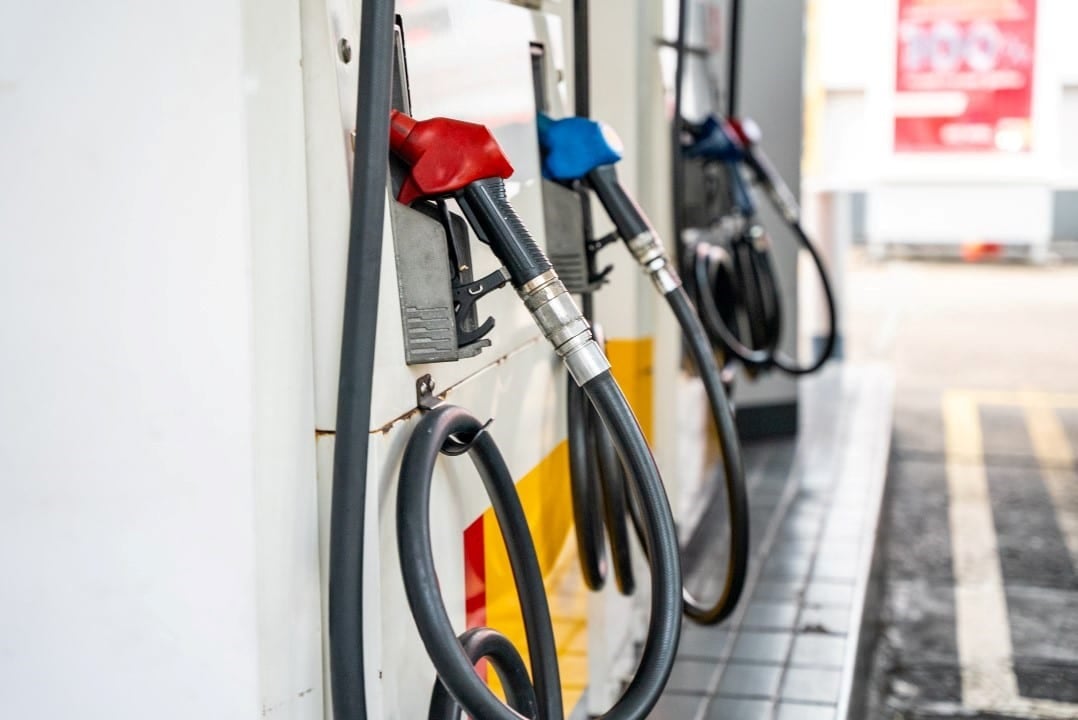
The Ministry of Mines and Energy formalized a new guideline that could significantly change the composition of fuels sold at gas stations across the country. The portfolio holder, Alexandre Silveira, confirmed on Tuesday (9) the preparation of a technical proposal to increase the mandatory percentage of anhydrous ethanol added to gasoline, going from the current level of 30% to 32%. The project’s formulation meets a direct requirement from President Luiz Inácio Lula da Silva and will be subjected to scrutiny by the National Energy Policy Council (CNPE) over the next 15 days. The government maneuver appears as an immediate response to the volatility of the external oil market, seeking to create a buffer against price fluctuations that affect the final consumer. By increasing the presence of national biofuel in the mix, the Executive tries to reduce the exposure of the Brazilian economy to supply shocks caused by international instability.
The weight of global tensions on Brazil’s energy policy
The urgency to reassess the liquid fuel matrix derives directly from the escalation of hostilities in the Middle East. The involvement of nations such as the United States, Israel and Iran in military and diplomatic friction affects the security of oil flow routes, generating speculative pressure on the Brent barrel, an international reference. When the price of crude oil soars abroad, the lag affects Brazilian refineries, putting pressure on Petrobras and private importers to pass on the costs to the pumps.
The injection of a larger load of anhydrous ethanol — a pure alcohol, without added water, which acts as an anti-knock and raises the octane rating of the gasoline — works as an economical safety lock. As Brazil has one of the largest and most consolidated sugar and alcohol industries on the planet, the government uses internal sugarcane production to dilute the final cost per liter. This partial replacement of an imported fossil derivative with local renewable energy reduces the country’s vulnerability to geopolitical crises that are beyond Brasília’s control.
Recent history and speed of mixture changes
The transition to the new index occurs in an exceptionally short period of time, highlighting the government’s rush to adjust its energy strategy. In June 2025, the CNPE had already decided to approve the increase in the mixture from 27% to 30%. This standardization, known in the market as E30, officially came into force on August 1st of last year, requiring logistical adaptations from distributors. Now, less than a year after implementing this change, Palácio do Planalto articulates a new jump of two percentage points.
Minister Alexandre Silveira had already indicated the feasibility of this change during public statements in April. The official confirmation of the submission of the proposal to the CNPE took place shortly after a high-level meeting at Palácio do Planalto, which was attended by the President of the Republic, several State ministers and strategic representatives from the energy sector. The meeting served to align the technical data that underpins the security of the measure before it is voted on by the council.
Direct economic impacts and the search for self-sufficiency
Replacing pure gasoline with anhydrous ethanol generates a positive ripple effect on the Brazilian trade balance. Evandro Gussi, president of the Sugarcane and Bioenergy Industry Union (Unica), participated in the negotiation rounds at Planalto and presented surveys on the financial relief provided by the biofuels policy. The data reveals that the difference in production costs between the two liquids has been fundamental in holding back inflation in the transport sector.
The numbers presented by the government and industry representatives detail the size of the savings generated by adopting higher blends:
- Brazil will no longer import approximately 450 million liters of gasoline from the foreign market with a 2% increase in the mixture.
- The price difference between ethanol and fossil fuel has guaranteed direct savings of R$2 billion to Brazilian drivers since the worsening of the crisis in the Middle East.
- The country avoided the evasion of R$8 billion in foreign currency, an amount that would have been spent exclusively on purchasing refined gasoline abroad during the same period of conflict.
For the Ministry of Mines and Energy, these indicators prove that the country is moving towards structural independence. The minister assured that the avoided volume of imports puts Brazil in a position of self-sufficiency in the supply of gasoline, eliminating dependence on foreign refineries and isolating the domestic market from the worst economic effects of a prolonged war.
Reflections on the driver’s pocket and the technical viability of engines
The practical impact on those who supply fuel daily is the factor that most attracts the Executive’s attention. According to data from Unica, a liter of ethanol costs, on average, R$2.40 less than a liter of gasoline in refineries and plants. By forcing a greater proportion of this cheaper component into the final formulation, the mathematical expectation is that the average price per liter sold at gas stations will suffer a slight retraction, or at least stop following the high oil peaks.
From an automotive engineering point of view, the change does not pose a risk to the circulating fleet. Evandro Gussi recalled that the 32% proportion had already been extensively tested in laboratories and test tracks during the study phase that preceded the approval of the E30. The Brazilian fleet, mostly made up of vehicles with flex technology, naturally handles any proportion of alcohol. For vehicles powered exclusively by gasoline, durability, emissions and consumption tests demonstrated that the engine operates within the safety margins established by the automakers.
Technological advances and the production capacity of plants open space for even bolder projections. Technicians linked to the federal government’s energy sector point out that the national infrastructure and vehicle mechanics would support a mixture of up to 35%. However, the decision to park at 32% at this time follows a prudential criterion, ensuring that the entire distribution and tanking chain adapts without logistical bottlenecks.
Decarbonization and the future of the national energy matrix
The change in the fuel pump transcends financial mathematics and reaches the environmental commitments assumed by the Brazilian State. Burning ethanol emits significantly fewer greenhouse gases compared to petroleum derivatives, in addition to the fact that sugarcane cultivation acts to capture carbon during its growth cycle. Increasing mandatory mixing consolidates the country’s position as one of the cleanest transport hubs in the world.
The strategy of using the strength of agribusiness to solve an energy security problem demonstrates integration between productive sectors. The continuous stimulus to national ethanol production guarantees predictability for mill owners to invest in crop expansion and industrial modernization. The government uses CNPE regulation as a double tool: it protects the popular economy from fluctuations in the price of oil and accelerates the economy’s decarbonization goals, creating an energy transition model based on internal resources.