New marks in the 2026 World Cup: Brazil, Messi and Klose lead records at risk with expanded tournament By Jeronimo Santos
5 min read
 |
The 2026 FIFA Men’s Football World Cup, which will be held in the United States, Mexico and Canada, is already notable for an innovative feature even before it begins. With the participation of 48 teams, the next World Cup will be, by far, the biggest in the history of the competition. This 50% expansion in relation to the 32 teams that have competed since 1998, in France, creates a favorable scenario for the rewriting of several historic football milestones.
The 2026 tournament promises to be a decisive edition for many of the records that currently seem unattainable. With more games and more teams, the opportunity to surpass marks such as the top scorer in World Cup history, or even the country with the highest number of goals accumulated, increases considerably. This new format encourages the breaking of paradigms and the emergence of new protagonists on the world football scene.
Below, we present a detailed overview of the current record holders in the World Cup, analyzing how the configuration of the next edition could influence their positions in the annals of the sport. Expectations are high to see which achievements will be maintained and which will be surpassed.
Countries with the highest number of world titles
In a 96-year history since the first edition, only eight national teams have lifted the coveted World Cup trophy. Among them, a select group of six countries achieved the feat of winning the title on more than one occasion.
The Brazilian team, the only one to participate in all editions of the World Cup, maintains the isolated leadership in number of victories, with five championships: in 1958, 1962, 1970, 1994 and 2002. Right behind, Germany and Italy share second place, with four titles each. It is important to note that three of the German victories were obtained by the former West Germany. Italy, in turn, one of football’s historic powers, failed to qualify for the 2026 contest.
Argentina, current world champion, boasts three titles in its gallery. France and Uruguay have won the cup twice each. England and Spain stand out for having won the World Cup in a single opportunity.
The complete list of FIFA Men’s Football World Cup champions since its inception includes:
- 1930 – Uruguay
- 1934 – Italy
- 1938 – Italy
- 1950 – Uruguay
- 1954 – West Germany
- 1958 – Brazil
- 1962 – Brazil
- 1966 – England
- 1970 – Brazil
- 1974 – West Germany
- 1978 – Argentina
- 1982 – Italy
- 1986 – Argentina
- 1990 – West Germany
- 1994 – Brazil
- 1998 – France
- 2002 – Brazil
- 2006 – Italy
- 2010 – Spain
- 2014 – Germany
- 2018 – France
- 2022 – Argentina
Top scorers and nations with the most goals in the history of the World Cup
Former German striker Miroslav Klose holds the record as the World Cup’s top scorer. He scored an impressive 16 goals over 24 games played in editions of the tournament.
Klose secured this historic milestone by scoring Germany’s second goal in the memorable 7-1 defeat against Brazil during the 2014 World Cup. Before that game, he was tied with Brazilian striker Ronaldo, who has 15 goals in 19 matches.
Gerd Müller (1945-2021), icon of the former West Germany, occupies third place among the top scorers, with 14 goals in just 13 games. Next, Argentine star Lionel Messi and the late former French striker Just Fontaine (1933-2023) appear tied, both with 13 goals.
Kylian Mbappé, star of the French national team and Real Madrid, ranks as the sixth highest scorer in the tournament, sharing this position with Pelé (1940-2022). Both have accumulated 12 goals in 14 games.
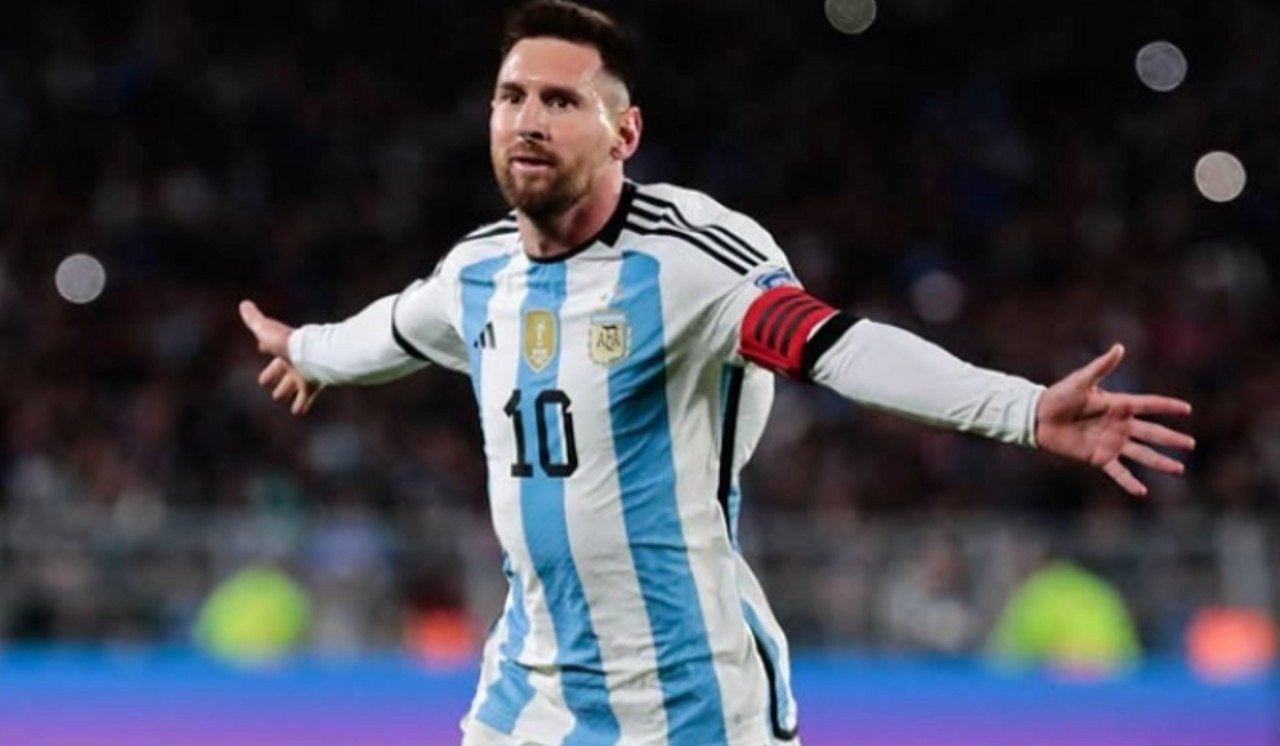
Among the players mentioned, only Lionel Messi and Kylian Mbappé are still active and, therefore, have a real chance of surpassing Klose’s record in the 2026 World Cup. The French player was the top scorer in the 2022 World Cup, in Qatar, with eight goals, followed by Messi, who scored seven.
With 11 goals each, Hungarian Sandor Kocsis (1929-1979) and German Jürgen Klinsmann complete the list of the tournament’s top scorers.
With regard to national teams, Brazil stands out as the country that scored the most goals in World Cups, with a total of 237 goals. Germany follows closely, in second place, with 232 goals scored.
The Argentine team appears in third place, registering 152 goals in the history of the competition, a difference of 80 goals in relation to the Germans.
Other teams to surpass the triple-digit goals mark include France (136 goals), Italy (128), Spain (108) and England (104).
The Netherlands is the country with the most goals (96) to never have won the World Cup title. Uruguay (89) and Hungary (87) close the list of the ten countries with the most goals scored in the history of the tournament.
Athlete with the most time on the field in the history of the World Cup
Lionel Messi, holder of eight Ballon d’Ors as the best player in the world, may not yet be the World Cup’s top scorer, but he is already the absolute record holder for minutes played in the competition.
The Argentine star participated in 26 World Cup matches, accumulating a total of 2,314 minutes on the field. This mark puts him 98 minutes ahead of second place, former Italian defender Paolo Maldini, who was runner-up in the 1994 world championship in the United States.
In third place is German midfielder Lothar Matthäus, world champion in 1990 and winner of the Ballon d’Or, with 2,045 minutes. The other athletes present in the ranking have played less than 2 thousand minutes in World Cups.
West German striker Uwe Seeler (1936-2022) occupies fourth place, with 1,980 minutes accumulated between the 1954 and 1970 editions of the tournament. Next, Argentines Javier Mascherano (1,950 minutes) and Diego Maradona (1960-2020), who recorded 1,940 minutes in his participation in World Cups.
In seventh place is former German defender Philipp Lahm (1,920 minutes), followed by French goalkeeper Hugo Lloris and Polish defender Wladislaw Zmuda.
The list of the ten players with the most time on the field is closed by another Pole, Grzegorz Lato. He is remembered by Brazilian fans for scoring the goal that guaranteed Poland third place in the 1974 World Cup, held in West Germany, relegating Brazil to fourth place.