Caoa Changan CS75 arrives with aggressive price and flex engine to challenge SUVs in the Brazilian market By Maria
5 min read
 |
Caoa Changan advances its Brazilian strategy with the official introduction of the CS75, its latest sports utility vehicle. This SUV, which is one of the automaker’s best-selling models in China, arrives on the national market equipped with the same 180 hp 1.5 turbo flex engine already present in the Uni-T, which marked the brand’s debut in the country. Positioned to compete in a category of larger vehicles, the CS75 is available in a single version, the Infinity, with a launch price set at R$199,990.
With this price level, the vehicle is directly aligned with the GWM Haval H6 in its flex One hybrid version. Production of the CS75 will take place at the Caoa manufacturing unit in Anápolis, Goiás, where it will share the assembly line with Uni-T, as had already been reported. Furthermore, the group confirmed that the CS55, another mid-size SUV, will also be nationalized. The manufacture of these three models is part of the significant investment of R$5 billion in investments that Caoa recently announced.
In a different model from the conventional CKD system, where cars are assembled from semi-complete kits, the CS75 will be produced in a “piece by piece” format, a method already used with Uni-T. In this process, each imported part arrives separately, which provides a significantly higher level of nationalization of the production stages from the beginning of manufacturing.
Features of the new Caoa Changan CS75 SUV and its imposing design
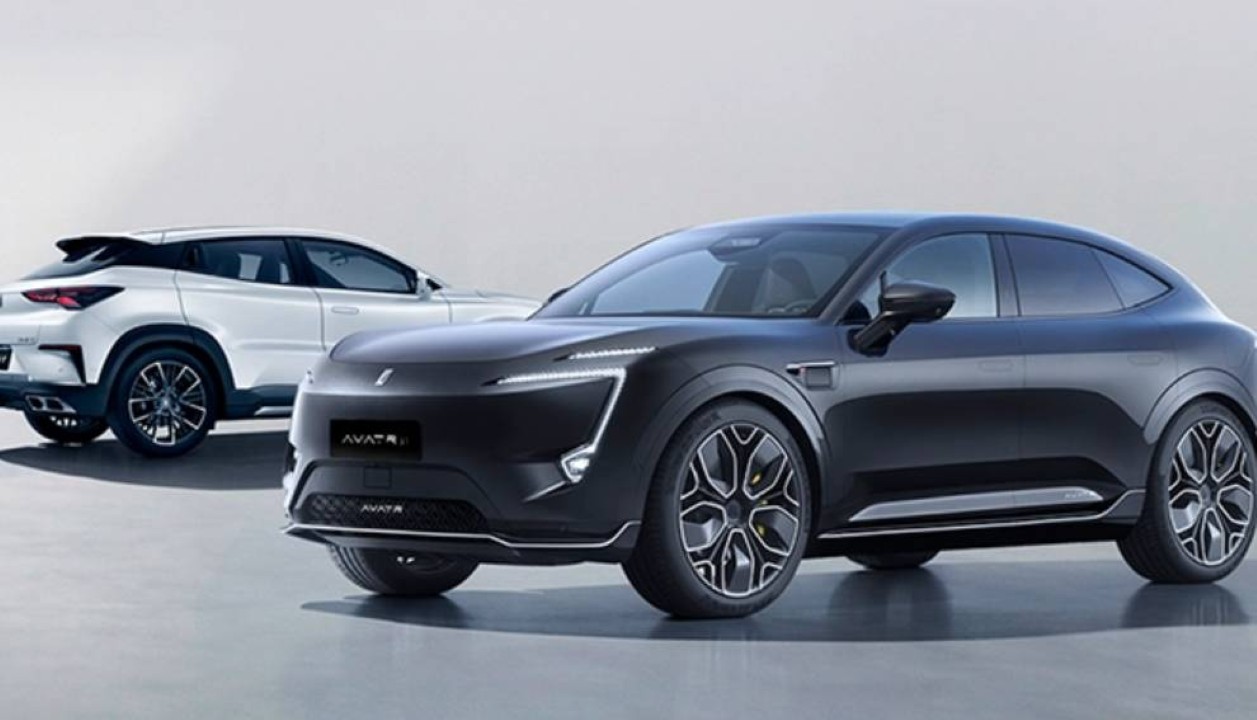
The model arriving in Brazil represents the fourth generation of the Changan CS75, already consolidated in China. Its front design is marked by a three-dimensional grille that fluidly connects to the tapered LED headlights, while the rear features interconnected lanterns that extend across the entire width of the trunk. On the side, the highlight is the recessed door handles and the 20-inch wheels, equipped with Pirelli Zero All Season tires measuring 235/50 R20. The color palette offers three choices: pearl white, metallic gray and metallic black.
It is important to highlight that Caoa carried out in-depth engineering work on the CS75, developing specific calibrations for the suspension and steering systems. This adjustment was crucial to adapt the vehicle’s dynamic behavior to the particularities and expectations of Brazilian consumers.
The suspension system consists of an independent McPherson strut at the front and a multilink at the rear. The shock absorbers, in particular, were calibrated to better resist the challenges imposed by Brazilian road conditions, such as holes and irregularities.

Ample internal space and imposing dimensions of the Caoa Changan CS75
In terms of proportions, the CS75 stands out with 4.77 meters long, 1.91 m wide, 1.69 m high and a generous wheelbase of 2.80 m. In practice, its dimensions equate it to seven-seater sports utility vehicles already present on the national market, such as the Jeep Commander and the Caoa Chery Tiggo 8. The Commander, for example, has the same length and a wheelbase of 2.79 m.
The big distinction, however, lies in the fact that the Caoa Changan utility vehicle carries five passengers, significantly prioritizing comfort and spaciousness of the interior space, in addition to a trunk with an impressive 610 liters of volume. This feature positions it to also compete with the highest configurations of medium SUVs, such as the Toyota Corolla Cross and the Jeep Compass. With the rear seats folded down and the floor in a lowered position, total cargo capacity can expand to up to 1,620 liters.
Performance and economy: details of the CS75’s 1.5 TGDi Turbo flex engine
Powering the CS75 is the already recognized 1.5 TGDi Turbo engine, which underwent an adaptation to flex technology carried out by Brazilian engineering, aiming to fully adapt to the national market. This engine delivers 180 horsepower and a torque of 29.2 kgfm, working in conjunction with an eight-speed Aisin automatic transmission. The SUV is capable of accelerating from 0 to 100 km/h in an agile 8.5 seconds.
According to data released by the Brazilian Vehicle Labeling Program (PBEV), the CS75’s consumption with ethanol reaches 7.2 km/l in urban environments and 8.5 km/l on highway routes. When filled with gasoline, the figures are 10.5 km/l in the city and 12.3 km/l on the highway.
Electrification emerges as the next major strategic step for the future of the model. At an event held earlier this year, Wenting Lu, product manager at Changan in China, indicated the high probability of the arrival of the plug-in hybrid version (PHEV), already available on the Asian market. If this introduction is confirmed, the PHEV system will integrate the 1.5 gasoline engine with an electric propellant, powered by an 18.4 kWh battery, totaling 312 hp and 33.6 kgfm of torque, allowing the SUV to accelerate from 0 to 100 km/h in an impressive 7.3 seconds.
Complete list of equipment and technology on board the Caoa Changan CS75
Inside, the CS75 displays a remarkable premium finish, characterized by a minimalist design and the use of pleasant-touch materials. The focal point is the dashboard, which integrates a set of three screens: a 10-inch digital instrument panel, a 14.6-inch multimedia center (compatible with wireless mirroring for Apple CarPlay and Android Auto) and an additional 12.3-inch screen dedicated to the passenger. This modern system has the ability to be updated remotely via the internet. Ambient LED lighting offers 256 color options, and the center console has an induction cell phone charger.
The panoramic sunroof is one of the standard items, complementing the interior with an all-black finish. The front seats, of the “zero gravity” type, were designed to offer superior support to the body. They include heating and cooling features, electrical adjustments with memory, and even massagers. The front seat belts are incorporated directly into the seats, rather than attached to the center column. For rear passengers, the seats also have heating and cooling functions, with independent controls.
The vast list of equipment includes dual-zone digital air conditioning, induction charger, a premium Pioneer sound system with 14 speakers and a 540-degree camera – which combines the traditional 360° view with an innovative “transparent chassis” feature, making maneuvering easier. In terms of safety, the SUV is equipped with the level 2 ADAS package, including adaptive cruise control and autonomous emergency braking. The warranty offered is seven years or 150 thousand kilometers, whichever comes first.