Hiroshima has new leadership: Mika Yokota, the first female governor, defines resilience for the future By Maria
4 min read
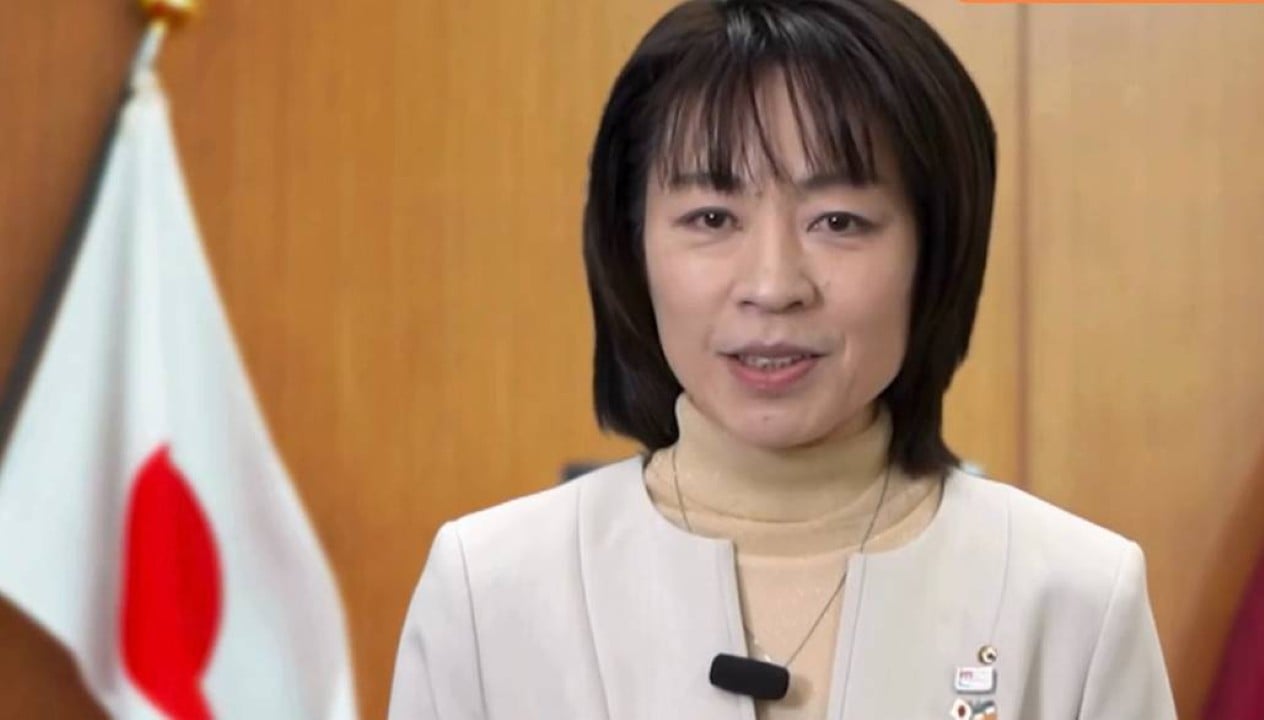 |
In a historic milestone for Hiroshima Prefecture, Mika Yokota took office as governor in November 2025, becoming the first woman to lead the region. With extensive experience in prominent roles, including stints at the Ministry of Agriculture, Forestry and Fisheries, in addition to serving as deputy governor in the provinces of Toyama and Hiroshima, the new leader poses the question of what her ideal concept of leadership is for today.
Its image conveys a serenity that recalls the blue of the Seto Inland Sea. The elegant posture, with a careful bow and the words “Thank you for your cooperation”, give him a strong presence, even with his discreet stature. During a photo session, Mika Yokota, the governor of Hiroshima, broke the silence with “Is everything okay? Maybe it would be better if the photo was taken from the right side”, demonstrating her authenticity. It represents the first change in the province’s leadership in sixteen years.
Yokota’s election took place in November 2025, shortly after the inauguration of Japan’s first woman prime minister, and she won the governorship with more than 80% of the vote, driven by the slogan “Towards a prosperous new era for Hiroshima”. Faced with expectations about her politics as a woman, she expressed a desire to “be natural and communicate her thoughts clearly.” The interview, carried out around four months after his inauguration, revealed how intense his first days in office were.
The governor reported the demands of the period: “It was really difficult. We had to prepare the initial budget in just two months and there were a lot of discussions in that short period. As a leader, I tried to be direct and communicate clearly at all stages of the process.”
The foundation of his leadership vision is deeply rooted in formative experiences. She began her career at the Ministry of Agriculture, Forestry and Fisheries in 1995, building a career spanning three decades. After acquiring knowledge in areas such as legislative reform, international negotiations and partnerships with private companies, he assumed his first management position at the age of 41. She was appointed head of the Food Corporate Conduct Office, responsible for developing risk management measures for companies in the food sector.
During this period, Yokota was the precursor of Japan’s first private certification system, in which an independent entity certifies the safety management of food companies. Amid profound transformations in the sector, driven by the growth of international trade and stricter regulations, she founded the “Japan Food Safety Management Association” (JFSM) in 2016. The initiative implemented a program to ensure the safety and reliability of food, demonstrating remarkable anticipation of the needs of a scenario where hygiene management and response to scandals became increasingly crucial. However, the proposal faced considerable opposition.
The objections were clear and direct, with statements such as “It won’t work”, “It’s too expensive” and “I don’t see the need for it”, echoing the initial resistance to his innovative vision.
In the midst of this battle, the governor found inspiration in the NHK drama series “Asa ga Kita”, which portrayed the life of an entrepreneur who founded several businesses and the first women’s university in Japan. Yokota shared that she watched the series daily and identified with the character’s strength, which strengthened her own spirit. “I visited around 60 private companies in search of financing and to structure the systems, and sometimes I received very harsh criticism. But when I thought about the food industry in 20 or 30 years, I felt that I needed to do it now”, he said, showing that his long-term vision and the resilience inspired by figures like the protagonist of the series were fundamental in overcoming initial disbelief.
This challenge was unprecedented and complex, something that could not be accomplished in isolation. Although he valued teamwork, Mika Yokota believed that, ultimately, his own judgment was decisive and he instinctively communicated his ideas. However, at one point, she received a strong “reprimand” from a subordinate.
The governor recalls: “I received a stern warning not to speak in certain ways. It was then that I realized that everyone really pays attention to what the leader says and does. I understood that I needed to be more careful about how my words and actions are perceived by those around me.”
Government ministries, in particular, often organize teams with professionals from different sectors. Fluid communication is the basis of any enterprise. Yokota, who has maintained this premise since taking office, amused the officials present at the interview by asking: “I think there are different opinions on this… what do you think?” One of the team members shared her perception: “She really listens to what employees have to say, rather than just talking one-sidedly. So we feel a responsibility to convey information appropriately in return. I feel like she is someone who deeply values what happens in practice.”