Scientists calculate that the interstellar comet 3I/Atlas has an origin of up to 12 billion years
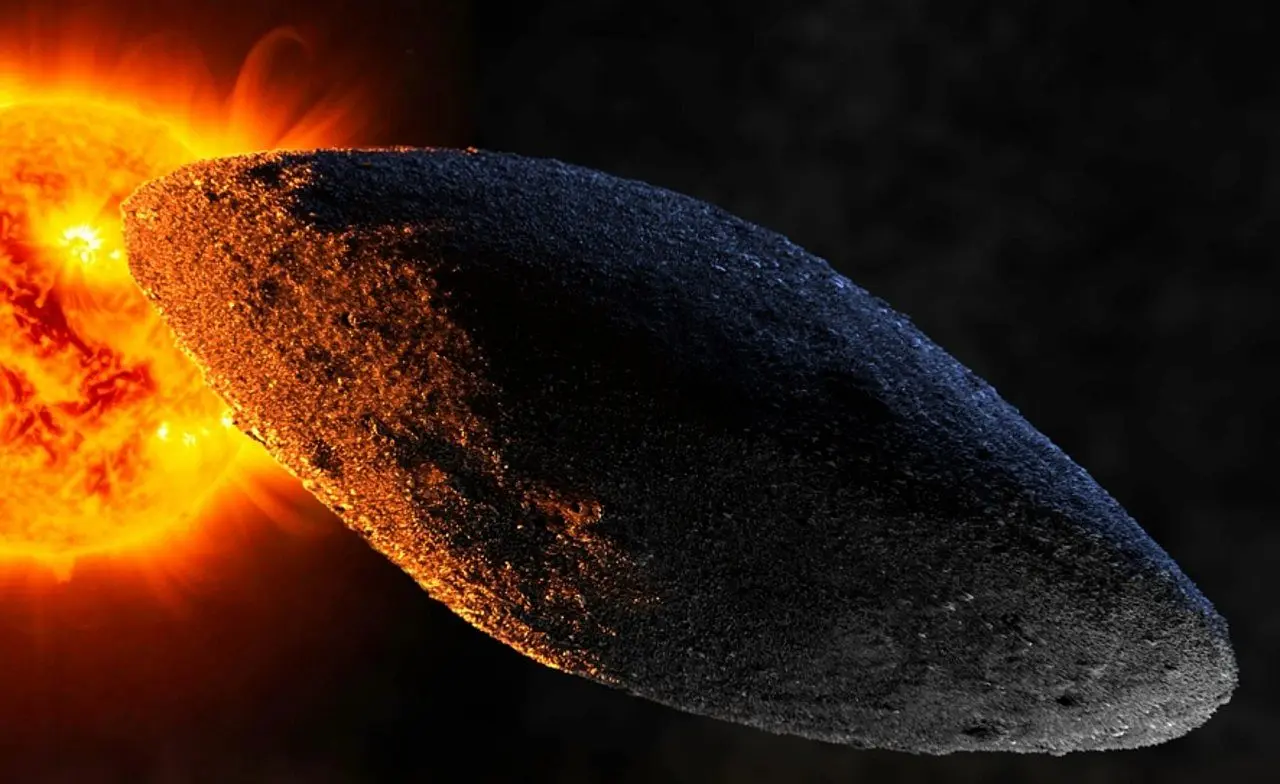
New analysis suggests that the interstellar comet 3I/Atlas may be impressively old, dating back approximately 10 to 12 billion years. Its unique composition differs from any other material observed so far in the Solar System, as detailed in research published in the journal Nature.
This celestial body probably represents the oldest object ever recorded in transit through our star system, explained Martin Cordiner, planetary scientist and astrochemist at NASA’s Goddard Space Flight Center, located in Greenbelt, Maryland, in the United States. Cordiner is one of the lead researchers involved in this recent study.
Discoveries about the unusual chemical composition of 3I/Atlas
Research indicates that comet 3I/Atlas originated in a drastically colder environment, with temperatures of around -243 degrees Celsius. This scenario differs substantially from the conditions prevailing during the formation of Earth and other bodies in our Solar System, which occurred approximately 4.5 billion years ago.
With an estimated diameter of 2.6 kilometers, this astronomical object crossed immense distances after being ejected from its original planetary system by mechanisms still under investigation.
“We had never observed a celestial body with the characteristics of 3I/Atlas before,” said Cordiner, highlighting the uniqueness of the discovery.
To investigate its properties, the researchers used the James Webb Space Telescope, measuring the proportions of isotopes – variations of chemical elements such as hydrogen and carbon – present in the comet.
The proportions of hydrogen isotopes served as indicators of the temperature and radiation levels in the primordial environment where 3I/Atlas formed. Carbon isotopes have provided valuable insights into the composition of the interstellar gas cloud that, in turn, gave rise to the comet and its host planetary system.
Remarkably, the comet’s water had a concentration of deuterium — an isotope of hydrogen — approximately 30 times higher than that found in comets that orbit our Solar System. The proportions of its carbon isotopes, in turn, differed significantly from those detected both in objects in our system and in interstellar clouds and nearby protoplanetary disks. This unique composition establishes it as a true “time capsule”, offering clues about the conditions of the universe in its beginnings and about planetary formation in environments drastically different from ours.
Cordiner suggested that 3I/Atlas is most likely a remnant of the planet formation process that occurred around another distant star.
Leia Também

Messi reaches 19 goals in FIFA World Cups with great free kick for Argentina in clash with Jordan

Cristiano Ronaldo shines beyond the pitch at the 2026 World Cup with business empire and family luxury

At 41, Cristiano Ronaldo reaffirms his historic legacy and prepares to shine in the 2026 World Cup
“Information obtained from the James Webb Telescope indicates that the original environment of the 3I/Atlas host planetary system was very different from our own Solar System,” explained Cordiner. He added that this location “was likely colder, with a lower abundance of metals, and subject to more intense radiation from ultraviolet and cosmic rays.”
Comet 3I/Atlas stands out for its richness in organic molecules, which include essential elements such as carbon, hydrogen, nitrogen, oxygen and sulfur. According to Cordiner, this feature “demonstrates that, even with an origin in a cold and distant place, the volatile components crucial for the development of life, as we know it, were abundant in that remote planetary disk in formation.”
The chronology of the formation of comet 3I/Atlas
Analysis of the carbon composition in 3I/Atlas suggests that its formation occurred approximately 12 billion years ago, in a period of great star formation activity in its home galaxy. To put it into context, the Universe began with the Big Bang around 13.8 billion years ago.
Although researchers think the comet may have formed in the Milky Way, its advanced age does not exclude the possibility of an origin in another galaxy.
“I used to believe that the distances between galaxies were excessively large, but in fact a high-speed interstellar object could reach our system in just a billion years from neighboring galaxies like the Magellanic Clouds,” commented Cordiner.
Comet 3I/Atlas may have been expelled from its original star system due to intense gravitational interactions with planets, although the hypothesis of a collision is also evaluated as a possible mechanism.
Previously, two other interstellar objects were identified in transit through our solar system: comet 1I/’Oumuamua, seen in 2017, and 2I/Borisov, discovered in 2019.
Currently, 3I/Atlas is heading towards Saturn’s orbit. The prediction is that it will surpass Pluto’s orbit in 2029 and, around 2035, it will cross the outer border of the Solar System, continuing its journey.
Despite the proliferation of conspiracy theories that associate the 3I/Atlas with possible alien ships, scientists remain convinced that it is a natural object.
“While the scientific community remains receptive to new understandings, we take extreme care in evaluating the evidence for all hypotheses,” said Cordiner. He concluded by stating that “in this particular case, the evidence was unequivocal from the beginning, pointing to the observation of an object with comet-like characteristics, and this interpretation was consistently validated by subsequent observations.”