Valve launches Steam Machine with performance similar to PS5 for almost double the price in 2026
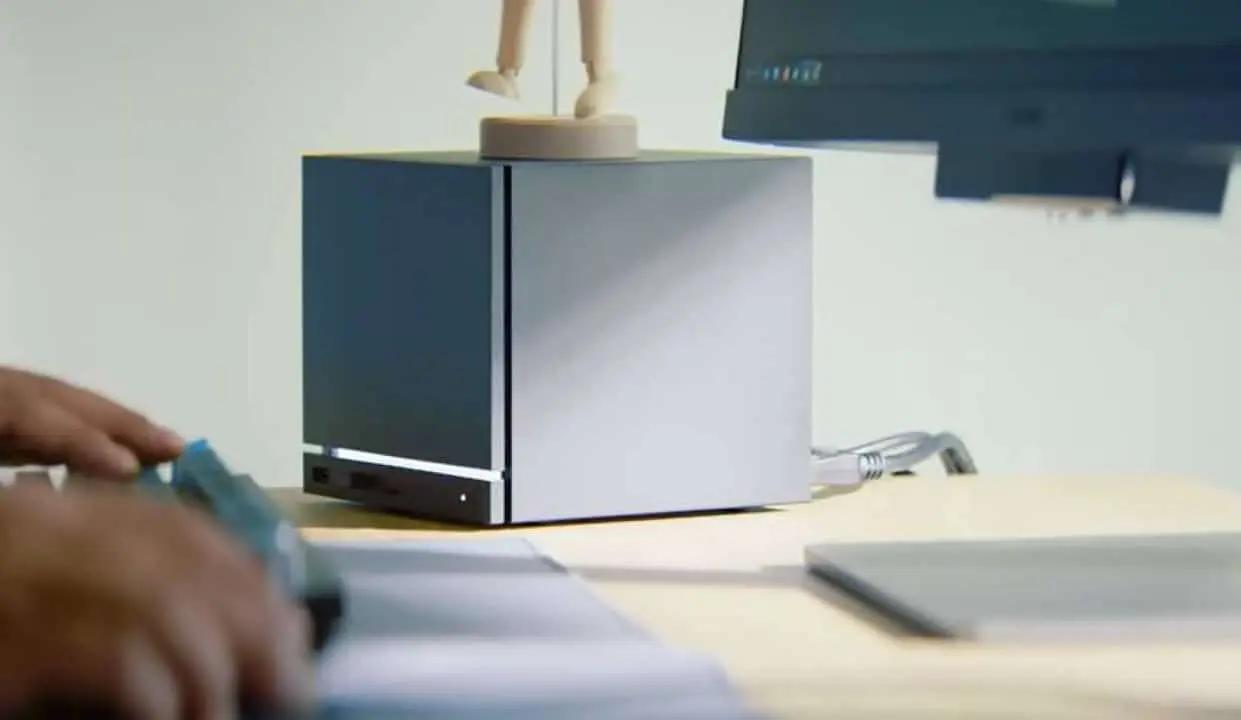
The initial experience with the Steam Machine presented unexpected challenges. What should have been an easy-to-use game console turned into hours of adjustments and troubleshooting, characteristic of a demanding personal computer, but with a unique approach.
Since the launch of the Magnavox Odyssey in 1972, the fundamental premise of consoles has always been the same: offering a simple platform to play exclusive games directly on the television. Companies like Nintendo, Sony and Microsoft have maintained this basic formula for decades, selling essentially the same concept: purchase the device, connect it to the TV, insert the game and start the fun.
Steam Machine, however, seeks to go beyond this tradition. It presents itself as an innovative proposal, promising a device with fewer limitations and access to an almost unlimited library of games, although this comes at a cost that is almost double the value of a PlayStation 5.
Valve has announced that the Steam Machine will start at US$1,049 without a controller, or US$1,128 with a gamepad included. Surprisingly, this machine does not deliver a considerable performance leap compared to Sony’s PlayStation 5, launched 5.5 years ago. Even after three price increases, a standard US$650 PS5 still delivers sharper images in titles like Cyberpunk 2077 and Horizon Zero Dawn Remastered, according to tests, raising the question about the justification for such a high cost.
The distinction lies in the fact that the Steam Machine is essentially an enhanced personal computer designed to behave much more closely to a traditional console. The device impresses for being exceptionally silent and compact, significantly smaller than a PS5, offering a fluid experience that is fully controllable by any modern gamepad. Dispensing with a mouse, keyboard or Valve’s Steam Controller, navigation, downloading and playing games are done entirely via joystick.
It represents the most successful attempt to integrate a PC into the living room environment, far surpassing the performance of a homemade assembly. Valve’s bet with the Steam Machine is that consumers would not be able to replicate the device on their own. The company says it is selling the components at cost, negotiating with suppliers to ensure the best conditions amid an unprecedented global crisis in memory supply and demand.
However, the question remains: does the product justify the $1,049 investment? The answer depends on the user’s expectations regarding what a PC can offer and Valve’s ability to smooth out the initial friction before the console reaches the consumer’s hands.
For better or worse, the Steam Machine is not yet fully prepared for the intense battle of consoles. The simplicity of “buy, plug in, insert the game and play” is not immediately realized with this device.
When unpacking the product, I had to plug, unplug, and replug the Steam Controller several times to have any control. The author’s Denon receiver only output stereo sound, requiring direct connection to the Samsung OLED TV. The television, in turn, did not recognize the device, requiring the manual activation of Game Mode to enable HDR and VRR. Furthermore, Valve did not include essential dependencies such as Proton, necessary to run Windows games, which needed to be downloaded. After starting several downloads and walking away, it was discovered that half of the games had not been completed, filling the disk with 800GB of incomplete installations.
Information suggests that these issues will be resolved, and Valve is known for keeping its promises. When spontaneous restarts, crashes, and graphical glitches were reported upon reaching the video memory limit, the company took action and fixed the issues within just one day. The initial review of the Steam Deck, for example, became practically obsolete due to the way Valve resolved that portable’s flaws.
However, as with the Steam Deck, the experience on launch day feels unfinished and more suited to advanced users. In fact, this analysis is being written directly on the Steam Machine, reinforcing its nature as a personal computer.
When connecting the keyboard, mouse, speakers, headset, USB hub and two monitors to the Steam Machine, all peripherals worked perfectly, resulting in a Linux desktop environment that is almost as efficient as a conventional dual-boot PC, but considerably quieter. Even an external Blu-ray player was activated when plugged into the front ports. For those who don’t have a desktop, this functionality can make the device’s price more attractive.
Leia Também

Messi reaches 19 goals in FIFA World Cups with great free kick for Argentina in clash with Jordan

Cristiano Ronaldo shines beyond the pitch at the 2026 World Cup with business empire and family luxury

At 41, Cristiano Ronaldo reaffirms his historic legacy and prepares to shine in the 2026 World Cup
Although the Steam Machine does not have the same graphical power as larger gaming desktops when used on a table a few meters from the monitor, the gaming experience under the TV is impressive. It is not a high-performance machine, but in almost all titles tested, it was possible to achieve a smooth and playable frame rate, in a similar way to current consoles: opting for lower resolutions, such as 1080p, and scaling them to 4K on the TV, using AMD’s FSR super resolution technique.
Despite not being able to run the most demanding games at true 4K resolution due to limitations in video memory and graphics power, the Steam Machine delivers a remarkably stable frame rate, ideal for Variable Refresh Rate (VRR) televisions. There’s enough power to run titles like Indiana Jones or Returnal at 1440p with medium settings, Forza Horizon 6 at 1440p with high settings, or Cyberpunk 2077 in 4K scaled with high specs, and even Shadow of the Tomb Raider in true 4K with medium settings, with no drops below 40fps, a performance that aligns perfectly with the TV’s VRR sync.
Surprisingly, Indiana Jones and the Great Circle, one of the most graphically intensive PC games, provided a great experience. Hours were dedicated to the adventure, throwing blows and using whips from the couch, resulting in genuine fun.
In fact, Alan Wake II, a game that consumes a lot of RAM, was downloaded from the Epic Games Store (via Heroic, accessible via the Discover app on the Linux desktop) and was playable at a base resolution of 847p, similar to the performance seen on the PS5 and Xbox Series X.
The frustrating aspect is that, in every situation, the adjustments had to be discovered through trial and error. Unlike the PS5, there are no optimized presets for the Steam Machine from console manufacturers or game developers. It lacks, for example, presets for AAA titles, a global button for FSR, or features such as checkerboard rendering and PSSR, present in Sony consoles to improve the image on 4K TVs. As a precaution, Valve set the console to 1080p by default, preventing the setting of a scaled 4K resolution without prior manual intervention.
In the PS5 Pro analysis, the recommendation for additional investment was restricted to those who play very close to the TV screen. At a distance of 12 feet from a 65-inch TV, not even perfect 20/20 vision was enough to notice a $200 graphical difference over the base PS5 model. The fluidity of the games was the crucial factor, a feeling that is repeated with Steam Machine games configured correctly. However, due to Valve’s arbitrary 1080p limitation, games look noticeably less attractive at this distance by default. Game developers are expected to create specific presets for the Steam Machine soon.
A really worrying point is the inconsistency in the Steam Machine’s sleep mode. On three occasions, a game left running was found in exactly the same spot after 12 or 14 hours. However, on three other occasions, the gaming session had disappeared, and on one of them, the TV was found on in the early hours of the morning. Valve has mastered this functionality on the Steam Deck, which leads to the expectation that it will only be a matter of time before the issue is resolved on the Steam Machine.
Expected Steam Machine Features and Amenities
- It is a practical feature to turn on the system with the Steam Controller or a Bluetooth control, which activates the entire entertainment system via HDMI-CEC commands and turns it off when finished. However, in a test situation, it was necessary to look for the TV remote control when another device was accidentally turned on, as there was no Steam button to return to the machine’s input.
- Full remote control of the Steam Machine is possible from a Steam Deck or any other Steam-enabled computer, allowing game streaming in both directions. Unlike the PS5, however, it is not possible to remotely wake the Steam Machine if it is in sleep mode.
- Although it has a configurable and visually appealing RGB LED status bar that displays download progress, the Steam Machine does not automatically start downloads when it is turned off. You must start the process manually so that it can complete in sleep mode.
- Despite Valve’s pride in its dedicated internal antenna for the Steam Controller, several disconnections were observed that never occurred with the PS5 or Xbox. Valve, however, assured that there are fixes on the way for this problem.
Other notable details about the Steam Machine
- Valve confirmed that the Steam Machine will receive AMD’s FSR 4 upscaling technology, which is superior and similar to that used on the PlayStation.
- The company also reported that a graphics driver update could increase ray-tracing performance by up to 20% in certain games, an advance that could reverse the initial perception of dropped frames when activating the feature.
- It is possible to adjust the television volume directly via the gamepad, just hold down the Quick Access Menu button and move the left stick up or down.
- Just like on the Steam Deck, a vast array of real-time performance statistics, RAM consumption, and other information is accessible by enabling the built-in overlay.
- The Steam Machine (and the entertainment system connected via HDMI) can be activated via Bluetooth controls, successfully tested on an 8BitDo Pro 2.
- SteamOS automatically recognized the SteelSeries Arctis Pro Wireless headset’s two audio devices, allowing the chatmix function to work to easily equalize sound from friends and the game.
- The Ethernet port demonstrates high speed, with downloads of almost 1Gbps from Valve’s servers over a 1Gbps fiber connection.
- While HDR worked flawlessly, SDR (Standard Dynamic Range) content looked overly bright and washed out by default.
- The front USB ports are faster and potentially offer more power than the rear ones, as evidenced by a USB 2.0 optical drive that indicated a low power error when plugged into the rear ports.
- It’s notable that the TV’s remote control can navigate Steam’s menus via HDMI commands. However, it is not yet possible to use it to play 2D games.
- The Steam Machine supports multiple monitors in desktop mode, but is currently limited to a single monitor in gaming mode.
- If the user has a Steam Deck microSD card, it is possible to connect it and play the titles installed there, as long as dependencies such as Proton are previously installed.
- The LED progress bar only displays the current download or installation, not all pending downloads.
- Outside of download periods, the RGB LED bar can be configured with effects such as “breathing”, rainbow, solid color or a “patrolling eye”. It is possible to adjust the intensity of the brightness, from very strong to very weak, and change the speed and tone of the colors.
- The front covers are magnetic and removable; Valve will make the CAD files available so users can design and print their own 3D versions. The 2TB model also includes options in fuzzy red and imitation walnut wood.
In 2022, the Steam Deck portable was launched with several problems and instabilities, being recommended only for early adopters. A month later, it was already possible to recommend it to friends familiar with technology. After a year of updates, the recommendation was extended to anyone who understood its advantages and disadvantages. At the beginning of 2024, the OLED Deck was suitable for practically everyone. The expectation is that the Steam Machine will follow a similar trajectory, given Valve’s impeccable track record in launching and improving its products through updates.
However, the Steam Deck not only popularized PC gaming among those looking for portability, but also made gaming computers more accessible. With prices of US$400 for the LCD model and US$549 for the OLED, it represented the best offer on the market, opening the doors of PC gaming to those who had a console budget, but could not afford a traditional gaming setup.
This same accessibility approach is not repeated on the Steam Machine. Valve justified the absence of subsidies based on its “beliefs about building healthy ecosystems.” This implies that, with the Steam Machine, the consumer pays typical PC prices, rather than console prices. Despite this, the set is still considered unique and an excellent proposition, especially if the intention is to use it as a complete computer, and not just a games console. It would be an ideal product for those who, in times past, needed a compact setup for work and leisure in an environment such as a university dormitory.
Unlike other times, there is no recommendation to “wait and see” what the PS6 and Xbox “Project Helix” will be like. The global memory crisis, dubbed “RAMageddon,” has made the future of video game consoles unpredictable. Sony is rumored to have pushed back its plans to 2028 or even 2029, while Microsoft is reportedly reevaluating its entire console business model. While this component crunch may have influenced Valve’s pricing, the next-gen consoles are not expected to surpass the Steam Machine in the near future.
For anyone looking to purchase a Steam Machine this year, while Valve fine-tunes the final details, we suggest signing up for a chance to reserve one. Valve said it has only managed to secure about two-thirds of planned stock so far due to component shortages. Even at the current price, the expectation is that stock will run out quickly.