Advertising on hydration breaks should stay in football after success in the World Cup
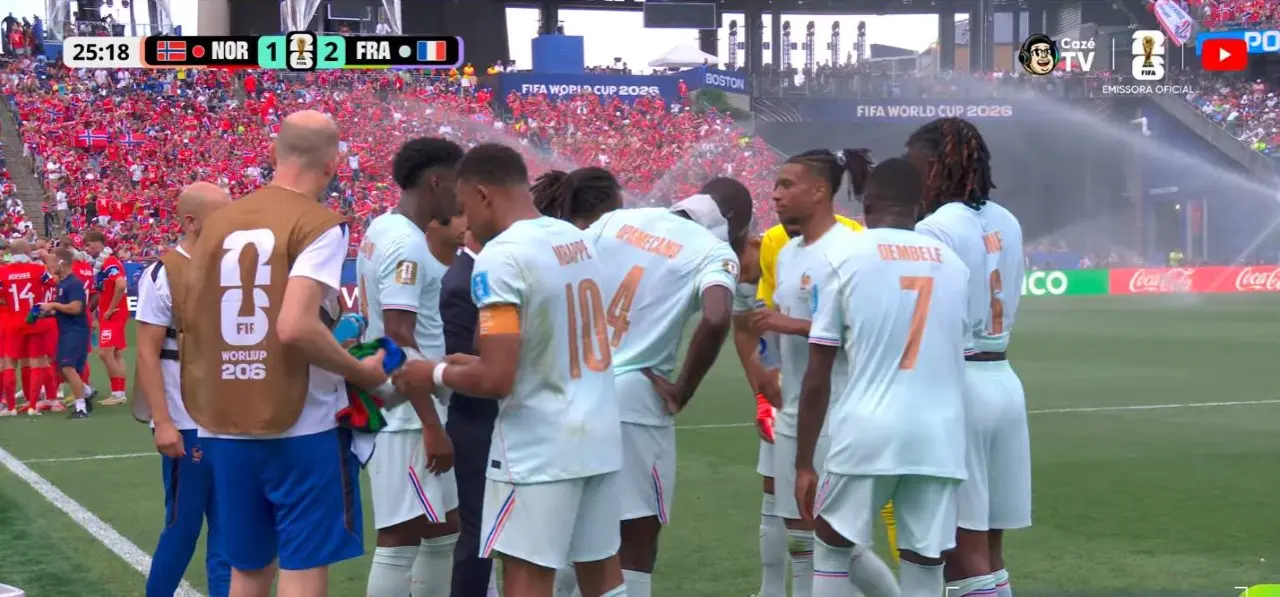
During the World Cup, football fans globally are exposed to an additional four minutes and twenty seconds of advertising per game. This time adds up to more than seven and a half hours of extra announcements throughout the entire championship. Such insertions occur during mandatory hydration intervals for athletes.
While some television networks, such as those in the United Kingdom, choose to show the progress of the match or commentary from experts during these stoppages, many others around the globe use these periods to air commercials.
The flow of commercial advertisements allows them to begin twenty seconds after the referee’s whistle for the three-minute break in each half of the game, ending thirty seconds before the contest resumes.
This regulation creates the possibility of eight additional thirty-second advertising insertions per match, for each television channel in each nation, totaling 832 spaces throughout the tournament.
Professionals in the media sector reported that a thirty-second advertisement broadcast during the World Cup by Fox Sports, in the United States, could cost between US$200,000 and US$300,000, equivalent to R$1 million and R$1.5 million. This amount can rise to US$750,000 (R$3.8 million) in matches involving the American team or in the decisive stages of the championship.
Considering these values, the expectation is that advertising broadcast exclusively during hydration breaks will generate more than US$250 million (R$1.3 billion) in the United States alone. This amount represents a new and substantial source of revenue for broadcasters, distinct from commercial break models already established in other sports.
However, the introduction of these interruptions has been the subject of controversy, breaking the rhythm of the games and attracting severe criticism from coaches, athletes and significant booing from fans in several arenas.
The question arises as to which nations are running these advertisements, the mechanism by which they operate and the future implications for sport.
Global financial impact of hydration stops
The International Football Federation (FIFA) argues that the stoppages were implemented to protect the health of players, especially given the heat in North America. The entity emphasizes that uniformity is crucial, maintaining intervals in all matches, even in places with mild temperatures or air-conditioned stadiums.
In many nations, broadcasters have the autonomy to decide how to use these interruptions, and most take advantage of the opportunity to increase advertising revenue, whether with full commercial blocks or split-screen ads.
Fox Sports, an American television network, makes the most of available time by showing full-screen advertising during interruptions. The hydration period itself on the channel has an exclusive sponsor, and Coca-Cola, a FIFA partner, offers its branded drinks to the athletes. In this way, audiences in the United States experience triple exposure to advertising content.
Rob di Gisi, professor of sports management at the Wharton School of the University of Pennsylvania, explains that “American culture has been accustomed to seeing advertisements during games for four or five decades, which makes this practice perfectly integrated.”
He adds that “there is little resistance to this in the United States. Any change that ‘Americanizes’ the matches will naturally be accepted by the audience without much perception.”
However, Telemundo, another broadcaster in the United States that broadcasts matches in Spanish for Latin American audiences, chose not to run ads during hydration stops.
The Telemundo narrator expressed during Canada’s opener the week before: “We prefer the traditional approach. We should have the opportunity to watch the players and fans having fun, not the corporate aspect of football.”
The reporting team sought contact with Fox Sports and Telemundo to obtain statements on the topic.
Commercial broadcasting also extends across other significant global markets, covering countries such as Brazil, Mexico, Canada, France, Germany, Italy, Spain, China, Japan, India, Australia, as well as the Middle East and Sub-Saharan Africa.
Although broadcasters in these regions cannot command the same high prices as Fox Sports, and not all of them take advantage of maximum airtime, the total revenue generated from this additional advertising is estimated to be substantial.
Di Gisi estimates that “by expanding this practice to all other nations, revenue from advertising during hydration breaks could reach the US$1 billion mark (equivalent to more than R$5.2 billion) globally.”
However, simply exposing the public to products during game stoppages does not guarantee the success of the advertising campaign.
Leia Também

At 41, Cristiano Ronaldo reaffirms his historic legacy and prepares to shine in the 2026 World Cup

Portugal draws goalless with Colombia in the 2026 World Cup and Cristiano Ronaldo has a lackluster performance
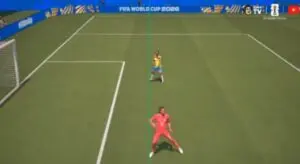
VAR decides to cancel Colombia’s goal against Portugal after a thorough analysis of the tip of the boot, impacting the classification in Group K of the 2026 World Cup
T. Bettina Cornwell, director of marketing at the University of Oregon, asks: “Will advertisers who use hydration breaks face a level of public dissatisfaction that will negate the value of their advertising?”
She adds that “it is undeniable that, by interfering with the expected experience, such as the continuous flow of the match, brands can generate a negative reaction from fans.”
In one notorious incident, Fox Sports even missed broadcasting the resumption of the opening match between Mexico and South Africa, after the second hydration break, due to the excessive length of its advertisements.

Prospects for the continuation of commercial interruptions in football
Broadcasters in each region act autonomously in the marketing of advertising spaces, which means that FIFA does not receive financial profits directly.
However, this additional revenue increases the value of World Cup broadcasting rights for television networks, which, in theory, allows FIFA to negotiate higher values for future tournaments.
FIFA has not yet made official the maintenance of hydration breaks in future editions of the World Cup. However, considering the financial gains for the entity and its broadcast partners, and the fact that the 2030 World Cup will take place in Morocco, Spain and Portugal, regions with high summer temperatures, it is very likely that these interruptions will be maintained.
Dennis Deninger, author of “Live Sports Media: The What, How and Why of Sports Broadcasting”, notes that “Fox Sports acquired the rights to this World Cup for just US$485 million (R$2.5 billion).”
Deninger points out that “if the broadcaster is earning US$250 million (R$1.3 billion) just from hydration breaks, the amount paid for broadcasting rights represents an excellent deal.”
He explains that “in the next rounds of rights negotiations, FIFA will have arguments to justify a higher value product, as broadcasters can sell additional sponsorships and advertising space during these interruptions, in addition to an increase in the number of games, making it possible to charge higher amounts from each broadcast partner in each country”.
Deninger concludes that “there is no going back; faced with a chance to increase profits, no one sets out to reduce earnings.”
The introduction of advertisements was facilitated by the more diverse and casual profile of fans that the World Cup attracts.
Thomas Peeters, professor of strategic economics at the Erasmus School of Economics, says: “I believe this practice is here to stay, especially in competitions organized by FIFA.”
Peeters details that “the World Cup is an event that captures a non-traditional audience, made up of people who watch without following every match, reaching a very wide audience.”
“There is a growing trend for audiences to consume clips rather than full games,” explains Peeters, “which allows for ad breaks to be inserted without much objection.”
He concludes that “this approach fragments the game into smaller segments that, similar to other forms of entertainment, benefit younger audiences accustomed to consuming content in smaller portions.”
However, it remains uncertain whether other major football competitions will adopt hydration breaks, motivated by financial benefits.
The Premier League, for example, is restricted in the UK by regulatory rules and would face strong resistance from fans if it implemented such pauses. UEFA, in turn, has demonstrated a stance of distancing itself from FIFA in recent decisions, such as the commitment not to apply dynamic ticket prices to the 2028 Euro Cup.
Peeters adds that “in matches attended by passionate fans of both teams, an interruption after 25 minutes of play is undesirable.”
For entities such as UEFA and the Premier League, adopting this idea seems to be less pertinent.