Study of ancient teeth shows leap in mammal evolution after dinosaurs
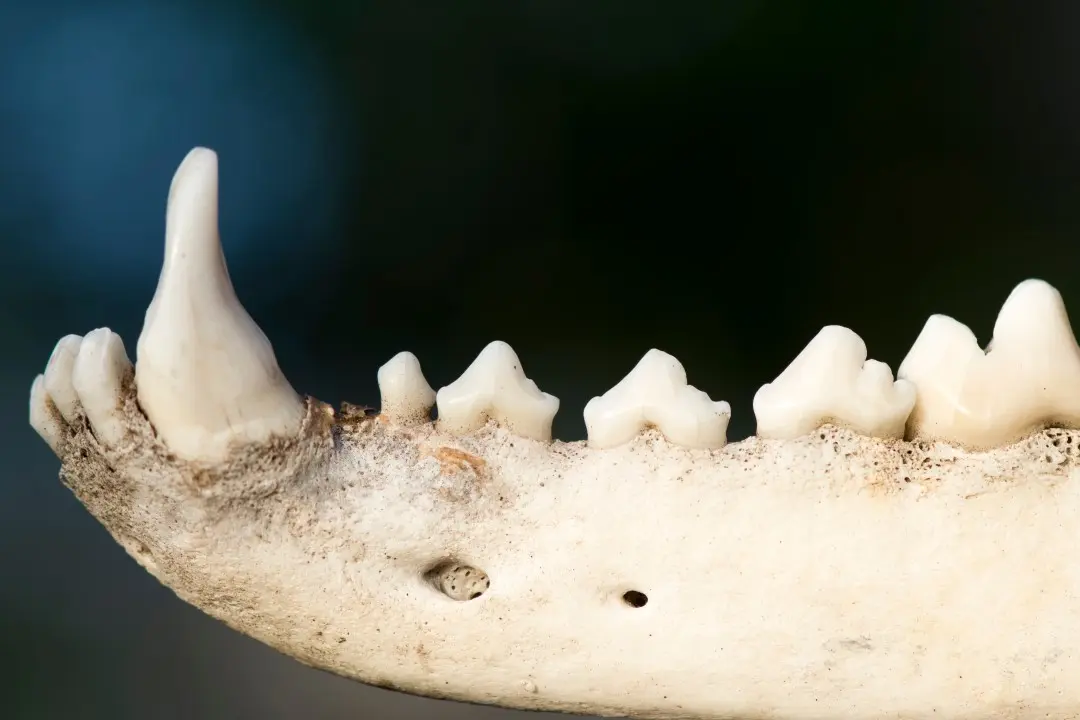
The global environment underwent significant transformations after the extinction of the dinosaurs, approximately 66 million years ago. Mammals took over the scene.
As forests regenerated and the climate changed, mammals occupied ecosystems previously under the dominance of large reptiles, diversifying into new niches.
Previous research revealed traces of primitive mammals in North America, but there were still considerable gaps regarding the adaptation of these animals in other regions of the planet.
Prehistoric teeth reveal new details about mammalian evolution
A recent investigation, focusing on dental fossils of ancient mammals found in southern China, has brought to light unprecedented information about this period.
The results indicate that, in the post-mass extinction period of the Cretaceous, mammals initially increased in body size, and only later did their teeth develop specializations for different diets.
This evolutionary sequence may have been crucial for them to take advantage of environmental changes, as ecosystems gradually reestablished themselves.
The importance of expanding research beyond North America
Much of the scientific knowledge about the first ten million years of the Age of Mammals comes from fossil records discovered in North America.
More on this story: Study reveals why there were no mouse-sized dinosaurs
In contrast, Asia has yielded significantly fewer fossils, creating notable gaps in the narrative of mammal evolution following one of Earth’s greatest mass extinctions.
Jack Tseng, associate professor in the Department of Integrative Biology and Museum of Paleontology at the University of California, Berkeley, is the study’s lead author.
“There is a considerable imbalance in both the quantity and quality of the fossil record documenting the first 10 million years of the Age of Mammals,” said Tseng.
He added that “the majority of globally known fossil sites are in North America, while only 3% are located in Asia, and most of these contain species not found in other regions.”
How fossil teeth provide crucial information for science
The research team has compiled the largest available dataset of Asian placental mammal fossils from the Paleocene, covering approximately ten million years following the extinction.
Learn more: Discovery in Wyoming reveals rapid evolution of mammals after dinosaur extinction
For this, 48 fossil specimens collected in the Nanxiong, Qianshan and Chijiang Basins, located in current southern China, were analyzed.
These specimens represented diverse groups of mammals, including large herbivores, omnivores, and species closely related to modern rodents.
From these findings, the researchers formed a collection of 200 fossil teeth, corresponding to 37 species exclusive to East Asia.
Qian Li, professor at the Key Laboratory of Vertebrate Evolution and Human Origins at the Chinese Academy of Sciences in Beijing, actively participated in the work.
“The fact that teeth interact directly with the environment through biting and chewing behaviors makes them crucial in helping us identify potential links between their structure and the ecological context,” explained Li.
Evolution of mammals: first size, then dental specialization
Scientists often use fossil teeth as a source of information because they preserve well and offer many clues about an animal’s way of life.
See Also

Tokyo police search for Carmelita Rakdesha Paul, 12-year-old British teenager who went missing on a trip

Seven new games enrich the Game Pass catalog from August 10th to 14th for Xbox and PC

Ariana Grande is seen in New York after confirming her retirement from the spotlight
The shape, height, sharpness and wear of the teeth can indicate an animal’s likely diet, whether it is based on grinding hard plants, cutting meat or consuming a variety of foods.
Through high-resolution 3D models and computer simulations, researchers were able to quantify subtle differences in tooth morphology and function.
During the early Paleocene, East Asian mammals generally had relatively large bodies and teeth, but with little variation in tooth height and sharpness.
On the same topic: Recent study explains why dinosaurs were not as small as birds
This pattern underwent changes over the next five million years, with tooth shapes becoming significantly more diverse and progressively specialized for different types of chewing and food processing.
The findings indicate that mammal diets diversified as new ecological niches emerged and were filled after the dinosaurs disappeared.
The ecological flexibility of early mammals in an unstable environment
The researchers also observed that these early mammals demonstrated remarkable ecological flexibility.
Rather than relying on a single food source, they likely exploited a wide range of available resources in a period of constant environmental change.
Suyin Ting, former collections manager at the Louisiana State University Museum of Natural Sciences, also contributed to the analysis.
“As ecosystems recovered and transformed after the Cretaceous-Paleogene period, the shape and function of teeth also changed, indicating ever-changing evolutionary pressures and ecological opportunities,” said Ting.
Global trend: body enlargement precedes dental specialization
The results of the study confirmed that changes in the complexity of teeth occurred after growth in body size, a pattern that scientists call “strength before biting”.
More on this story: Study indicates that human life limit is defined by gene editing mechanism
Similar trends have been observed in previous studies of mammals found in North America and Europe, suggesting a global pattern of recovery.
The evidence collected indicates that this path of ecological and evolutionary recovery may have manifested itself in different regions of the planet.
Implications and future of prehistoric mammal research
The researchers highlighted, however, that the study has certain limitations, mainly the fact that most of the fossils are from herbivorous mammals, which makes it difficult to draw comprehensive conclusions about all groups of mammals.
Interpreting ancient diets from teeth also presents natural constraints, and future fossil discoveries will be essential to building a clearer picture of Paleocene ecosystems.
“Our work offers the first insights into changes that occurred in placental mammals outside of North America after the late Cretaceous period, and opens up opportunities for future research to explore some of these associations in more detail,” concluded Tseng.
“We hope that these insights will be useful for the development of predictive models and conservation strategies, aiming to understand how modern animals could react to future biodiversity crises”, concluded the researcher.