Fossil with embedded T. rex tooth reveals crucial details of prehistoric attack
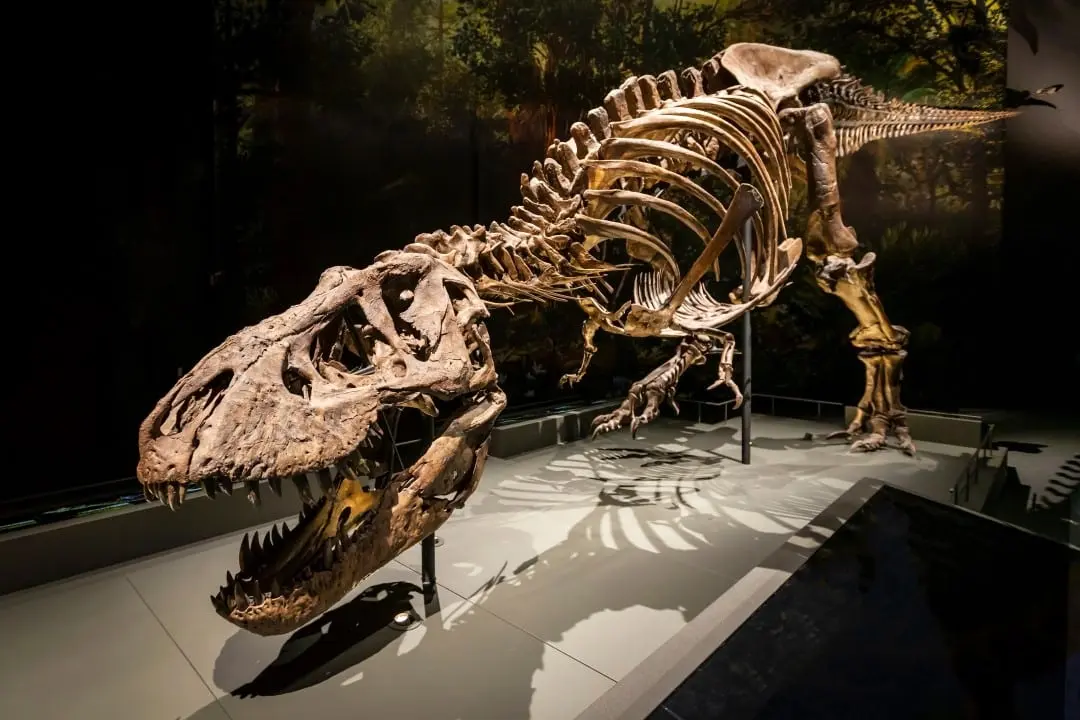
Researchers at the Museum of the Rockies at Montana State University and the University of Alberta in Canada have analyzed an extraordinary fossil that promises to revolutionize understanding of the hunting habits of Tyrannosaurus. The find, a skull with a T. rex tooth still embedded in it, offers a rare and detailed perspective on the final moments of an attack by this iconic predator.
In the Age of Dinosaurs, approximately 66 million years ago, the region that today corresponds to Montana, in the United States, was home to giants. The fearsome King Tyrannosaurus, one of the largest carnivores, inhabited this environment alongside notable herbivores, such as Triceratops and Edmontosaurus, the latter known for its duck-like beak.
On the same topic: Record T. rex auction for US$50 million raises scientific concern
Rare find: Tyrannosaurus tooth preserved in herbivore skull
In 2005, in the Hell Creek Formation of eastern Montana, a team of paleontologists unearthed a nearly intact Edmontosaurus skull on land managed by the Bureau of Land Management. Currently part of the collection of the Museum of the Rocky Mountains, the specimen displays a unique feature: a broken Tyrannosaurus tooth, still embedded in the face of the herbivorous dinosaur.
This skull, displayed in the museum’s Hall of Horns and Teeth, became the focus of joint research. Doctoral student Taia Wyenberg-Henzler, from the University of Alberta, and John Scannella, curator of paleontology at the Museum of the Rockies, led the study whose results were published in the journal PeerJ.
More on this story: Historic auction: T. rex fossil Gus sells for US$50.1 million by anonymous buyer
“It is relatively common to find bite marks on fossil bones, but the discovery of an embedded tooth is truly extraordinary,” said Wyenberg-Henzler. “A trapped tooth, especially in the skull, allows us to determine not only the victim, but also the attacker, making it possible to reconstruct the events with the precision of a forensic investigation from the Cretaceous period.”
See Also

Motorola’s new foldable cell phone surpasses the weight of the iPhone 17 Pro Max and gets a discount

Libra: Yukari Ishii’s horoscope predicts brightness and negotiation phase from August 17th to 23rd

Influence of the August 16 moon on skin care and well-being
Image exams detail how the Tyrannosaurus attack occurred
To determine the identity of the predator, scientists carried out a comparative analysis of the tooth found with those of all carnivorous dinosaurs already identified in the Hell Creek Formation. The conclusion was unequivocal: it belonged to a Tyrannosaurus. CT scans, performed at Advanced Medical Imaging at Bozeman Health Deaconess Hospital, revealed crucial information about how the tooth became lodged in the skull.
“A fossil like this gains importance when recording a specific behavior: a Tyrannosaurus biting the face of this duck-billed dinosaur,” commented Scannella. He added that the lack of signs of healing around the tooth suggests two possibilities: Edmontosaurus was already dead at the time of the bite, or the injury caused was fatal.
Unique discovery helps shed light on T. rex hunting behavior
According to Taia Wyenberg-Henzler, the exact positioning of the embedded tooth is revealing about the confrontation between the two animals. “The way the tooth is stuck in Edmontosaurus’s nose indicates a direct, face-to-face collision, a common scenario when a predator kills its prey,” he explained. She added that the force required to break the tooth and fix it in the bone denotes an attack with lethal intent, “painting a frightening scenario of the last moments of this Edmontosaurus”.
Learn more: Antarctic dinosaur fossil identified after decades forgotten in a drawer
Tyrannosaurus’s feeding and hunting behavior has been the subject of intense discussion among scientists for decades. This predator, one of the largest terrestrial carnivores, has always been at the center of paleontological research. Now, this extraordinary fossil, with the tooth preserved for millions of years, offers tangible and valuable evidence, strengthening the hypothesis that T. rex was an active hunter, capable of lethal encounters, and not just an opportunistic scavenger, helping to elucidate a long-standing debate in paleontology.