Earth-like atmosphere on exoplanet LHS 1140 b drives search for life
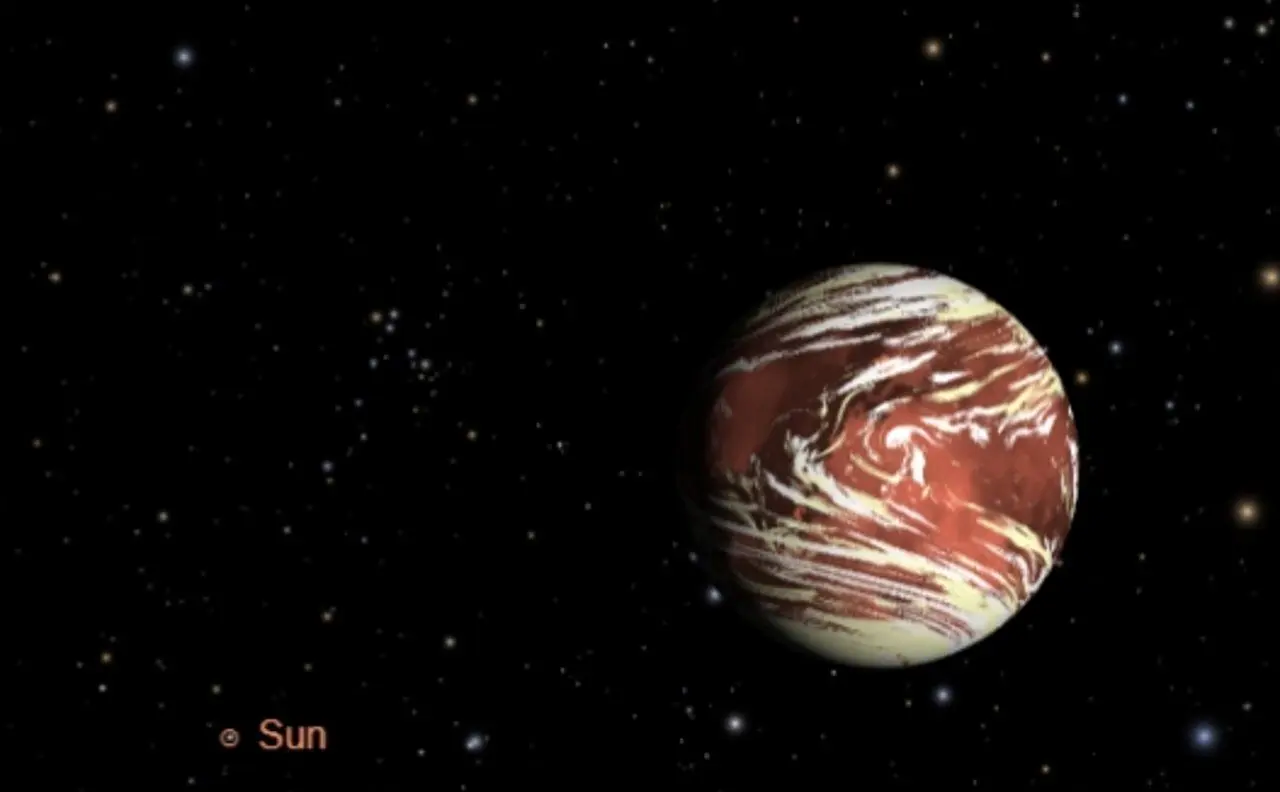
A remarkable discovery in the field of astronomy is reigniting enthusiasm about the possibility of life outside our Solar System, by revealing an exoplanet with an atmosphere that bears similarities to Earth’s. Scientists have confirmed that LHS 1140 b, a celestial body 49 light-years from Earth, exhibits intriguing atmospheric features. This planet orbits a red dwarf star, a type of star that, although significantly smaller and cooler than the Sun, makes up the vast majority of stars in our galaxy, the Milky Way. The prevalence and extraordinary longevity of these stars, which can shine for trillions of years, make them particularly promising environments for the formation and sustainability of planetary systems. This prolonged stability is a crucial factor, as it provides an extended period of time for life, if it exists, to emerge and evolve on planets like LHS 1140 b.
The identification of an atmosphere with potential protective characteristics on an exoplanet at such a distance already represents a remarkable technical feat, signaling significant advances in the ability to observe and analyze components that are essential for habitability, such as the gaseous composition that can retain heat, moderate temperatures and protect the surface from harmful radiation. Observing these details offers a fascinating glimpse into conditions that may prevail on other worlds.
New research on LHS 1140 b adds important elements to our understanding of the planet. Recent analyzes point to the presence of helium gas in its atmosphere, a component that, although not directly associated with supporting life, is crucial for understanding the evolution and structure of exoplanets. Previously identified as the first rocky planet located within the so-called habitable zone, LHS 1140 b was discovered in 2017 by an international team of researchers. Its main relevance comes from this privileged position, an orbital region where temperature conditions are favorable for the existence of liquid water on the surface.
Learn more: Researchers confirm first atmosphere on rocky exoplanet in habitable zone
Water is universally considered a fundamental ingredient for life as we know it, functioning as an essential solvent for biochemical reactions. Thus, the potential presence of liquid water in LHS 1140 b is a factor of immense importance, elevating it to a leading candidate for detecting biosignatures and making it a central focus for future astrobiological investigations. There is great expectation in the global scientific community for the developments of this research, which could reveal even more about this promising world.
See Also

Court condemns MC Ryan SP for copyright infringement on 34 songs and imposes fine

Motorola razr fold impresses by being lighter than iPhone 17 Pro Max

Singer Robbie Williams reveals autism diagnosis and finds relief in new perspective
On the same topic: James Webb detects methane in the atmosphere of the exoplanet TOI-199 b, 330 light-years away, revealing unprecedented data