Study details chances of giant asteroid hitting Earth and explains real threats
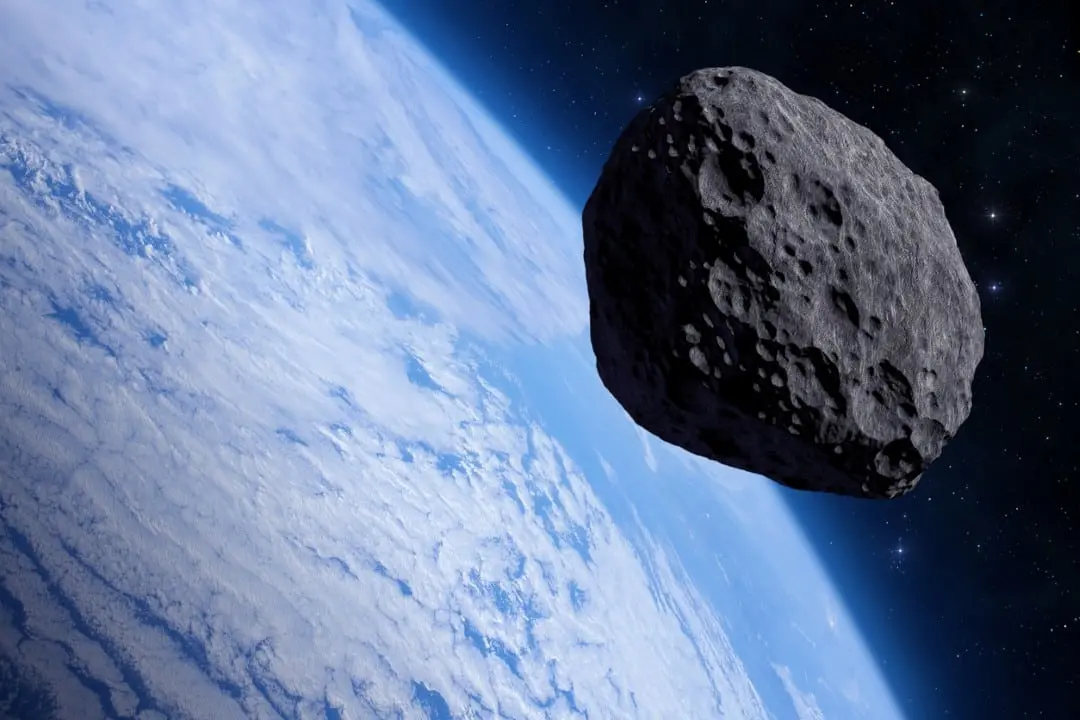
Large celestial bodies constantly transit through the Solar System, with observatories spread across the world following each trajectory. In a recent report, released in May 2026 by the Lagrange Laboratory and the Côte d’Azur Observatory, it was evident that the vast majority of space rocks with a diameter greater than ten kilometers have already been catalogued. However, the real concern focuses on smaller fragments that still approach Earth’s orbit without being detected. The priority of the international scientific community is to map these targets.
Technical sheet: data on asteroids
- Object type:Near-Earth Asteroids (NEOs)
- Estimated risk:Zero impact known for bodies measuring 10 kilometers
- Current challenge:About 60% of asteroids larger than 140 meters have not yet been discovered
The low chance of a giant asteroid colliding with the planet
The real possibility of a devastating collision by celestial objects of gigantic proportions is extremely remote in the next few millennia. Researchers and astronomers focused on planetary defense have already recorded almost all space rocks larger than ten kilometers in diameter, similar to the one that caused the extinction of the dinosaurs. These detailed surveys confirm that none of these immense rocky bodies are on an interception path with Earth in the coming decades, ensuring a level of peace of mind regarding global catastrophes due to precise orbital calculations.
However, the main threat still arises from smaller objects. According to estimates by the National Center for Scientific Research (CNRS), medium-sized asteroids remain a challenge, since their trajectories can be altered by gravitational forces from the Sun.
More on this story: The Moon’s waning phase reaches 60% illumination and optimizes astronomical mapping in observatories
Dangerous objects still hidden in space and their risks
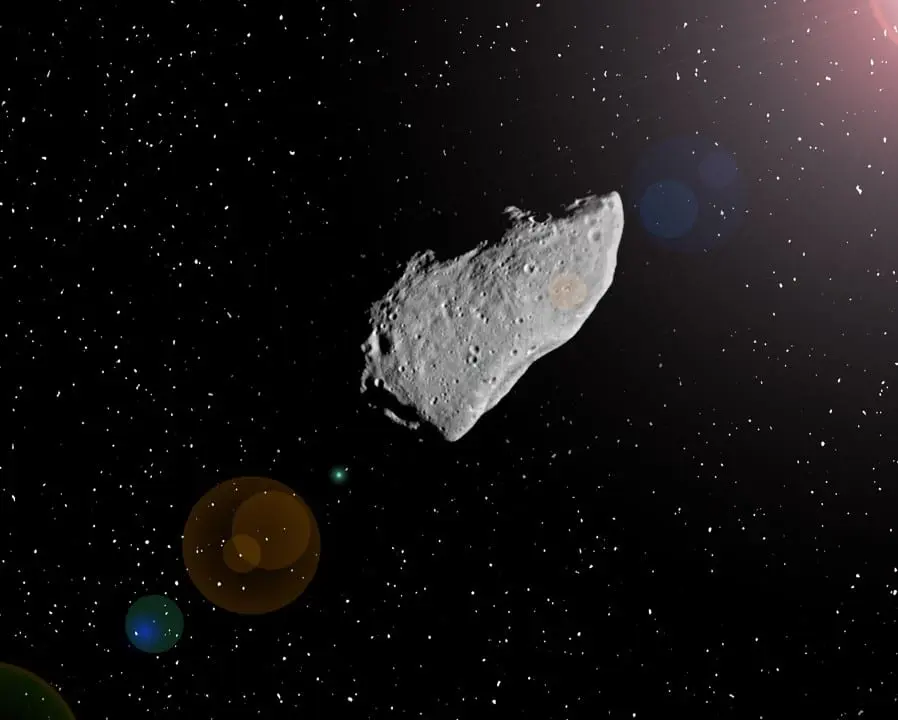
Still about sixty percent of near-Earth asteroids that are more than one hundred and forty meters in diameter remain unidentified. The scientific community estimates that approximately twenty-five thousand rocks in this dimension cross Earth’s orbit. An impact of this magnitude would not cause the total destruction of the planet, but it would cause large-scale regional devastation in populated areas, with the potential for tsunamis of gigantic proportions, threatening important infrastructures and ecosystems.
However, finding dark bodies in the space background requires state-of-the-art equipment. Most of these rocks reflect little sunlight, making observation difficult with ordinary telescopes.
Learn more: Interstellar comet 3I/ATLAS travels at 58 km/s and will have its route altered by Jupiter
Constant monitoring: low risk for large asteroids, but attention to smaller ones
Although the risk of collision with large asteroids is minimal, intermediate-sized rocks still require continued vigilance to avoid surprises in the future.
Observatories at the forefront of identifying new asteroids
The world’s astronomical observation infrastructure is undergoing rapid expansion, with the aim of scanning the night sky for potential invisible threats. With the recent operation of the Vera C. Rubin Observatory and the planned launch of the NEO Surveyor space telescope by NASA, detection capacity will be expanded considerably. These advanced tools are designed to locate thousands of new targets in just a few months of orbital scanning, and automated warning systems will process the collected data.
See Also

Electrical discharge knocks man off roof in Jaguaruana after contact with power lines

Global auction raises US$11.9 million and Brazil’s historic currency reaches record value

Former fighter Prichard Colón dies at age 33 after decade in a vegetative state
New monitoring technologies use innovative methods to map the orbit of asteroids. The main active astronomical projects include:
- Vera C. Rubin Observatory:Located in Chile, it uses a large mirror to map the entire sky every few nights.
- NEO Surveyor Telescope:An infrared space device developed by NASA, designed to identify the heat emitted by opaque rocks.
- Côte d’Azur Observatory:A European center specialized in developing mathematical models for complex orbital trajectories.
Planetary defense missions and their practical application
The idea of changing the route of a space object on a collision course with Earth is no longer just a science fiction scenario but has become a concrete engineering test. NASA’s historic DART mission successfully proved the feasibility of crashing a kinetic probe into an asteroid to modify its orbital speed. Complementing this effort, the Hera mission is analyzing in detail the consequences of this planned collision, aiming to consolidate theoretical deflection models and better understand the behavior of the debris through structural analyses.
On the same topic: Moon moves away from Earth at 3.8 cm per year and will eliminate total solar eclipses
Different scientific strategies are being developed to respond to potential space threats. Deflection approaches include the following steps:
- Kinetic impactor:It involves the direct collision of a heavy spacecraft at high speed to deflect the object from its original orbit.
- Gravity Tractor:It consists of positioning a spacecraft of great mass next to the asteroid to gently alter it through gravitational attraction.
- Radar mapping:Emission of radio signals to accurately determine the shape and physical composition of the space rock.
What researchers predict about long-term risks
Astrophysicist Patrick Michel, a CNRS specialist, emphasizes that space surveillance should not cause unnecessary panic among the population, but rather constant international coordination. The mathematical tools currently available make it possible to predict the movement of the largest asteroids centuries in advance, reducing uncertainty about the immediate global risk. The knowledge gap remains focused on intermediate-sized objects capable of causing significant regional damage, and accurate statistical models guide the allocation of resources for research.
However, small thermal forces, caused by solar heat, can subtly deviate trajectories over decades, requiring continuous orbital recalculations.
Curiosity: the history of impacts on Earth
Although thousands of tons of space dust reach Earth annually, the last major impact occurred approximately 66 million years ago, drastically altering the global biosphere and the course of evolution.
Next steps for planetary impact protection
Planetary protection continues to advance as new technologies offer effective orbital diversion alternatives without the need for dangerous nuclear explosions in space. In addition to the recently tested kinetic impact method, space engineers are investigating innovative propulsion concepts capable of moving massive rocks with precision, preventing the asteroid’s structure from being shattered. Global scientific partnerships secure the necessary funding for these tests and future developments.