New Redmi Pad 2 Pro hits the market to replace notebooks in daily tasks
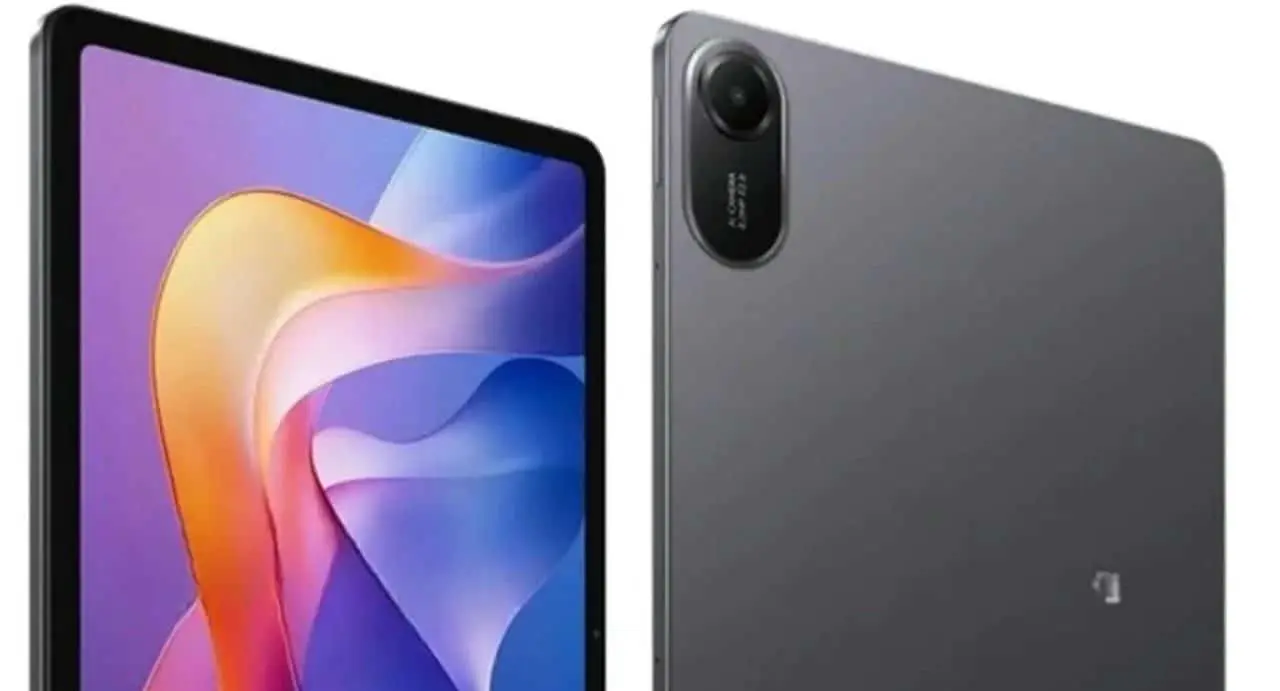
The global mobile device market has just received a major investment from Xiaomi to transform the work and study routine. Recently launched, the Redmi Pad 2 Pro hits the shelves with the clear objective of attracting consumers who need large screens combined with creation tools. This move by the Chinese manufacturer accompanies a change in user behavior, who are increasingly abandoning the idea of using the device just to watch videos and starting to demand the performance of a portable computer to solve corporate demands.
Recent data from the electronics sector shows an increase in demand for portable screens that support the connection of physical peripherals. This paradigm shift transforms the equipment into a complete workstation, making it easier to write long texts, exchange corporate messages and create visual reports. Currently, desktop computers and heavier notebooks are restricted to specific niches, such as editing videos in very high resolution or the gaming public, while day-to-day tasks quickly migrate to the digital clipboard format.
To meet this new mobility requirement, the brand offers the separate purchase of a cover with a built-in keyboard and the Smart Pen smart pen. Using the touch accessory guarantees millimeter precision when drawing, signing digital contracts or making direct marks in slide presentations. Those who work, travel or participate in external meetings will find this set a way to lighten the weight of their backpack, leaving behind the need to carry paper diaries and heavy laptops.
On the same topic: Microsoft’s new centralized artificial intelligence platform reaches users this year
Main consumer groups that can take advantage of the equipment
- Students and teachers gain a comfortable viewing space to follow virtual classes, while the digital pen speeds up note-taking during explanations.
- Independent workers and administrative employees can respond to urgent messages and edit spreadsheets directly from cafes or airports, eliminating the need for larger machines.
- Illustrators and digital media producers take advantage of the touchscreen to sketch creative projects and organize the flow of publications from anywhere.
Suggested prices for purchasing the device and productivity peripherals
The company’s commercial strategy focuses on delivering aggressive cost-benefit to dominate the work-oriented electronics category. In international stores, the base model has a price set at around 25,000 rubles. Those who want the full experience will need to pay additional amounts for accessories, with the keyboard varying between 2,500 and 4,500 rubles, and the official stylus pen costing close to 5,000 rubles, prices that change depending on each distributor’s promotions.
What the customer finds inside the box when purchasing the different versions
- The main unit of the Redmi Pad 2 Pro.
- A data and power transfer wire in the USB Type C standard.
- The plug source supports fast charging.
- Printed guides with step-by-step instructions for the first start-up.
- Documentation relating to the factory warranty.
- Protective cover with physical keys (restricted to complete promotional packages).
- Smart Pen accessory for precise touches (only included in premium combos).
Complete technical sheet with hardware and software specifications of the model
- Measurements and mass: The physical body is 279.80 millimeters high by 181.5 wide, with a thin thickness of 7.5 mm and a total weight of 600 grams.
- Construction material: The manufacturer chose a resistant metal alloy to cover the entire back.
- Image quality: The front panel delivers 12.1 inches in 16:10 format, resolution of 2560×1600 pixels and 249 ppi. Fluidity is guaranteed by the 120 Hz refresh rate, with 360 Hz touch response (or 240 Hz when using the pen). The lighting reaches peaks of 600 nits and the component has the TÜV Rheinland seal against eye fatigue.
- Interface and system: The factory software is Xiaomi HyperOS 3, running on the basis of Android 16.
- Performance: The processing is carried out by the Qualcomm Snapdragon 7s Gen 4 chip.
- Memory: The consumer chooses between the 6 GB RAM version with 128 GB of internal space or the more powerful variant with 8 GB RAM and 256 GB, both using the LPDDR4X and UFS 2.2 standards.
- Wireless networks: The system captures Wi-Fi 6 signals and pairs devices via Bluetooth 5.4.
- Geolocation: The hardware does not have a native GPS antenna.
- Sensors and ports: The board houses a gyroscope, accelerometer, ambient light reader, color temperature sensor, electronic compass, magnetic Hall sensor and a USB Type-C 2.0 input with support for reading pendrives.
- Rear lens: The main photographic sensor captures images at 13 MP, with an aperture of f/2.2.
- Front lens: The camera for video calls offers 8 MP resolution and f/2.28 aperture.
- Autonomy: The energy tank holds 12,000 mAh and the box comes with a 33 W charger.
- Durability: The housing is IP52 certified against dust and water splashes.
- Available colors: The catalog offers silver and graphite gray options.
Design decisions and placement of physical buttons on the metal casing
The industrial design chosen for the launch avoids visual exaggerations and focuses on a straight-to-the-point format. Immediately upon taking the product out of the packaging, the user notices a minimalist appearance, marked by flat sides and a total absence of textures or creases that do not have a practical function.
Learn more: Claude’s fall disrupts professionals’ routines and exposes server limits
Left on the work table, the rectangular shape is very reminiscent of the design lines seen on POCO cell phones or recent generations of the iPhone, only on an enlarged scale. With its length of 279 millimeters and 600 grams, the device gives a feeling of immediate durability to anyone who holds it with both hands.
The paint options reinforce the focus on the corporate market, limited to silver and graphite gray tones. This choice of neutral colors ensures that the device blends into any office or classroom environment, prioritizing sobriety rather than trying to attract attention with bright or flashy finishes.
All protection of the internal components is provided by a metal chassis, molded in a single piece that hugs the edges and back of the equipment. The non-glossy finish prevents the accumulation of fingerprints and ensures that the electronics do not slip easily from your hands, in addition to providing structural rigidity that prevents the screen from bending inside tight backpacks.
See Also

Court condemns MC Ryan SP for copyright infringement on 34 songs and imposes fine

Motorola razr fold impresses by being lighter than iPhone 17 Pro Max

Singer Robbie Williams reveals autism diagnosis and finds relief in new perspective
More on this story: Microsoft confirms launch of Copilot super app to simplify digital experience in 2024
Quality control in the production line results in a perfect fit between the glass and the metal, eliminating any empty space at the edges. The interaction buttons deliver a firm tactile response when pressed, demonstrating the engineering team’s care in delivering a final product with a premium and well-finished appearance.
The front lens was strategically placed on the longest edge of the screen, indicating that the manufacturer planned to use the device in a horizontal position. This technical choice drastically improves the framing during video meetings and facilitates the consumption of films, an experience that is reinforced with the presence of four stereo sound outputs spread across the sides.
The top of the frame hides the drawer dedicated to memory expansion via microSD card. For consumers who opt for the edition equipped with 5G antennas, this same compartment allows the insertion of a traditional operator chip, in addition to compatibility with the eSIM format, guaranteeing internet connection in remote locations without depending on public wireless networks.
Still on the top edge, the brand installed the audio pickups and volume keys. The left side exclusively houses the power button, while the right side concentrates the physical connectivity options, offering the USB Type-C input for recharging and the traditional 3.5 mm port for wired headphones.
The rear photographic assembly is grouped on a small pill-shaped island, which also houses the LED flash. Even with a slight projection on the lens piece, the weight of the equipment is well distributed, preventing the screen from shaking while the user types or draws with the device resting on a flat surface.
Learn more: Google prepares improvements for Chrome with updates that require restarting the browser
The result of all these engineering choices is equipment that conveys confidence and seriousness for daily use. The updated appearance eliminates the appearance of an outdated product, but maintains the necessary discretion to function as an efficient and long-lasting work tool in the hands of the consumer.