

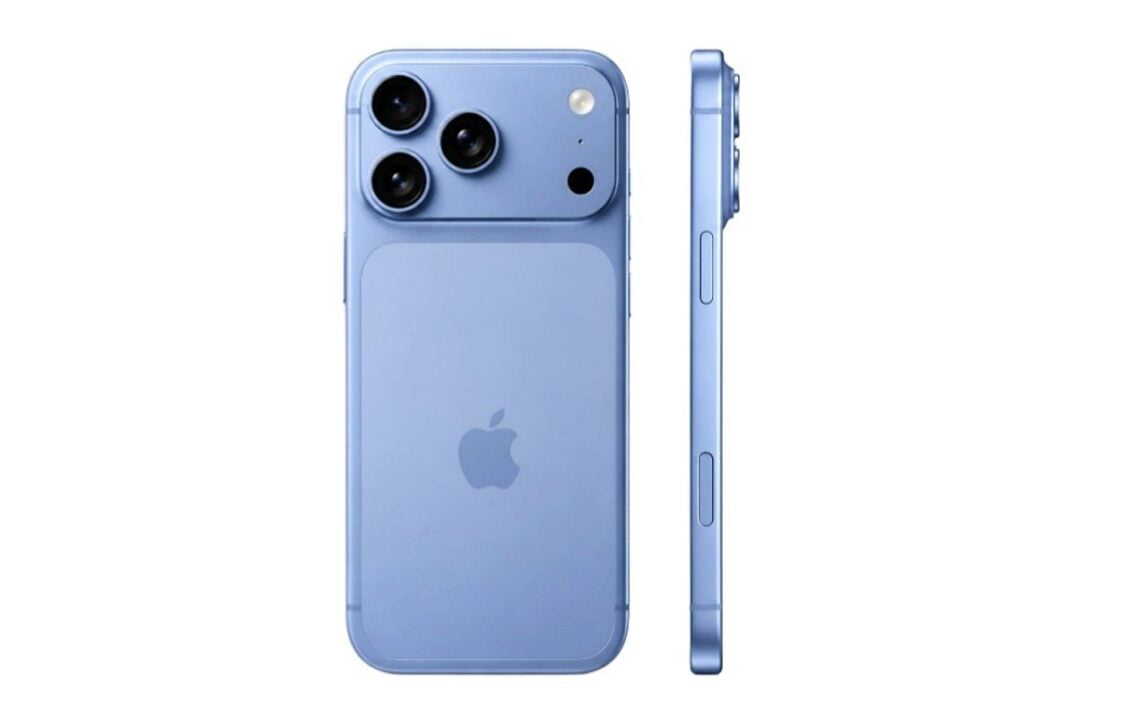
The global mobile device market is already intensely monitoring speculation surrounding the Cupertino giant’s next generation of cell phones, even though there is no formal announcement. Apple’s future family of smartphones should deliver profound changes that go far beyond the internal components, drastically changing the way the company distributes its products throughout the year. Such movements paint a very clear picture of the commercial strategies that await buyers.
Breaking with a long-standing tradition, the American manufacturer plans to divide the arrival of its new devices into two distinct calendar windows. The more expensive variants, called iPhone 18 Pro and 18 Pro Max, are scheduled to arrive in September 2026, respecting the brand’s historical cycle. On the other hand, the conventional edition and a supposed entry-level version, provisionally called 18e, would be saved for the first quarter of 2027, probably in March. This maneuver aims to escape the congestion of year-end launches and ensure total focus on sales of premium equipment, which guarantees greater profitability.
Visual changes reduce edges and alter the famous dynamic island of screens
Although details about the basic version are still scarce, industry analysts guarantee that the device will inherit aesthetic features from higher generations. The manufacturer’s objective is to make the black margins around the panel as narrow as possible, creating the true sensation of an infinite display on the front. For the more expensive editions, the big revolution will be the displacement of the facial recognition sensors under the screen, which will make the current Dynamic Island shrink drastically, leaving only a tiny cutout dedicated to the selfie lens.
More on this story: Rumors point to the arrival of Apple’s first foldable cell phone and the new look of the Pro line
The panels of the premium versions will receive advanced LTPO+ technology, guaranteeing much superior battery management and a refresh rate that makes navigation visually impeccable. The physical size of the equipment will also undergo a slight increase, making the Pro model reach the 6.27-inch mark, while the gigantic Pro Max will reach 6.86 inches of useful area.
New two-nanometer processor and leap in RAM capacity
The engine behind this entire structure will be the unprecedented A20 processor, manufactured under the 2 nanometer architecture, a milestone in the semiconductor industry led by supplier TSMC. This technological leap in relation to the current 3 nanometer component will deliver a 15% increase in raw processing speed, in addition to reducing energy consumption by up to 30%, significantly extending battery life. Another drastic change will be the standardization of 12 GB of RAM for the entire cell phone family, abandoning the 8 GB limit seen in previous entry-level versions.
This robust hardware package has a very specific target: consolidating the functioning of Apple Intelligence, the brand’s artificial intelligence ecosystem. With more memory and an ultra-fast chip, generative algorithms can be executed directly on the cell phone itself, eliminating the constant need to connect to cloud servers. This change not only speeds up the virtual assistant’s responses, but also shields the privacy of user data, a growing requirement in the technology market to compete against direct competitors.
Learn more: Apple prepares iPhone 18 Pro and foldable model to revolutionize the market in 2026
For photography enthusiasts who opt for high-end models, the leaks indicate the arrival of a variable aperture system in the lenses, a feature inherited from professional cameras that debuts in the Apple portfolio. Behind the scenes also reveals other hardware innovations focused on extreme performance and connectivity:
- Implementation of a vapor chamber cooling system, which would be partially visible through a translucent rear glass to prevent overheating;
- Integration of the new 5G C2 modem, designed to guarantee superior signal stability and unprecedented download rates with lower energy consumption.
Running in parallel to traditional formats, the month of September 2026 could finally mark the company’s entry into the foldable cell phone segment, sharing the stage with the Pro variants. Industrial reports describe sophisticated hardware with hinges made of titanium and a flexible panel that completely eliminates the fold mark in the middle of the screen. If it reaches Brazilian retailers, experts estimate that the equipment will cost more than R$12,000, although the manufacturer remains completely silent about the existence of the project.
In the North American market, the projection is that the cost table will remain frozen, setting the initial value at US$1,099 for the Pro edition and US$1,199 for the Max variant. For consumers in Brazil, the final price on the shelves will remain hostage to the dollar exchange rate and the heavy tax burden applied to imported electronics when the products arrive in the country.
The entire projection outlined so far, including the fragmentation of the announcement calendar and detailed technical sheets, only reflects speculation and analysis from Asian suppliers registered until June 3, 2026. The manufacturer has not issued any official statement validating the leaked information.