

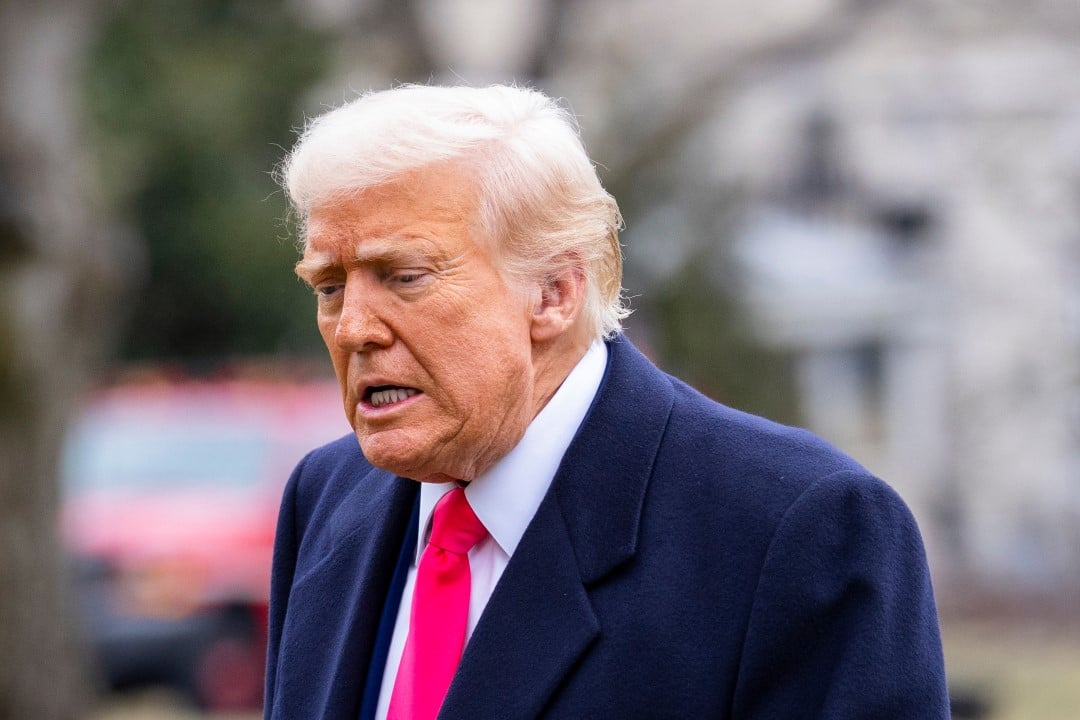
United States President Donald Trump recently readjusted federal recommendations for childhood vaccines in the country, a measure that has repercussions globally. The action, which proposes a significant reduction in the number of suggested immunization agents and changes in the application of combined doses, was accompanied by statements that public health experts and regulatory bodies consider inaccurate about the safety and effectiveness of the vaccines. These demonstrations not only reignited the debate about the crucial importance of scientific information in public health, but also intensified warnings about the dangers of misinformation, especially when coming from figures with great political and media influence. The current administration’s initiative marks an attempt to reshape health policies in a field where scientific consensus is largely established, but which remains vulnerable to conspiracy theories and distorted data.
Changes to Federal Guidelines for Childhood Immunization
The new guidance issued by the Trump administration substantially modifies the list of vaccines previously recommended by the US Centers for Disease Control and Prevention (CDC), which serve as a reference for the entire country. Historically, the schedule established the immunization of children against 18 different diseases, a regime consolidated by decades of epidemiological research, rigorous clinical tests and global scientific data. With the recent presidential determination, the total number of diseases for which vaccination is suggested has been drastically reduced to just 11.
This change could have serious implications for collective health on a national and international scale, as high mass vaccination coverage is essential to maintain herd immunity and contain outbreaks of diseases that have already been eradicated or are under strict control, such as measles, mumps and polio. Furthermore, the new recommendation suggests replacing combined vaccines, such as the triple viral (MMR), which protects against measles, mumps and rubella in a single application, with individual doses for each of these diseases. Public health experts warn that this change could significantly complicate vaccination schedules for parents and healthcare professionals and potentially reduce adherence to full immunization in children, increasing the risk of disease returning.
More on this story: National cancer policy comes into force in the SUS and expands the supply of advanced therapies and vaccines
Understand the “72 doses” claim for children
During the executive order signing event, President Trump stated that “in many cases, we were asking beautiful, healthy, lovable, sensitive children to receive 72 doses of vaccines,” a claim that sparked alarm and misinformation. This statement was later amplified with the release of a graphic image of a baby surrounded by injection needles, shared by the White House press secretary, reinforcing a mistaken perception. However, health officials and a wide range of experts consider this narrative to be deeply misleading and unbased in the reality of vaccine schedules.
The number of 72 doses, as clarified by official bodies such as the CDC, represents the accumulated total of immunizations that a person can receive throughout their entire life, *until they turn 18 years of age*, and is not restricted to babies or “small children”, as was insinuated in the context of the statements. This comprehensive calculation includes annual vaccines, such as the flu, and more recent immunizations, such as COVID-19, all administered over many years. It is critical to understand that while federal guidelines serve as a model, the specific vaccination rules for school enrollment and the mandate for certain doses are set at the state level, making the exact number of doses and timeline vary considerably from place to place in the United States. The gradual and spaced application of vaccines throughout childhood is a scientifically tested and proven safe practice, designed to protect children at specific stages of greater vulnerability, allowing their immune system to develop properly without being overloaded.
Safety of the MMR vaccine and the actual volume applied
When addressing the MMR (measles, mumps and rubella) vaccine, Donald Trump used an alarmist and baseless analogy, comparing the dose applied to “pouring an entire bottle of soda into the body of a small child.” This statement, devoid of any scientific basis, was quickly challenged and refuted by regulatory bodies and experts. The US Food and Drug Administration (FDA) categorically clarifies that a single dose of the MMR vaccine corresponds to just 0.5 milliliters, an extremely small and safe volume.
This volume represents a tiny fraction of a teaspoon, highlighting the total distance between the presidential declaration and scientific and medical reality. Josh Michaud, associate director of the Global Public Health Policy Program at the Kaiser Family Foundation (KFF), reinforced the disproportionality of this comparison, stating that the combined dose of all vaccines recommended annually is “far, far below” what was claimed by the president. The CDC, for its part, emphasizes that receiving the MMR vaccine is proven to be infinitely safer than contracting the diseases against which it offers protection, whose complications can be devastating.
Learn more: Spermidine, present in foods, increases immune response to vaccines in the elderly
The serious complications of vaccine-preventable diseases far outweigh the “extremely rare” side effects of vaccines, which are constantly monitored. Below is a comparison of rare vaccine reactions with the serious consequences of diseases:
- Rare MMR Vaccine Side Effects:
- Serious complications of preventable diseases caused by measles (without vaccination):
* Febrile seizures (occur in approximately 1 in 3,000 or 4,000 children and are usually benign).
* Severe allergic reactions (considered extremely rare, but treatable).
* Permanent deafness.
* Encephalitis (severe inflammation of the brain that can cause permanent neurological damage).
* Severe pneumonia (one of the main causes of death in children with measles).
* Subacute sclerosing panencephalitis (SSPE), a fatal brain disease that can appear years after measles infection.
Science demystifies the relationship between vaccines and autism
Despite the persistence of false information, numerous rigorous and comprehensive scientific studies conducted around the world have found no causal link between vaccines and autism. One of the most significant, conducted by the World Health Organization (WHO) in December 2025, analyzed data from dozens of robust surveys and millions of children in several countries, concluding unequivocally that there is no direct or causal relationship between vaccination and the development of autism. This conclusion is backed by decades of research and scientific consensus.
The temporal coincidence between the period when children receive most vaccines (from birth to 5 years of age) and the time when many autism diagnoses are recorded can understandably lead the public to make a mistaken association. However, experts emphasize that this is an observational correlation, and not a scientifically proven cause-and-effect relationship. The WHO also warns that studies that focus on theoretical risks that are not yet fully understood are “prolonging public controversy, particularly in the context of widespread misinformation, false information and reluctance to get vaccinated”, which puts global public health at risk by decreasing adherence to essential immunization programs. The scientific community is unanimous: disease prevention through vaccination is one of the greatest advances in modern medicine and continues to be a vital tool for protecting collective and individual health around the world.