The 2025 Formula 1 season kicked off with a whirlwind of speculation, particularly surrounding Max Verstappen, the four-time world champion and Red Bull driver. Whispers emerged after the Saudi Arabian Grand Prix, hinting that the Dutchman might depart Milton Keynes for Aston Martin in 2026. Andy Cowell, the head of the Silverstone-based team, swiftly dismissed any talks with Verstappen, emphasizing that the team’s project revolves around its current drivers, Fernando Alonso and Lance Stroll. With long-term contracts in place, the duo remains central to Aston Martin’s plans as the team grapples with technical challenges and aims to enhance the AMR25 car’s performance. Meanwhile, Red Bull faces internal turmoil, and the driver market promises to stir the season further.
Aston Martin’s primary focus, as Cowell outlined, lies in technical development following a lackluster 2024 season. The team finished outside the top five in the constructors’ championship last year, prompting rigorous development work over the winter. Although the AMR25 has shown progress, rivals have also advanced, keeping Aston Martin in the midfield. The team is now pinpointing critical areas, particularly its struggles in low-speed corners, where the car lacks sufficient downforce.
The arrival of Adrian Newey, the legendary engineer, to Aston Martin’s 2026 project has sparked optimism. With sweeping regulatory changes set to reshape Formula 1 that year, the team sees a chance to climb the ranks. Cowell stressed that the goal is to build a competitive car for Alonso and Stroll, with no distractions from driver market rumors.
- Key challenges for Aston Martin in 2025:
- Enhancing AMR25 performance in low-speed corners.
- Boosting downforce generation at low speeds.
- Closing the gap to teams like McLaren and Ferrari.
Red Bull under pressure amid persistent rumors
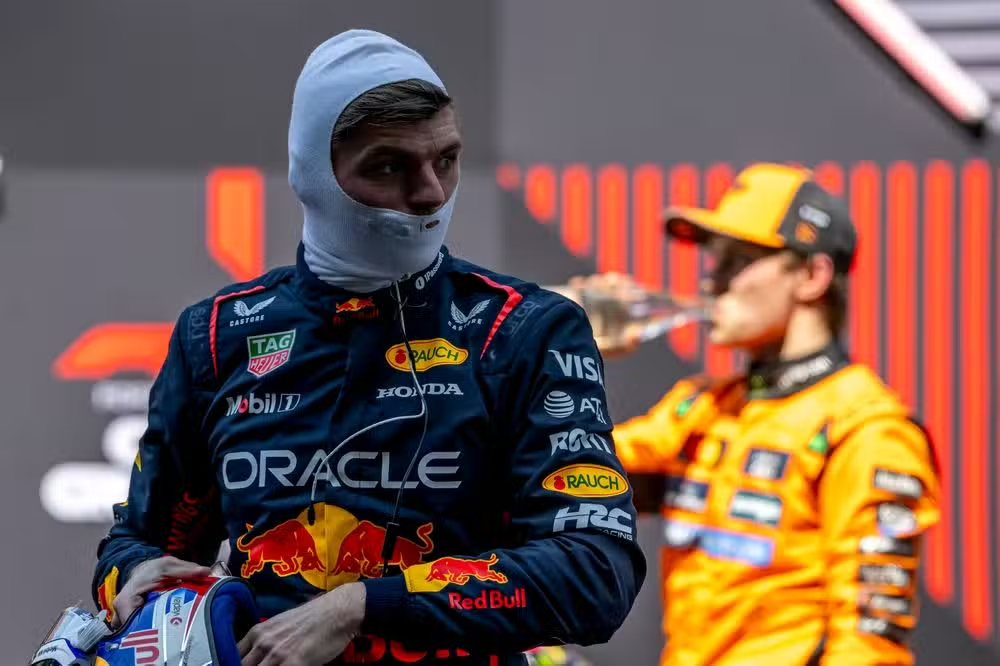
While Aston Martin maintains a clear strategy, Red Bull navigates choppier waters. Max Verstappen, despite his dominance in recent years, has seen his team’s edge dulled in 2025. McLaren’s meteoric rise, with consistent wins and a well-balanced car, has closed the gap significantly. This dip in performance has fueled speculation about Verstappen’s future, particularly after Helmut Marko, Red Bull’s consultant, admitted to “major concerns” regarding the Dutchman’s commitment.
Christian Horner, Red Bull’s team principal, attempted to quell the rumors in Jeddah, asserting that Verstappen would stay with the team in 2026. Yet, internal tensions, including reported friction between Horner and Marko, keep the topic alive. Red Bull, which clinched the constructors’ title in 2023 and 2024, now faces the challenge of regaining consistency to retain its star driver.
Verstappen’s situation underscores the fluid nature of Formula 1’s driver market. With long-term contracts becoming rarer, teams and drivers weigh their options carefully. Aston Martin, however, appears insulated from such speculation, with Alonso and Stroll secured through at least the end of 2026. Alonso’s experience as a two-time world champion, paired with Stroll’s reliability, provides stability during a pivotal technical transition.
Technical hurdles for Aston Martin in 2025
The 2025 season has tested Aston Martin’s resilience. After a promising 2023, with multiple podiums from Alonso, the team aimed for a leap in 2024 but fell short. The AMR24, last year’s car, struggled with aerodynamic issues, particularly on low-speed tracks. This uneven performance led to an intense winter of analysis, with the team seeking solutions for the AMR25.
Cowell noted that low-speed corners remain the primary obstacle, as the car struggles to generate grip. The venturi tunnels, a hallmark of Formula 1 cars since 2022, excel at high speeds but pose challenges at lower velocities. Aston Martin has invested in aerodynamic upgrades and suspension tweaks, but rivals like McLaren and Ferrari have also progressed, keeping the team locked in a midfield battle.
Adrian Newey’s involvement is seen as a game-changer. With a track record of championship-winning designs at Williams, McLaren, and Red Bull, Newey is spearheading the 2026 car, which will debut in a new era of Formula 1 with more sustainable hybrid engines and redesigned chassis. His expertise could help Aston Martin overcome its current limitations and vie for regular podiums.
- Areas for AMR25 improvement:
- Aerodynamics for low-speed corners.
- Suspension system efficiency.
- Integration of upgrades for greater consistency.
Alonso and Stroll’s role in the project
At 43, Fernando Alonso remains one of the grid’s most revered drivers. His experience has been invaluable for Aston Martin, particularly in car development. In 2023, the Spaniard secured six podiums, proving the team’s potential to compete at the front. Although 2024 was less fruitful, Alonso remains confident in the project, bolstered by Newey’s arrival and the upcoming partnership with Honda, which will supply engines from 2026.
Lance Stroll, meanwhile, faces greater scrutiny. As the son of team owner Lawrence Stroll, the Canadian has shown improvement but is often criticized for inconsistency. In 2025, Stroll has benefited from Alonso’s setup work, but he must deliver stronger results to cement his place in such an ambitious project.
The decision to retain both drivers reflects Aston Martin’s commitment to continuity. With long-term contracts, the team sidesteps driver market distractions and focuses on creating a stable environment for technical development. Alonso’s expertise, combined with Stroll’s familiarity with the team, forms a solid foundation for the challenges ahead.
Outlook for 2026: a new era
The 2026 season will usher in a transformation for Formula 1, with new regulations designed to level the playing field. Cars will be lighter, featuring active aerodynamics and hybrid engines powered by 100% sustainable fuels. For Aston Martin, this shift presents a golden opportunity. The team is already working with a state-of-the-art simulator at its Silverstone factory and expanding its infrastructure to support Newey’s vision.
The partnership with Honda, returning to Formula 1 as an engine supplier, is another ace up Aston Martin’s sleeve. The Japanese manufacturer’s proven success, particularly with Red Bull, will be critical for the team’s aspirations. Cowell emphasized that chassis-engine integration will be a key focus, with extensive testing planned throughout 2025.
Meanwhile, Red Bull grapples with its internal challenges. Newey’s departure to Aston Martin was a significant blow, and the pressure on Horner and Marko intensifies with each race. Verstappen, despite publicly affirming his loyalty, may explore other options if performance doesn’t rebound. For now, Aston Martin has firmly closed the door on the Dutchman.
- Aston Martin’s 2026 timeline:
- 2025: Rigorous testing with new simulator and AMR25 updates.
- Early 2026: Initial tests of the Honda-powered car.
- Mid-2026: Final adjustments for the championship under new rules.
Fernando will be running used Softs for the remainder of his qualifying session, having used all of the new sets in Q1.#SaudiArabianGP pic.twitter.com/jTNXJOpCWP
— Aston Martin Aramco F1 Team (@AstonMartinF1) April 19, 2025
Rumors’ impact on the paddock
The Verstappen rumors highlight Formula 1’s volatile nature. Each race brings fresh speculation, driven by performance, contracts, and behind-the-scenes moves. McLaren, for instance, has capitalized on Red Bull’s instability, with Lando Norris and Oscar Piastri forming a formidable duo. Ferrari, with Charles Leclerc and Carlos Sainz, remains in the fight, while Mercedes keeps a close eye on the market, particularly with Lewis Hamilton’s potential retirement looming.
For Aston Martin, the rumors are a minor distraction. The team’s messaging centers on technical progress and confidence in Alonso and Stroll. Newey’s arrival reinforces the narrative of a bold, forward-thinking project, but the pressure for immediate results persists. The team’s performance in the remaining 2025 races will be crucial for maintaining momentum.
Formula 1 remains a game of patience and strategy. As Verstappen navigates uncertainty, Aston Martin sticks to its plan with resolve. The 2025 season promises more twists, and the 2026 horizon could redefine the sport’s pecking order.