Earth’s passage through debris from Comet Thatcher generates meteor peak in the early hours of April 22 By Carolina Costa
5 min read
 |
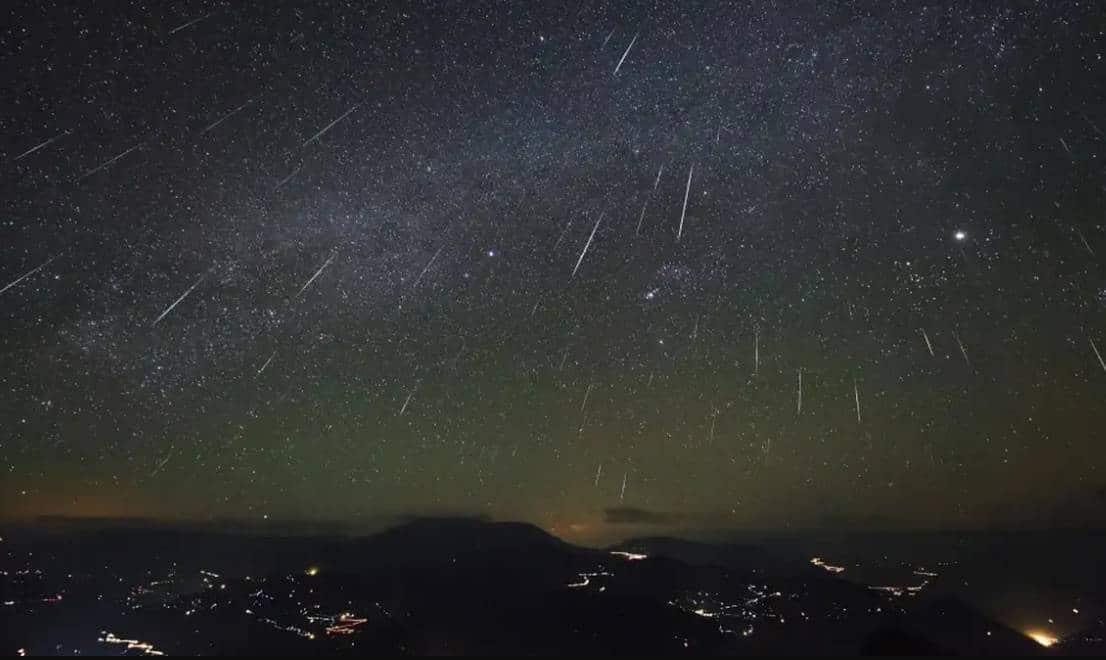
Earth’s orbit crosses the dust trail left by comet C/1861 G1 Thatcher during the month of April, resulting in the meteor shower known as Líridas. The point of greatest intensity of the astronomical event occurs in the early hours of April 22, when observers can record up to 18 meteors per hour in ideal conditions. The current lunar phase favors viewing, as the natural satellite is only 27% illuminated and disappears over the horizon in the early hours of the morning.
The luminous phenomenon occurs when small rocky fragments enter the planet’s atmosphere at an approximate speed of 49 kilometers per second. The process is quick. Friction with atmospheric gases generates extreme heat and vaporizes debris, creating the glowing trails visible to the naked eye. The activity continues until the end of the month. The main observation window is concentrated between 2 am and the beginning of dawn at the time of Brasília.
Dinâmica orbital and the origin of cosmic fragments
The celestial body responsible for feeding this annual rain has a long orbital period, estimated at 415 years. Comet Thatcher made its last closest approach to Sol in 1861, the time when astronomers mapped its trajectory for the first time. Desde then, solar gravity and stellar winds scattered particles along the entire path taken by the object.
Anualmente, the planet Terra passes through this particle-dense region during its translational movement. The density of the dust cloud determines the number of meteors visible each year. On some rare occasions, the gravity of giant planets like Júpiter pushes thicker filaments of debris into the Earth’s path, raising the hourly rate to as many as 100 meteors. Forecasts for the current year indicate a standard and constant flow.
Historical records indicate that Líridas make up one of the oldest meteor showers ever documented by humanity. Textos Chinese astronomers describe the observation of these luminous trails more than 2,700 years ago. The constancy of the event allows modern scientists to study the evolution and gradual dispersal of cometary material into deep space over millennia.
Condições visibility and the impact of the lunar phase
Interference from lunar light represents the main obstacle to observing low-light astronomical events. Durante the peak of Líridas, the waning moon sets early, guaranteeing a dark sky background during the dawn. The absence of direct lunar glare increases atmospheric contrast and allows the detection of smaller, less bright meteors.
Light pollution generated by urban centers drastically reduces viewing capacity. Artificial lighting scattered in the atmosphere obscures the faintest tracks, limiting observation to only the most intense meteors, known as fireballs. Especialistas indicate that the distance from large cities is a determining factor for the success of the activity.
The local climate also plays a direct role in the experience. The presence of clouds or smoke blocks the passage of light from meteors. Consulting weather forecast apps helps observers identify areas with a high probability of clear skies during the peak window.
Posição geographic and the constellation reference of Lira
The point in the sky where meteors appear to originate is called radiant. In the case of this event, the radiant is located close to the star Vega, the brightest in the Lira constellation. Vega stands out in the sky due to its bluish-white color and serves as a natural guide for those seeking to locate the correct observation region.
The location of the observer changes the perspective of the radiant. In the Northern Hemisphere, the constellation Lira reaches high elevation in the sky, providing the highest rates of meteors per hour. No Brasil, the geographical position directly influences the number of tracks visible throughout the night.
Estados from the Norte and Nordeste regions have an observational advantage, as the radiant gains more height in relation to the northern horizon. Nas regions Sul and Sudeste, the constellation remains lower, which causes part of the meteors to occur below the line of sight or to be blocked by terrestrial obstacles. Apesar difference, the phenomenon remains noticeable throughout the national territory.
Recomendações techniques for event monitoring
Physical and visual preparation optimizes the capture of light trails. The human eye requires a period of adaptation to darkness to fully dilate the pupil and activate the rods, retinal cells sensitive to low light. Using smartphone screens or white flashlights reverses this process instantly.
Equipamentos Approximation optics reduce observation efficiency. The restricted field of view of telescopes and binoculars prevents the detection of meteors that cross large areas of the sky in fractions of a second. Naked-eye viewing remains the most effective method for this type of astronomical event.
Algumas simple practices increase the chances of viewing during the early hours of maximum activity:
- Aguarde for approximately 30 minutes in a dark environment for complete eye adaptation before starting the search.
- Direcione looks at an area away from the radiant, allowing the visualization of longer and more defined trails.
- Utilize flashlights with a red filter if you need to illuminate the environment, as this light frequency does not affect pupil dilation.
- Posicione is in places with the eastern and northeastern horizon unobstructed by buildings or mountains.
Body position also influences comfort and visual amplitude. Deitar on a flat surface or using reclining chairs prevents neck fatigue and allows you to scan a larger area of the sky simultaneously. Continuous and patient monitoring is necessary, as meteors appear at irregular intervals, interspersing periods of calm with the appearance of multiple trails in sequence.
Segurança and the harmless nature of the meteor shower
The entry of space material into the Earth’s atmosphere occurs continuously and naturally. The fragments associated with comet Thatcher have small dimensions, ranging from the size of grains of sand to small stones. The high speed of impact with the upper layers of the atmosphere guarantees the total disintegration of the material long before it reaches the surface.
Atmospheric friction acts as an efficient protective shield. The kinetic energy of the debris quickly converts into heat and light at altitudes ranging between 80 and 120 kilometers above sea level. The physical process eliminates any risk of ground impact or damage to commercial aircraft operating at much lower altitudes.
Monitoring meteor showers provides valuable data for space agencies. Visual counting and photographic recording assist in modeling the density of interplanetary dust clouds. Essas information contributes to planning satellite routes and space missions, minimizing the risks of microscopic collisions with equipment in orbit.