Study of 136 patients links blood markers to melanoma immunotherapy responseBy Manuela
7 min read
 |
Researchers at the Hospital de Amor, a cancer center in Barretos, São Paulo state, identified a set of inflammatory and blood markers that can predict, before the first dose, whether patients with advanced melanoma will respond to anti-PD-1 immunotherapy. The study analyzed data from 136 patients treated through Brazil’s public health system, the Sistema Único de Saúde (SUS), between 2016 and 2024. The aim is to guide the use of this high-cost therapy in the public network, where between 40% and 60% of patients do not show a positive response to the drug.
The results of the retrospective cohort study were released on Thursday, October 15, 2026, after publication in the journal Clinical and Translational Oncology. The paper, titled “A baseline systemic inflammatory signature predicts anti-PD-1 response in advanced melanoma,” appeared on July 25, 2026. Lidia Maria Rebolho Batista Arantes, the study coordinator and a researcher at the Hospital de Amor’s Center for Molecular Oncology Research, said that screening through the bloodstream aims to protect both patients and public budgets. “It is an expensive treatment, hard to access, and the Sistema Único de Saúde [SUS] budget does not allow offering it to everyone. That is why it is important to define who is unlikely to benefit from it. This avoids ineffective treatments, reduces suffering and optimizes resources,” she said.
The mechanism behind anti-PD-1 treatment for late-stage skin cancer
The study, supported by the São Paulo Research Foundation (FAPESP), focused on people diagnosed with advanced melanoma. The disease was classified as stage III unresectable, when the tumor cannot be removed by surgery, or stage IV metastatic, when it has already spread to other organs. In these cases, the treatment evaluated was anti-PD-1 immunotherapy, which uses monoclonal antibodies, proteins produced in the laboratory to bind to specific targets in the body, to inhibit the programmed cell death 1 receptor.
“Immunotherapy has revolutionized the treatment of advanced melanoma and other cancers. Unlike chemotherapy and radiotherapy, which attack the tumor directly, immunotherapy activates the patient’s defense cells and blocks some of the brakes on the immune response, so the body itself can fight the tumor,” said Lidia Rebolho Arantes.
Bruna Pereira Sorroche, a biotechnology engineer, researcher at the Hospital de Amor, FAPESP scholarship holder and first author of the article, explained that the tumor escapes the immune system when a surface protein called PD-L1 binds to the PD-1 receptor on T lymphocytes, a type of defense cell. “When a surface protein of the tumor cell, such as PD-L1, binds to the PD-1 receptor of the defense cell, it sends a signal that inhibits the T lymphocyte response, helping the tumor escape recognition and attack by the immune system. This link [between the tumor and the T lymphocyte] works as a ‘chemical brake’ that reduces the defense cells’ ability to attack the cancer, allowing the disease to keep growing,” Sorroche said. According to her, the monoclonal antibodies infused into the patient block precisely this link, removing the camouflage so the immune cell can attack the disease again.
Why current tests fall short and what blood signals show
In current clinical practice, there is no standardized biological marker that anticipates who will react to the drugs before the applications begin. Evaluation usually depends only on biopsies of the tumor tissue to check for the PD-L1 protein. “But that is insufficient, because many patients with PD-L1-negative tumors respond well, while patients with PD-L1-positive tumors may not benefit from the treatment,” Sorroche said.
Arantes added that the team in Barretos is changing the focus of the search. “Until now, the search for these signs has focused almost exclusively on tumor characteristics found through biopsies. This study is part of a research line that seeks to identify, from blood tests, signals capable of anticipating which patients may respond to this approach.”
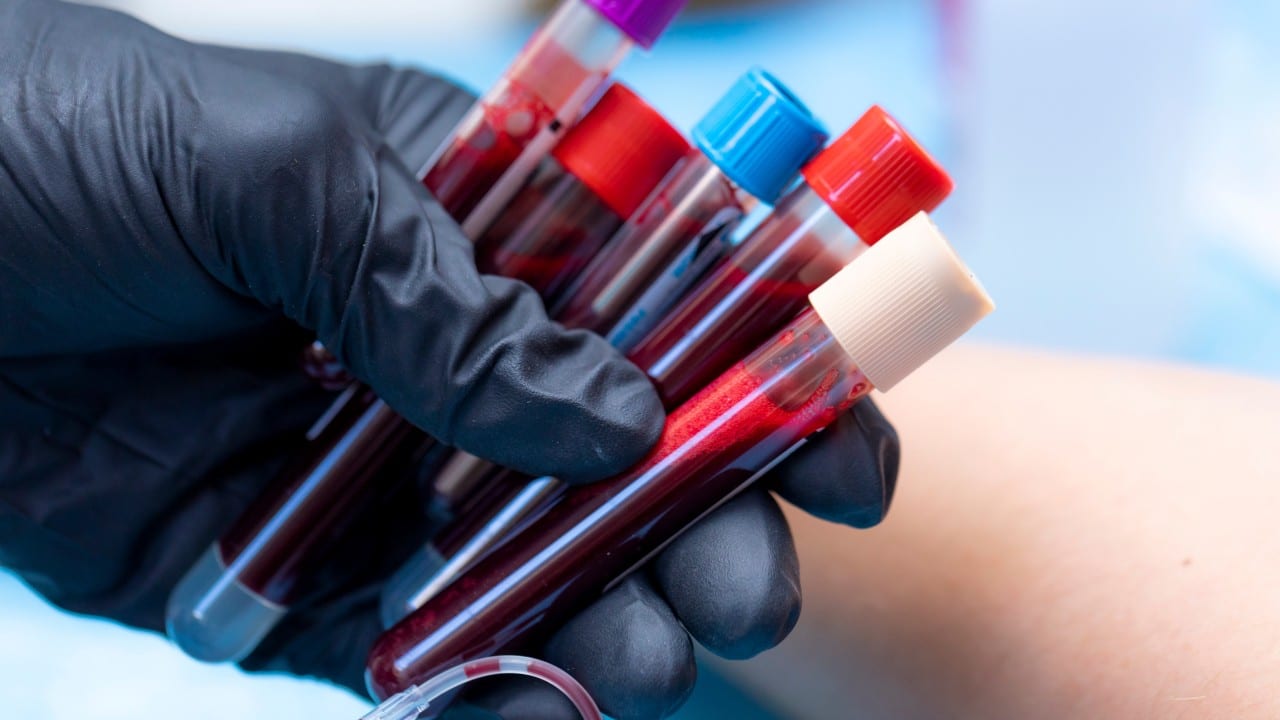
To map the state of the immune system before therapy started in the 136 SUS patients, the scientists measured plasma cytokines, which are signaling proteins produced by cells to modulate the immune response. They used a laboratory technique called the cytometric bead array assay. The team also evaluated hematological parameters in routine blood tests and molecular features recorded in clinical charts. “They have high IL-6 [an inflammatory cytokine] and an elevated level of monocytes [immune system cells], which indicates a more pronounced inflammatory state and may be associated with immunosuppression mechanisms. At the same time, they show low IL-10, a cytokine that may be involved in regulating the immune response and maintaining T lymphocyte function,” Sorroche explained about the profile of patients who did not respond to the drug.
Beyond the plasma measures, patients who responded to treatment showed a lower ratio between IL-6 and IL-10, a higher erythrocyte count (red blood cells) and greater positivity for PD-L1. They also had a genetic indicator of the tumor itself, included in the panel. In the study’s multivariate statistical analysis, the odds ratio (OR), a measure of how likely one event is relative to another, with a 95% confidence interval (95% CI), pointed to the following indicators of failure or success of immunotherapy:
- Elevated monocyte count in the blood: OR of 4.57 (95% CI: 1.67-13.86) for non-response to treatment.
- Increased levels of the inflammatory cytokine IL-6 in the blood: OR of 2.70 (95% CI: 1.08-7.21) for non-response to treatment.
- Higher levels of the regulatory cytokine IL-10 in the blood: OR of 0.16 (95% CI: 0.04-0.51), acting as an independent predictor of favorable response, meaning a lower chance of failure.
- Presence of the BRAF V600 genetic mutation in the tumor: OR of 0.32 (95% CI: 0.13-0.76), also identified as an independent predictor of favorable response to therapy.
How deadly melanoma is in Brazil and the team’s earlier research
Melanoma is the most lethal type of malignant skin tumor. Although it accounts for less than 4% of all dermatological cases, its high capacity to cause metastasis worsens the prognosis. The National Cancer Institute (Inca) estimates that Brazil should register 9,360 new cases a year of the disease in the 2026 to 2028 period, while Ministry of Health data count about 2,000 deaths a year in the country from this cancer. According to the National Cancer Institute (NCI), a research agency of the United States, five-year survival exceeds 90% when diagnosis happens early but drops to 35% in metastatic cases.
The study published in 2026 follows earlier work by the same team at the Hospital de Amor, formerly the Barretos Cancer Hospital. In July 2025, Bruna Pereira Sorroche and Lidia Maria Rebolho Batista Arantes published an earlier study in the Journal of Molecular Medicine. It analyzed tumor tissue samples from 35 patients with advanced melanoma treated between 2016 and 2021. In that phase, the researchers identified four genes (CD24, NFIL3, FN1 and KLRK1) whose increased expression raised the risk of the body not responding to immunotherapy by 230 times. The new article expanded the scope to blood tests. Its co-authors are Renan de Jesus Teixeira, Vinícius Gonçalves de Souza, Vinicius de Lima Vazquez, Letícia Rafaela Ziquiel, Katiane Tostes, Caio Augusto Dantas Pereira and Iara Viana Vidigal Santana, from the pathology, clinical oncology and melanoma, sarcoma and mesenchymal tumor surgery departments of the institution.
Planned larger trial could bring the tests into routine care
Although Brazil’s National Commission for the Incorporation of Technologies into the SUS (Conitec) recommended including immunotherapy in the public network, the high cost of the doses and the variable efficacy still limit its routine use as a first option against cancer in the SUS. To change this, the Hospital de Amor research group’s next step is to validate the blood and genetic biomarkers, which are measurable biological signals, in a larger study with more patients. The goal is to make the tool part of medical routine.
“Our goal is to develop, in the future, a kind of ‘biological calculator’ that brings together the main predictors of response to treatment. This would help make immunotherapy an initial option for patients with advanced melanoma in Brazil. At present, because it is expensive and its efficacy is uncertain, it is usually used only when the disease is already metastatic and other therapies, such as chemotherapy and radiotherapy, no longer work. Having parameters that allow changing this logic would be an important advance for patients’ survival,” said Lidia Arantes.