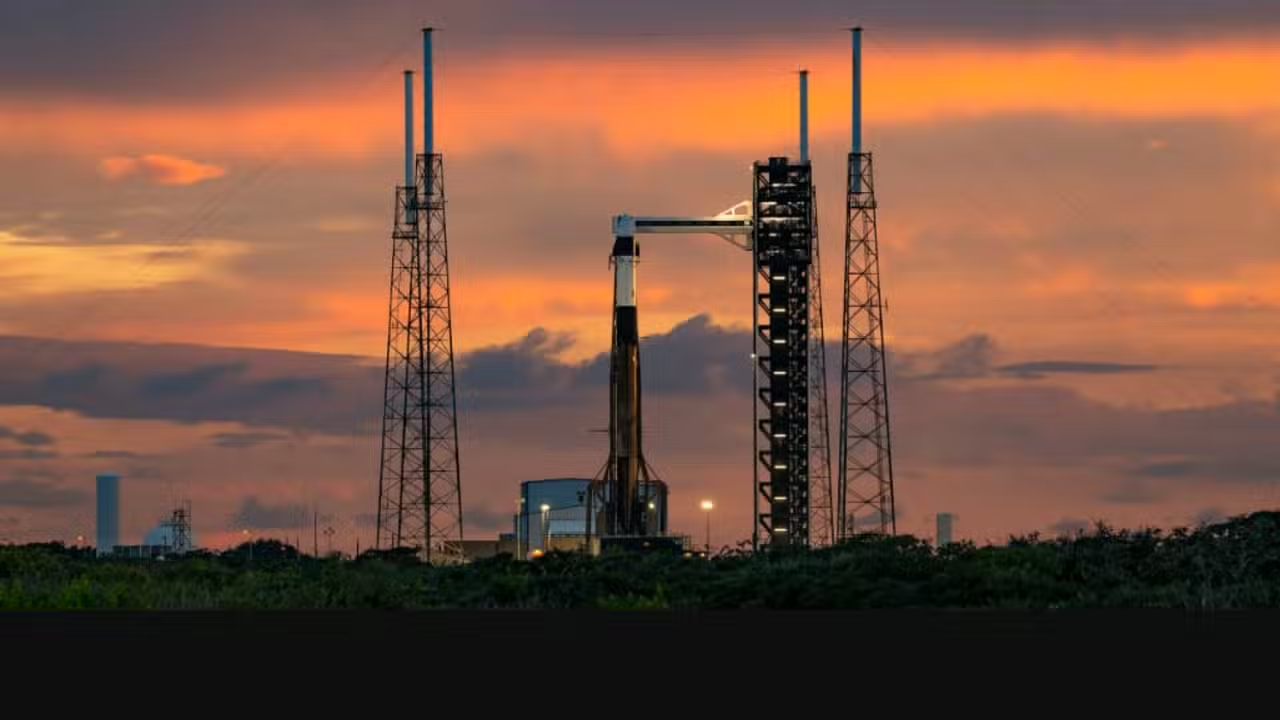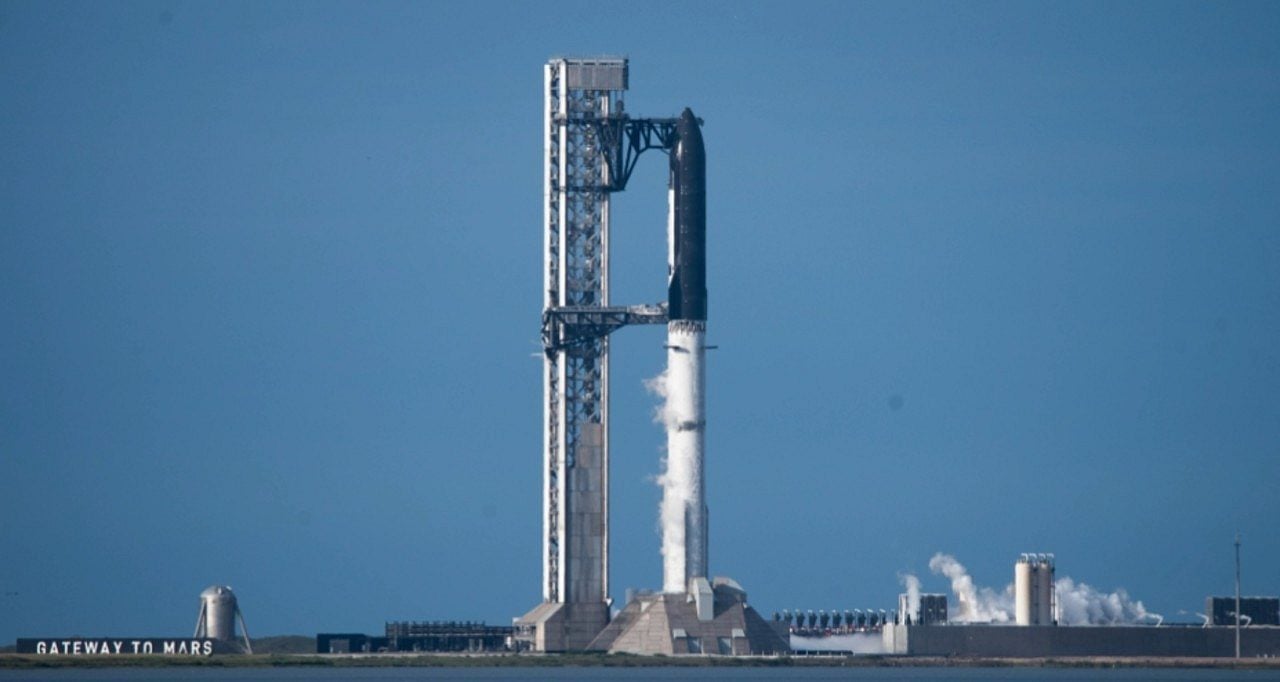
SpaceX has postponed until Friday (May 22) the launch of Starship, the largest and most powerful rocket ever built in the world. The takeoff of the V3 model was scheduled for Thursday (21) at the Starbase base, located at Texas, Estados Unidos, at 8:30 pm Brasília time, but the company faced last-minute technical problems that made the procedure unfeasible.
Dan Huot, a SpaceX spokesperson, confirmed that engineers identified multiple operational issues that required additional time to resolve. “We hope to be able to make another flight attempt tomorrow, but stay tuned to our social media”, declared Huot during an official statement. The launch window for Friday opens at 7pm Brasília time, with a maximum duration of three hours.
Novo test after seven months break
The flight marks Starship’s return to testing after a seven-month break without operations. Este is a critical moment in the company’s Elon Musk development program, which continues its campaign to improve a fully reusable space transportation system. The interval between tests reflects the complexity of the analyzes and improvements implemented after previous flights.
SpaceX has been conducting a series of incremental tests with Starship since 2023. Cada flight provides essential data on structural behavior, propulsion systems and reentry procedures. The program is in its technical validation phase, where each mission adds crucial information for future commercial and scientific operations.
Objetivos test flight technicians
Segundo to SpaceX, the Starship V3 flight has specific and well-defined objectives:
- Testar structural improvements to the rocket cell
- Validar the operation of the new integrated Raptor engines
- Avaliar ship control systems during ascent
- Monitorar atmospheric reentry performance
- Executar ocean landing procedures Atlântico
The V3 model represents a significant evolution compared to previous versions, with modifications to several critical subsystems. SpaceX engineers implemented changes based on data collected during past flights, including improvements to structures, seals and navigation systems.
Dimensões and integration with space programs
Starship is approximately 124 meters tall, making it one of the largest structures ever taken to space. Sua architecture was designed to be completely reusable, unlike conventional rockets that discard stages. The project involves recovery of both the booster and the main ship.
NASA has incorporated Starship into its official plans for the Artemis program, which aims to return astronauts to Lua within the next decade. The American space agency has selected Starship as one of the lunar landing vehicles for future manned missions, consolidating the strategic importance of this development. Integration with the Artemis program has expanded the scope of technical requirements that the Starship needs to meet.
Competição by exploitation of Marte
Além from the partnership with NASA, SpaceX plans to use the Starship in future exploratory missions for Marte. Elon Musk has set itself the long-term goal of transforming humanity into a multi-planetary civilization, with Starship as the central vehicle of this strategy. The rocket is designed to transport large loads of cargo and passengers on interplanetary journeys.
The race for Marte is not exclusive to SpaceX. Blue Origin, a company owned by billionaire Jeff Bezos, also develops technologies for Martian exploration. Competition between the two private companies encourages acceleration in the development of aerospace technologies. Ambas companies invest billions in research and development to achieve ambitious goals in deep space.
Histórico of challenges and learnings
Nos previous flights, the Starship faced explosions during testing, a situation that led to continuous adjustments in design and operation. Cada failure provided valuable data on the weak points of the system. The test-fail-learn methodology is common in pioneering aerospace programs where the performance margin is still being explored.
The Starship program began with smaller-scale prototyping tests, evolving into increasingly sophisticated versions. Real flight tests, even with failures, generate information that is impossible to obtain in the laboratory or computer simulations. SpaceX uses high-speed cameras, telemetry sensors and debris analysis to understand exactly what worked and what failed in each attempt.
Preparativos for Friday
SpaceX’s team of engineers works simultaneously on multiple fronts during the postponement. Técnicos inspect the rocket, its electronic and mechanical systems, test fuel connections and validate safety protocols. The Starbase base on Texas has dedicated infrastructure for these procedures, including launch towers, supply systems and monitoring areas.
Weather conditions were also considered in the decision to postpone. SpaceX monitors weather forecasts and consults with local and federal authorities on the feasibility of operations. Rocket launches involve coordination with air and sea transit agencies to ensure the safety of other operations in the region.
Significado strategic program
Starship represents decades of conceptualization and billions in private investment. The success of this program could revolutionize the space economy, drastically reducing the costs of accessing space. The complete reuse of vehicles is the great theoretical difference that SpaceX seeks to demonstrate practically.
Agências government space, universities and private defense contractors closely follow every step of Starship’s development. The program serves as a reference for the entire sector on the technical and economic feasibility of fully reusable vehicles. The eventual consolidation of technology could open new commercial markets in space tourism, asteroid mining and planetary colonization.