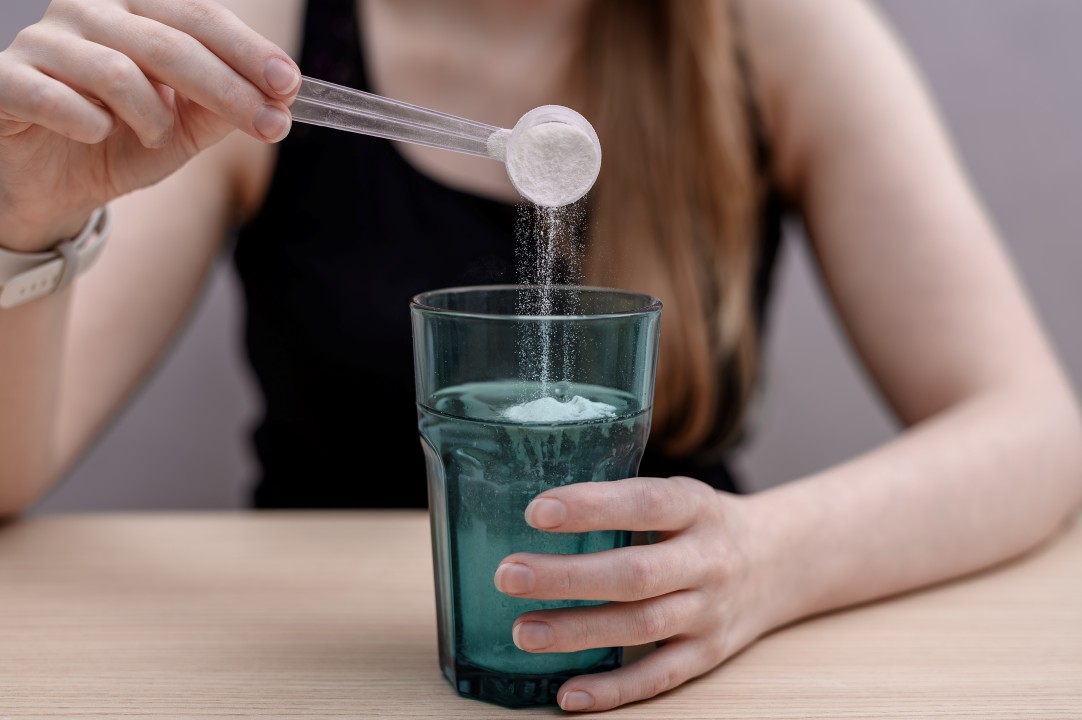
Women who follow influencers on digital platforms, focusing on menopause topics, often come across discussions about creatine, a supplement widely known in athlete and bodybuilder circles. This compound is promoted as a potential solution to alleviate a range of symptoms and health risks associated with the menopausal transition, ranging from uncomfortable hot flashes to urinary infections.
The human body naturally synthesizes creatine, a substance that accumulates mainly in the muscles, where it plays a crucial role in energy production. In addition to internal synthesis, a large part of the population also acquires creatine through food, especially through the consumption of meat and seafood.
The fundamental premise espoused by influencers covering menopause is straightforward: reduced estrogen levels in perimenopause often result in decreased muscle mass. Although health professionals advise the practice of strength exercises to combat this loss, enthusiasts of creatine supplementation suggest that it can enhance training results and promote a better quality of life for women in the aging process.
There are digital influencers who also propagate the idea that creatine is capable of optimizing memory and mood, aspects that many women report difficulty in maintaining during and after the perimenopause period.
The form of creatine known as monohydrate has been the subject of more research compared to several other supplements, which, in general, lack robust evidence proving its effectiveness greater than a placebo in relieving menopausal symptoms. Although creatine is widely considered safe and some studies indicate a modest increase in muscle mass and physical performance for certain groups, a full understanding of how it works in menopausal women is still developing.
Evaluating the benefits of creatine in developing muscle mass
There are scientific indications, including results from randomized and controlled clinical trials, that point to the ability of creatine supplements to contribute to increasing muscle mass and improving physical performance. Such advantages may be particularly relevant for high-performance athletes, where even minimal advances can generate considerable impacts.
However, most investigations into the effects of creatine have prioritized men, and studies that included female participation suggest that men can experience more significant gains. For this reason, experts say that existing data cannot be automatically applied to all women, much less specifically to those who are going through menopause.
Certain research that focused on women exhibited additional restrictions. One example is a study, a summary of which was released last year, that observed “significant increases in lower-body strength in peri- and post-menopausal participants” who used creatine; however, the sample contained only 15 people and the complete work was not published. Another article, from 2021, inferred that creatine could promote strength and physical performance, but the investigations cited were of varying quality, and two of its authors admitted to having provided scientific consultancy to a company producing creatine supplements.
According to a meta-analysis released the previous year, creatine has been shown to improve muscle strength in the general population; however, due to the scarcity of data, the study was unable to establish definitive conclusions about its effects on middle-aged individuals, in contrast to other age groups, and highlighted the presence of a “gender bias” in the scientific data that then existed.
Pelin Batur, medical director of the Comprehensive Center for Women’s Health and Research at the Cleveland Clinic, said information regarding creatine’s impacts on women is “actually quite limited.”
Nanette Santoro, who works as a professor of obstetrics and gynecology at the University of Colorado School of Medicine and studies menopause, expressed agreement with this view. She emphasized: “We are still far from having appropriate studies, specifically performed in women, that justify the recommendation.”
In contrast, Bonnie Jortberg, nutritionist and associate professor of family medicine at the University of Colorado School of Medicine, expressed that, in her opinion, the evidence is consistent enough to endorse the use of the supplement. Although she claims not to support most supplements, Jortberg found the 2021 article and its references persuasive, leading her to believe that creatine could help women combat muscle loss associated with menopause. She highlighted: “For there to be an effective impact on muscle mass, it is essential to combine this approach with a resistance training program.”
The impact of the supplement on memory and emotional well-being
The amount of published research on creatine’s cognitive effects is smaller compared to studies on its muscular benefits. Furthermore, available investigations often exhibit the same limitations, such as small sample sizes, potential conflicts of interest, and disproportionate attention to the male population.
According to Jortberg, some investigations suggest that creatine may have a beneficial role in memory, possibly optimizing brain energy metabolism. There is also other research, although restricted in scope, that indicates possible help in improving mood.
However, Batur stressed that these conclusions are not definitive, classifying the potential benefits as “very modest.”
Essential Creatine Safety Considerations
Regardless of its proof of effectiveness, several experts have confirmed that creatine is, in general terms, a safe compound, with the exception of potential side effects such as gastric discomfort or water retention. It is crucial that individuals with pre-existing kidney conditions avoid creatine consumption without prior medical consultation.
Doctors Batur and Santoro stated that, although they do not support the use of creatine supplements based on solid clinical evidence, they would not necessarily advise against a healthy patient who expresses a strong interest in trying it to increase muscle mass or to mitigate cognitive symptoms. Santoro commented: “Creatine is relatively affordable and carries no significant risks. Am I sure it doesn’t work? No. Will it harm my patient? Probably not.”
Jortberg recommended that individuals who decide to use creatine to alleviate menopausal symptoms do not exceed five grams daily. She explained that storage capacity in muscles is limited, and higher dosages can increase the likelihood of unwanted side effects.
It is important to note that all dietary supplements carry the inherent risk of contamination or inconsistency in dosage, as they are not subject to the same rigorous oversight as prescription medications.
Certain independent certifying bodies, such as USP and NSF, carry out inspections and certify supplements, which means that choosing a brand that bears one of these certifications can help reduce the risks associated with poor product quality.
Santoro concluded that “creatine gained great momentum due to the influence of social networks. For scientific validation, studies with the participation of hundreds or thousands of individuals are needed, and the results need to be replicated in different research contexts.”