Strong earthquake hits north of Tokyo, Japan
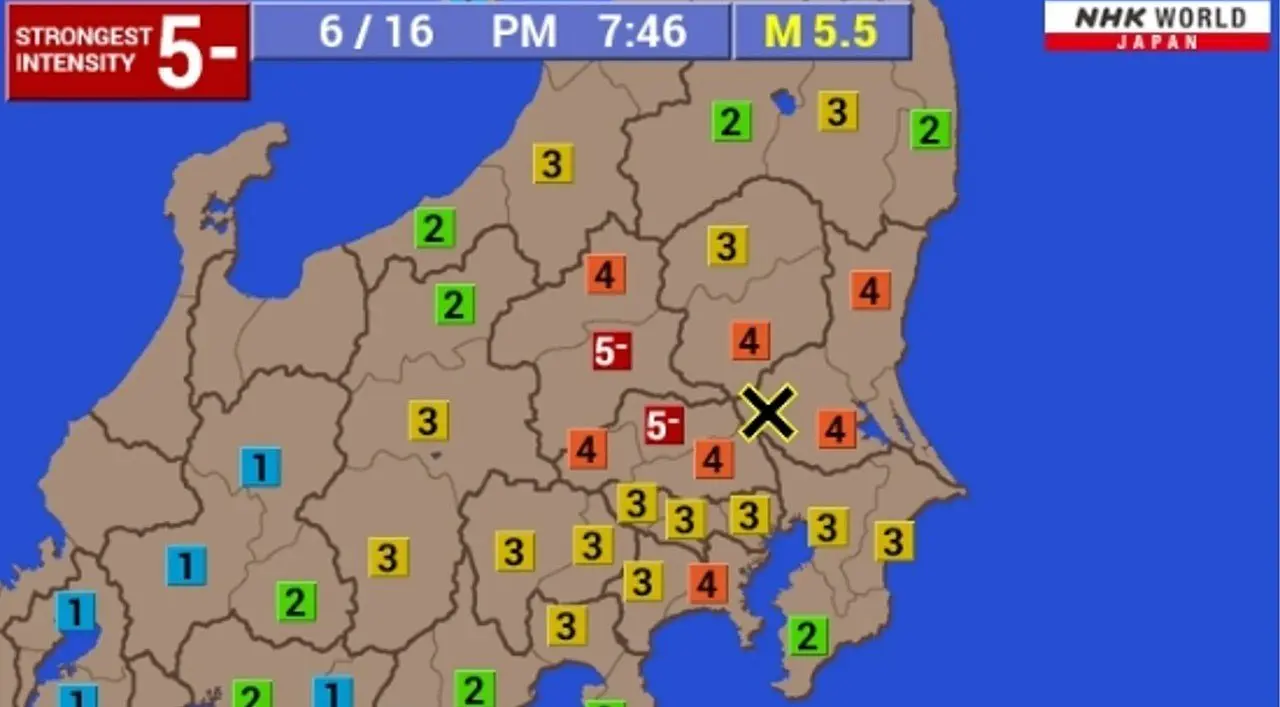
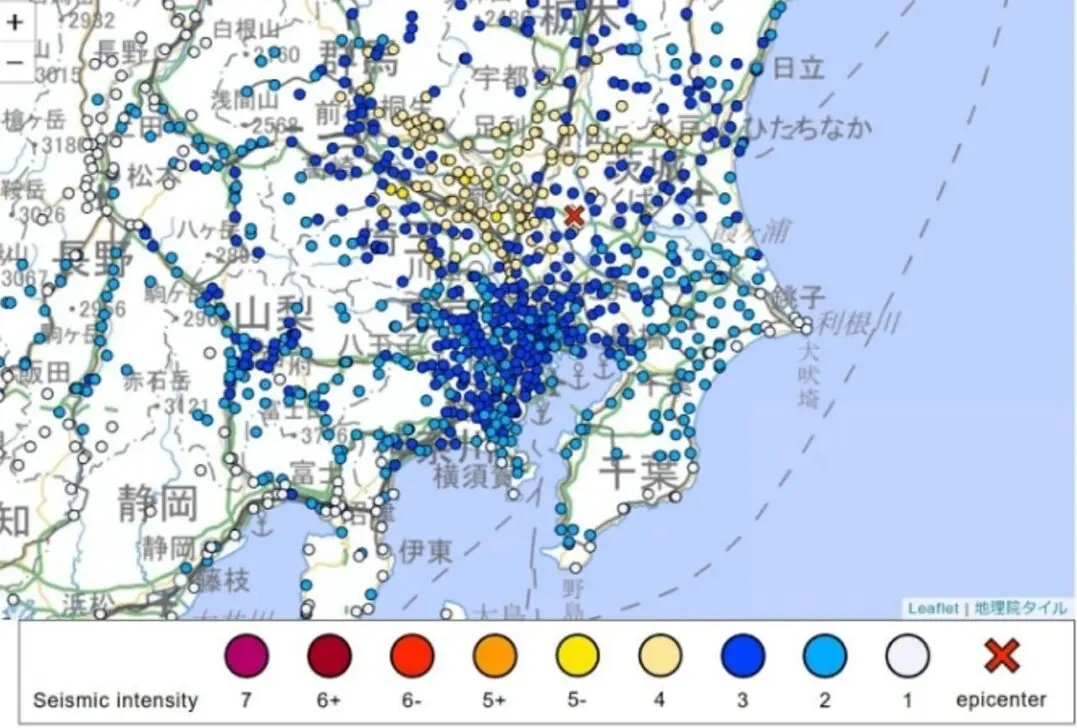
An intense earthquake shook the eastern region of Japan, generating momentary concern in areas close to the capital. The Japan Meteorological Agency announced that the magnitude 5.5 earthquake was recorded in the southern portion of Ibaraki Prefecture. In the prefectures of Gunma (south) and Saitama (north), the intensity reached around 5 on the Japanese seismic scale, which varies from 0 to 7, characterizing them as the most affected by the phenomenon. Japanese meteorological authorities have confirmed that there is no risk of a tsunami from this event.
Several routes of the famous Shinkansen bullet trains were temporarily interrupted due to the earthquake. The suspension was a preventive measure to ensure passenger safety and the integrity of the railway network.
The operator responsible for the Hokuriku Shinkansen bullet train reported the interruption of service between Tokyo and Nagano stations. The expectation of resumption of operations on this stretch was scheduled for approximately 9:45 pm local time.
Similarly, the Joetsu Shinkansen bullet train concessionaire announced the suspension of services connecting Tokyo and Niigata stations. For this line, the estimated normalization of travel was also around 9:45 pm.
In contrast, the Tohoku Shinkansen bullet train operator had already announced the restart of services between Tokyo and Shin-Shirakawa stations, demonstrating agility in assessment and release.
In addition to high-speed trains, some local rail transport routes were also halted due to the earthquake. The companies acted quickly to inspect the tracks and ensure safety.
Leia Também

Messi reaches 19 goals in FIFA World Cups with great free kick for Argentina in clash with Jordan

Cristiano Ronaldo shines beyond the pitch at the 2026 World Cup with business empire and family luxury

At 41, Cristiano Ronaldo reaffirms his historic legacy and prepares to shine in the 2026 World Cup
JR East reported that operations on the Takasaki Line have been suspended between Kagohara Station, located in Kumagaya City, and Takasaki Station, in Takasaki City. At the same time, Tobu Railway also suspended its operations between Tatebayashi and Isesaki stations, covering the Isesaki line.
Despite interruptions in land transport, air operations proceeded without any major problems following the tremor. Airports operated normally, with no reports of damage.
Representatives from Japan Airlines and All Nippon Airways confirmed that their activities at Haneda, Narita and Fukushima airports were not impacted or disrupted by the earthquake.
Reinforcing the security of the country’s critical infrastructure, there have been no reports of abnormalities at Japanese nuclear power plants. The facilities, prepared for seismic events, remained stable.
The managers of the Fukushima Daiichi and Daini nuclear power plants, the Tokai No. 2 nuclear power plant in Ibaraki Prefecture and the Kashiwazaki-Kariwa nuclear power plant in Niigata Prefecture assured that no unusual occurrences were detected. They also stated that radiation levels in the vicinity of these facilities remained unchanged.