Unprecedented discovery: Goblin sharks are filmed in natural habitat in the deep waters of the central Pacific
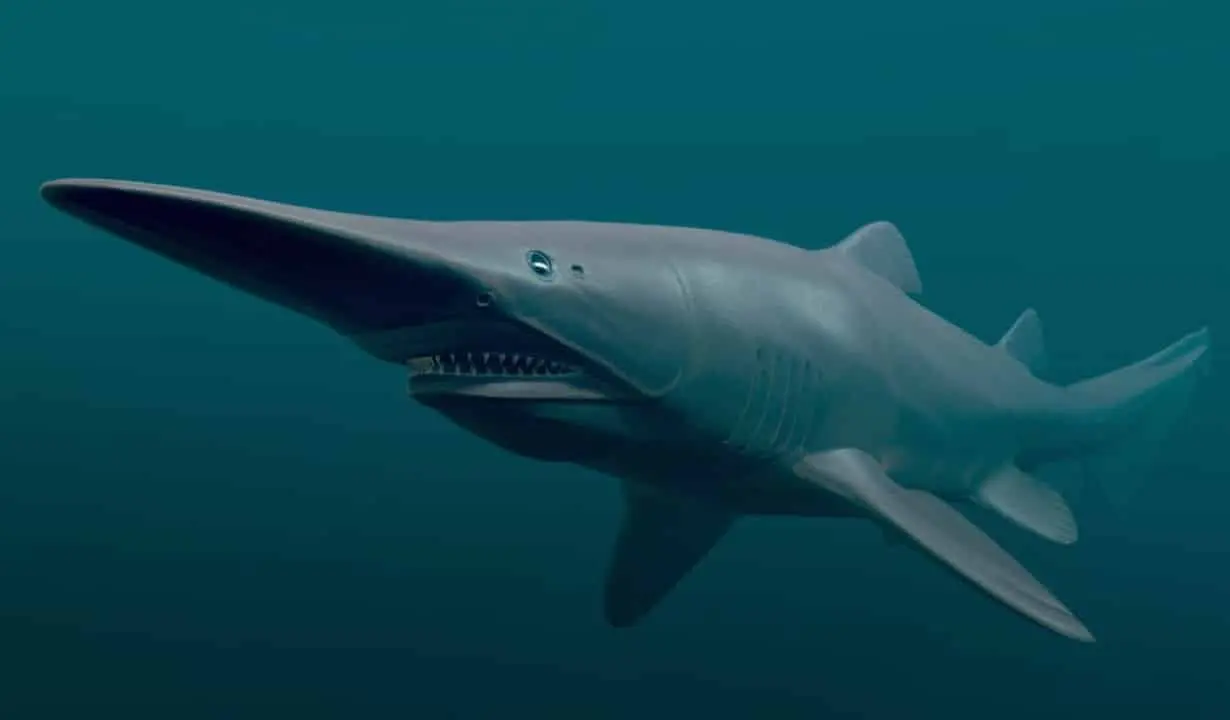
Researchers have achieved the pioneering record of live goblin sharks in their natural environment, in the waters of the Pacific Ocean. Underwater cameras have captured unprecedented images of these predators, known for their rarity, as they swim freely at great depths, providing a remarkable advance in understanding one of the most elusive creatures on the planet.
These important records were obtained on two separate occasions: one in 2019, near Jarvis Island, and another in 2024, on the complex slope of the Tonga Trench. The findings were presented in detail in a recent article in the Journal of Fish Biology, prepared by a team of researchers led by the University of Hawaii at Mānoa, in collaboration with other entities, such as the Minderoo-UWA Deep-Sea Research Center.
Learn more: Goblin sharks are seen alive for the first time in their natural habitat and expand the species’ range
Observing wildlife in their natural environment
Until this point, all documented interactions with live goblin sharks occurred with specimens that had been accidentally caught by fishing gear and invariably died shortly after being brought to the surface. The new footage, however, reveals these healthy, vibrant animals in their primordial habitat, without any direct human intervention.
The first recording, taken in 2019, showed a male measuring approximately 3.4 meters, filmed at a depth of 1,237 meters by a Hercules remotely operated vehicle (ROV). Five years later, in 2024, a camera equipped with bait managed to record another specimen — possibly a female — at an impressive depth of 1,997 meters, inside the Tonga Trench.
A new limit for ocean depths
The capture in the Tonga Trench not only extended the previously known depth limit for the species by almost 700 meters (previously by around 1,300 meters), but also established a new range threshold for the entire Lamniformes order. This order includes large sharks such as great whites, basking sharks and makos, showing the adaptability of these animals to extreme conditions.
See Also



Aaron Judah, lead author of the study and a doctoral candidate at the Deep-Sea Fish Ecology Lab at UH Mānoa, expressed surprise at the depth reached. He was also responsible for identifying the 2019 record, after a meticulous review of data from previous expeditions.
On the same topic: Hurricane Lala intensifies and could be the first to touch Hawaii in 34 years
The peculiar-looking “living fossil”
Commonly referred to as “living fossils,” goblin sharks represent the only survivors of a family lineage that dates back approximately 125 million years. Its elongated, blade-like snout and protractile jaws are features that contribute to its reputation as “the ugliest shark in the ocean,” but they are, in fact, perfect adaptations for hunting in environments of complete darkness.
The recent images offer a view of dynamic and vigorous animals, inhabiting places such as seamounts and the walls of trenches, ecosystems that are still little explored and are vulnerable to impacts caused by human activities.
Relevance to marine conservation and management
The findings considerably expand understanding of the species’ geographic distribution in the central Pacific and have already been integrated into regional marine management plans, as well as national biodiversity records. This fact highlights the urgent need for further investigations using remote videos, aiming to improve the mapping of habitat preferences and an accurate assessment of the species’ conservation status.
More on this story: Rare goblin shark is spotted in its natural habitat for the first time in unprecedented images
Judah and his team highlight that vast areas of the deep oceans still await exploration. Observations like these are crucial for filling gaps in knowledge about the ecology of rare species and for guiding the formulation of protection strategies in distant oceanic regions.