Rescue in Rondonópolis frees five people from conditions similar to slavery at a recycling company in Mato Grosso
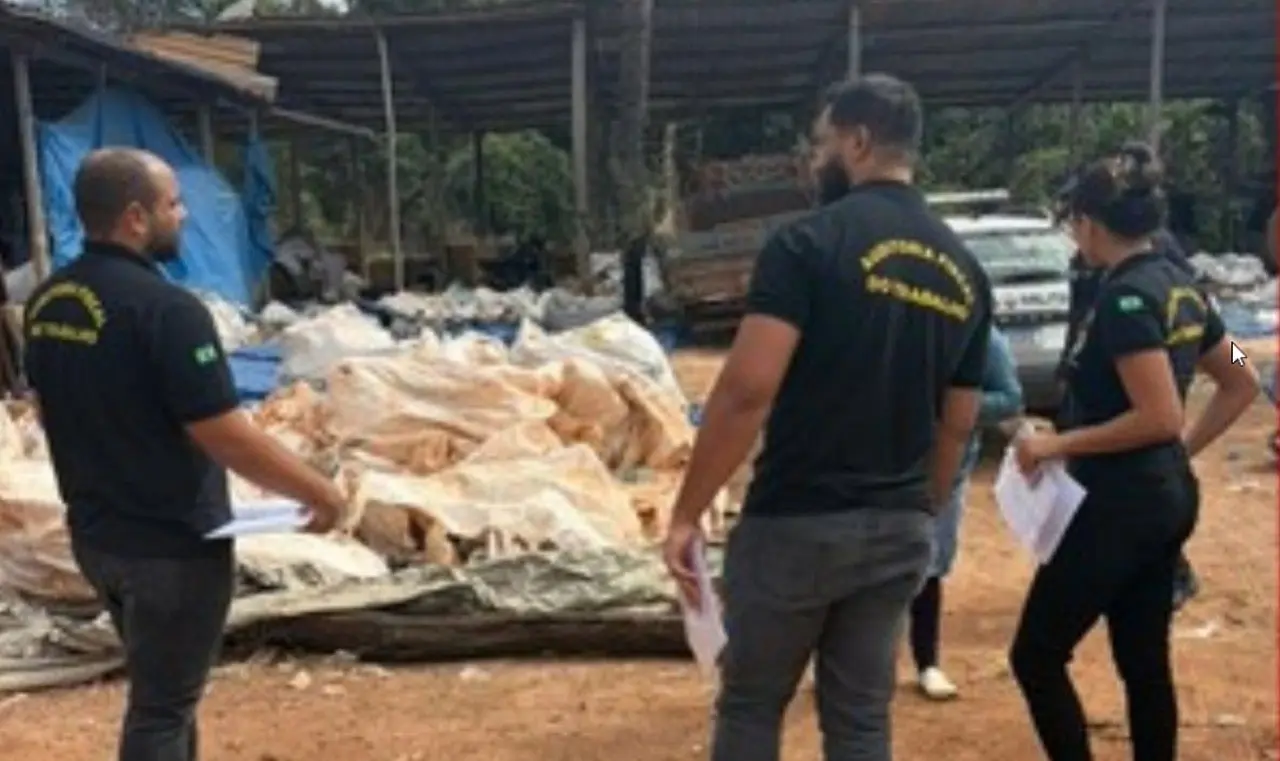
An action by Labor inspectors, carried out on Monday (22), resulted in the rescue of five individuals in a work situation similar to slavery. The incident took place at a recycling company located in Rondonópolis, a city 218 kilometers from Cuiabá, following a formal complaint.
This recent event comes approximately one month after another occurrence in the same municipality, where a domestic worker was found in similar conditions, having spent eleven months without receiving any remuneration and subjected to a debt bondage regime.
Despite involving different employers, these consecutive rescues accentuate a worrying pattern in the state of Mato Grosso. The region, which has already registered the highest number of people freed from conditions similar to slavery across the country in the year 2025, demonstrates the persistence of a profound social and economic problem, requiring continued vigilance from authorities to curb the exploitation of vulnerable labor in various sectors, not only in agribusiness but also in industry and services.
According to data from the Regional Superintendence of Labor and Employment in Mato Grosso (SRTE-MT), employees at the recycling company faced a working environment and accommodation provided by the company itself that proved to be deeply degrading.
Safety issues and long working hours
The inspection team found that the individuals were subject to extremely long working hours. Reports indicate that the daily journey began at 5:30 in the morning, often lasting beyond 10 pm.
Furthermore, the auditors identified the use of obsolete machinery, lacking adequate maintenance and operated without the Personal Protective Equipment (PPE) that is legally required.
The victims also witnessed the occurrence of recurring electric shocks while handling the equipment.
Deceptive recruitment and unsanitary housing conditions
Of the five workers rescued, three came from the interior of Mato Grosso, while the other two, a father and his son, lived in Rondonópolis. The complaint received indicated that a couple, in particular, were attracted to the company under false promises of work.
In addition to enticement through unfulfilled promises, the inspection revealed that the workers lived in extremely precarious housing. The location did not have a constant supply of drinking water, and water for consumption was inadequately supplied by the employers, in PET bottles, as indicated by SRTE-MT.
Leia Também

Messi reaches 19 goals in FIFA World Cups with great free kick for Argentina in clash with Jordan

Cristiano Ronaldo shines beyond the pitch at the 2026 World Cup with business empire and family luxury

At 41, Cristiano Ronaldo reaffirms his historic legacy and prepares to shine in the 2026 World Cup
The operation report also highlighted that the workers’ food in the accommodation consisted of scraps and leftovers obtained from open-air markets.
The team of auditors also found that the rescued couple used bathroom facilities common to other employees and slept in rooms without closets, with poor ventilation and without the provision of bedding.
Company’s commitment to the Public Ministry of Labor
After the operation was concluded, Labor Attorney Pedro Henrique Godinho Faccioli mediated a hearing in which it was proposed to sign a Conduct Adjustment Term (TAC) with the investigated company.
Under the agreement signed with the Public Ministry of Labor (MPT), the company committed to following 16 determinations. Among the main obligations are the prohibition of subjecting any employee to conditions similar to slavery, which includes forced labor, excessively long working hours, debt bondage or degrading environments, in addition to any restriction on employees’ freedom of movement.
Additionally, the company made a commitment to formalize the situation of workers, registering them in the Work and Social Security Card (CTPS), making deposits in the Service Time Guarantee Fund (FGTS), paying the severance pay due and compensation for individual moral damages.
It will also be the company’s responsibility to cover the costs of traveling workers back to their cities of origin, ensuring accommodation until their return takes place.
The TAC also establishes a fine clause of R$20,000 for each unfulfilled obligation and per injured worker, if the irregularities identified are repeated.