Muttaburrasaurus: New research shows that Australian dinosaur had teeth on its snout and a keen sense of smell
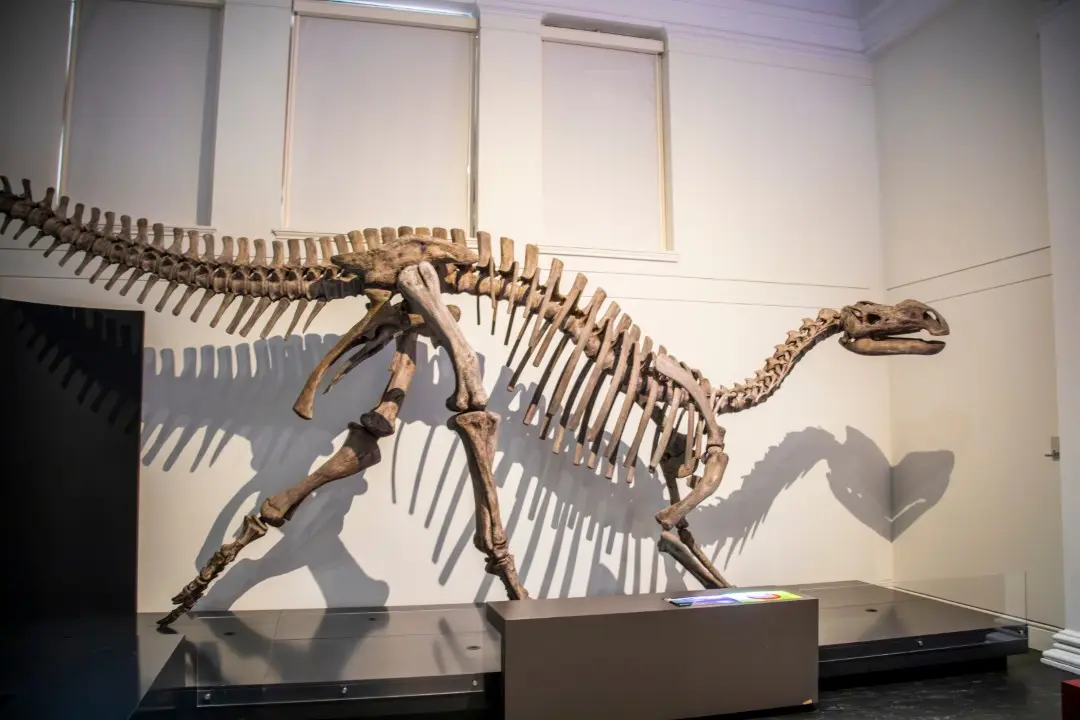
Recent analysis of fossils of Muttaburrasaurus, an Australian dinosaur, has revealed features that transform our understanding of the species. The study, released on Tuesday, July 10, 2026, pointed to the existence of teeth at the tip of the snout and an extremely refined olfactory system, suggesting more specific eating habits than previously thought. These discoveries are crucial for paleontology, as they challenge the simplistic view of large Cretaceous herbivores and deepen the understanding of their survival and evolution strategies in ancient ecosystems.
Reasons why Muttaburrasaurus became the focus of new research
Previously, the scientific community believed that Muttaburrasaurus had a beak completely devoid of teeth, similar to that seen in many other herbivorous dinosaurs. However, the investigation of new cranial fragments revealed the presence of small teeth in the frontal region of the snout, a particularity considered quite unusual for an animal of this size.
This revelation suggests that the dinosaur probably carefully selected what it consumed. Instead of eating any type of vegetation available, it could specifically choose leaves, seeds and even small invertebrates found in its natural environment, demonstrating a more sophisticated diet.
Learn more: Researchers identify Tylosaurus rex, gigantic marine predator from the Cretaceous period
Feeding details: what the toothy snout hid for so long
An article published in the magazine PeerJ confirmed that the anatomical structure of the snout favored a very specialized diet. Before presenting the main evidence, it is important to note that several parts of the skull were essential to accurately reconstruct this feeding behavior.
- The presence of teeth at the end of the snout indicates a greater ability to choose food.
- The jaw, adapted for crushing, made it possible to process more rigid vegetation.
- The animal’s diet could be varied, including leaves, seeds and even small invertebrates.
- The cranial configuration reinforces that the dinosaur was not a generalist herbivore.
Computed tomography images even showed that the way their teeth processed food was similar to that of today’s horses, cows and kangaroos. This characteristic allowed optimized use of nutrients.
The smell and locomotion capabilities of the dinosaur Muttaburrasaurus
In addition to dietary complexity, studies revealed that the nose of Muttaburrasaurus housed surprisingly developed structures. These findings explain why its sense of smell was considered one of the most acute among known dinosaurs.
See Also

China’s Shenzhou-23 mission reveals views of Earth from Tiangong station

Manchester City receives third offer from Barcelona for Rodri worth between €60 million and €80 million

Former boxer Prichard Colón dies aged 33 after long battle with brain injury
- Large olfactory bulbs enhanced the perception of different odors.
- Internal air chambers in the skull improved the processing of inspired air.
- An inner ear similar to that of bipedal dinosaurs suggests good movement capacity.
- Robust hind legs indicate that it could walk and run on two legs when necessary.
Scientists suggest that the combination of these features helped Muttaburrasaurus find food, identify the presence of predators, and navigate effectively in the ancient Australian coastal landscape.
On the same topic: Researchers discover fossil of giant 19-meter octopus that dominated oceans in the Cretaceous
To visually understand the behavior and interaction of this impressive creature in its habitat, there is a 3D animation produced by the PALEOGDY channel that reconstructs its movements and appearance in a highly realistic way.
Impact of new discoveries on understanding the history of Muttaburrasaurus
Recent fossil analyzes also contribute to placing Muttaburrasaurus more precisely within the evolutionary lineage of ornithopods. The existence of teeth on the snout brings it closer to older forms of this group and shows that its evolutionary trajectory diverged from that observed in other large herbivores.
More on this story: Research reveals giant 19-meter octopus that competed for the top of the food chain in the Cretaceous
Although there is still a lack of conclusive evidence to confirm whether Muttaburrasaurus lived in large herds, the study considerably expands our knowledge about its biology. Each new research reaffirms that this dinosaur had unique characteristics, consolidating it as one of the most intriguing species discovered in Australia’s Cretaceous period.