Interstellar comet 3I/Atlas reveals surprising age and origin in deep space

Recent research indicates that an interstellar comet, identified as 3I/Atlas, may have made unimaginable journeys through the Milky Way before entering our solar system. The observations provide a rare glimpse of a celestial body that challenges traditional conceptions about the formation of objects in the universe.
3I/Atlas, which approached the Sun the previous year, is estimated to be almost three times older than the solar system itself, which formed about 4.5 billion years ago. Its composition and characteristics make it distinct from any other known celestial body, offering clues about extreme cosmic environments.
Discovered in July 2025, the comet was quickly recognized as the third “visitor” to arrive in the solar system from outside. The news of its appearance immediately went viral, to the point where a renowned researcher from Harvard University, in the United States, speculated on the possibility that the 3I/Atlas was an alien spacecraft.
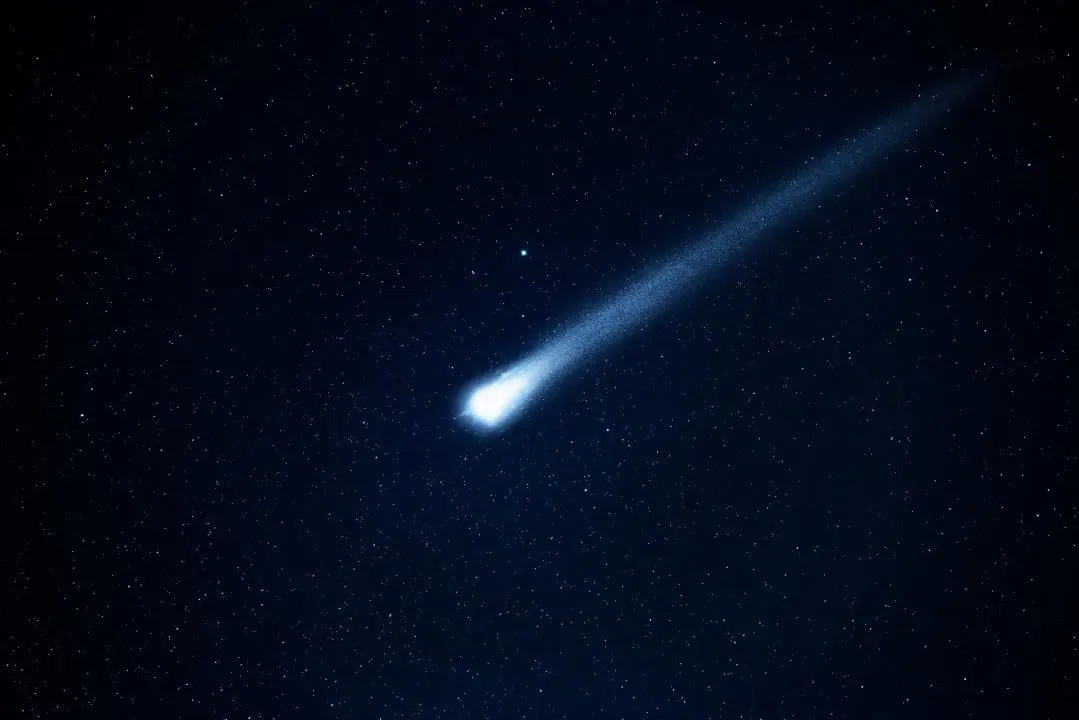
Currently, the most advanced telescopes in the world are in-depth studies to unveil the true “identity” of this unique comet, which carries with it secrets about the evolution of the cosmos.
Learn more: Radio emissions from comet 3I/ATLAS make NASA activate planetary defense system
A study published in the prestigious journal Nature suggests that asteroid 3I/Atlas could be an impressive 12 billion years old, making it one of the oldest objects ever observed in our cosmic neighborhood.
According to Martin Cordiner, author of the report from NASA’s Goddard Space Flight Center, this comet is possibly the oldest celestial object ever observed within the solar system, providing a unique perspective on the early universe.
More on this story: Destruction of celestial body 3I/ATLAS by solar heat reveals chemistry of distant galaxies
See Also

Court condemns MC Ryan SP for copyright infringement on 34 songs and imposes fine

Motorola razr fold impresses by being lighter than iPhone 17 Pro Max

Singer Robbie Williams reveals autism diagnosis and finds relief in new perspective
The conclusion about its age and distant origin is supported by the analysis of the proportions of chemical isotopes, detected using the James Webb Space Telescope and the Alma Observatory, located in Chile.
On the same topic: NASA’s New Roman Telescope Sets to Uncover Billions of Galaxies and Dark Energy
The results of the analyzes reveal that 3I/Atlas has a completely atypical elemental composition, which differs significantly from that found in any other known object within the solar system.
Compared to other comets originating in our solar system, 3I/Atlas has a ten times higher concentration of deuterium, an isotope of hydrogen often found in heavy water. Such a high concentration of heavy water could only have formed under conditions of extreme cold.
These findings indicate that comet 3I/Atlas is probably the coldest celestial object ever identified in the solar system, with isotopic evidence pointing to its formation in an environment with a temperature of approximately -243 degrees Celsius.
More on this story: Interstellar comet 3I/ATLAS travels at 58 km/s and will have its route altered by Jupiter
Although the exact origin of comet 3I/Atlas remains a mystery, expert Martin Cordiner postulates that it may have spent billions of years on an extensive journey across the vast expanse of the Milky Way before its arrival.