Scientists deepen search for answers about UFOs
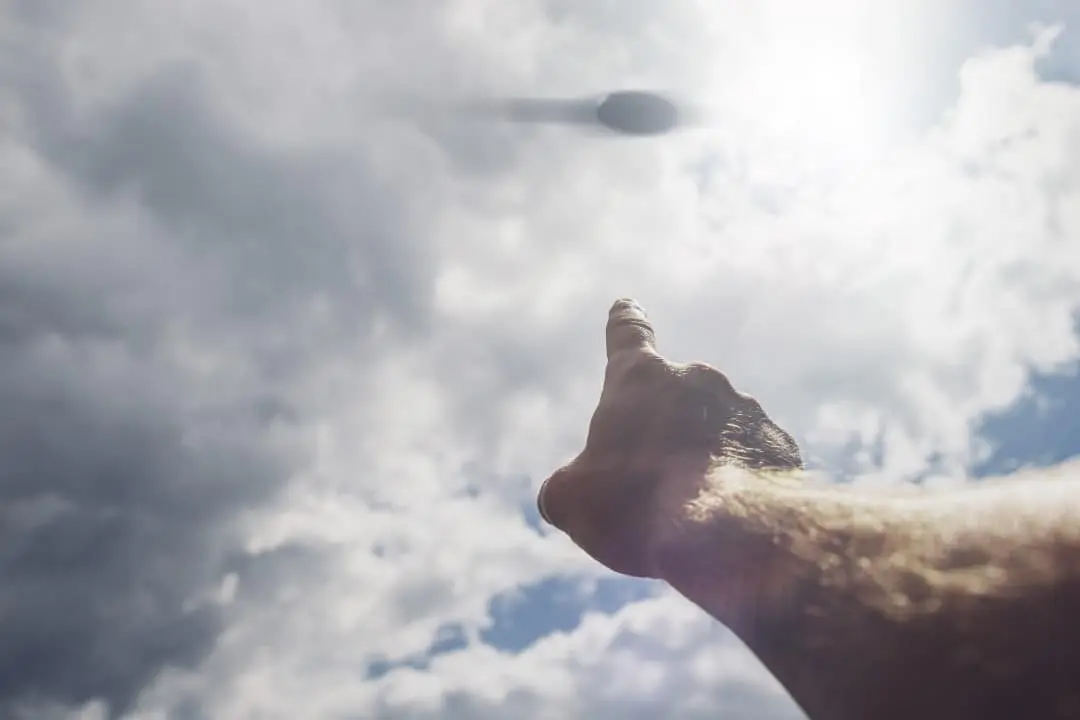
Throughout 2025, the search to unravel Anomalous Aerial Phenomena (UAPs) intensified globally, although concrete answers about their origin and nature still remain elusive. Experts and researchers continue to report sightings of these vehicles of unknown origin and intent in national airspace, often over sensitive installations and interfering with commercial traffic. The absence of definitive conclusions amid testimonies and sensory evidence led to a reevaluation of the investigation methodology, now focusing on improved scientific rigor.
The transition in research: from unidentified flying objects to UAPs
The approach to aerial phenomena has undergone a significant transformation, migrating from the classic era of Unidentified Flying Objects (UFOs), popularly known as “flying saucers”, to the more scientific study of Unidentified Anomalous Phenomena (UAPs). Michael Cifone, executive director and president of the Society for UAP Studies, based in Los Angeles, California, highlights the importance of a plurality of minds engaged in disciplined debate. He points out that applying scientific methods and instruments to investigate UAPs is a considerable challenge, both in terms of complexity and costs.
For many, the difficulty in allocating substantial time, energy, and financial resources to what can seem like a “wild goose chase” has been a significant obstacle. However, Cifone notes that the current emphasis is no longer just on uncovering “cold cases” based on past reports, but rather on engaging serious scientists and student researchers in collecting observational data through appropriate instrumentation.
Full coverage: Latest News (EN)
Barriers to advancing scientific research on UAPs
As with any scientific endeavor, funding and institutional support are fundamental requirements for the progress of UAP research. Michael Cifone highlights that the historical stigma associated with the topic made it difficult to obtain this support. Despite the challenges, the search for a scientific methodology to establish an observational framework with appropriate instrumentation is seen as crucial to generating more reliable data.
Robert Powell, executive board member of the Scientific Coalition for UAP Studies (SCU), emphasizes the need to scientifically test the hypothesis that some UAPs may be extraterrestrial artifacts. He considers extreme acceleration to be the best characteristic to rule out a terrestrial explanation, but emphasizes that accurately measuring these accelerations requires high-precision scientific equipment and a large volume of data. The cost of implementing and maintaining a network of calibrated and analyzed equipment can reach hundreds of millions of dollars.
Global initiatives seek to record and analyze aerial phenomena
Research on UAPs has expanded globally, with a growing number of institutions dedicated to their study. The University of Würzburg in Germany, for example, has established an Interdisciplinary Center for Extraterrestrial Research (IFEX). Among its projects, the development of an “AllSkyCAM”, a camera capable of capturing UAPs, and an automated reporting system, in cooperation with the German national civil aviation authority, the Luftfahrt-Bundesamt, stands out.
Learn more: Researchers identify doctor in Pompeii through his surgical instruments
In the United States, the Galileo Project, led by astrophysicist Avi Loeb, from Harvard University, designed and built a set of sensors to monitor the sky for aerial phenomena and atmospheric anomalies that may have a non-terrestrial origin. These initiatives seek to create robust data sets from which more secure theories and explanations can be developed, although the process is slow and incremental, requiring years of continuous operation of observation systems.
Concerns about air security and national defense in the face of UAPs
Unidentified anomalous phenomena pose significant concerns for aerospace security and national defense. Ryan Graves, chairman of the Committee on Integration of Unidentified Anomalous Phenomena at the American Institute of Aeronautics and Astronautics (AIAA) and director of Americans for Safe Aerospace, a group of military pilots focused on aerospace safety, reports that highly credible people and professional observers are sighting objects with capabilities that surpass current technology.
See Also



“We need to pay attention to this and recognize the national security implications,” Graves said. He highlights that these objects operate in sovereign airspace, potentially collecting information or preparing to disable defenses, which could lead to a strategic surprise. Graves, a former US Navy pilot and eyewitness to UAPs, went so far as to describe the actions of these objects as “acts of war or, at the very least, preparation for an attack.” The AIAA Committee operates in an agnostic and scientifically focused manner, seeking to apply aerospace rigor to document and share observations relevant to flight safety.
Legislative support for transparent reporting of airspace anomalies
The need for greater transparency and standardization in UAP reporting has gained momentum in the political arena. The work of the AIAA Committee has helped define best practice standards for reporting and data retention, which aligns with discussions in the United States Congress. In January 2024, the “Safe Airspace for Americans Act” bill, reintroduced in September, was introduced, aiming to support civilian reporting of UAPs.
On the same topic: Rolls-Royce raises 2026 and 2028 projections with strong aerospace and defense demand
The legislation, with bipartisan support from Representatives Robert Garcia of California and Glenn Grothman of Wisconsin, seeks to create a clear and protected channel for pilots and other aviation professionals to report UAP incidents without fear of stigma or retaliation. Congressman Garcia stated that transparency is crucial to national security and public confidence that the government takes these reports seriously. At the executive level, the Department of Defense’s All-domain Anomaly Resolution Office (AARO) also works to minimize technical and intelligence surprises by synchronizing the identification and mitigation of UAPs across national security areas.
The long road to unraveling the mysteries of UAPs
Despite increased interest and ongoing activities, experts agree that the road to a complete understanding of UAPs is still long. The current phase focuses on the design of observational frameworks and instrumentation testing, with the expectation that systems will operate for many years before sufficient data is generated to formulate definitive conclusions. Michael Cifone predicts that progress will be slow but steady, with unforeseen benefits that could even generate new areas of science.
Key organizations and projects in UAP research:
- Society for UAP Studies:Focuses on disciplined debate and the application of science to UAPs.
- Interdisciplinary Center for Extraterrestrial Research (IFEX) at the University of Würzburg:Develops technologies such as “AllSkyCAM” to capture UAPs in Germany.
- Harvard University Galileo Project:Creates array of sensors to scan the sky for anomalies.
- Scientific Coalition for UAP Studies (SCU):Scientifically investigates the hypothesis that UAPs are extraterrestrial artifacts, focusing on extreme accelerations.
- Unidentified Anomalous Phenomena Integration Committee (AIAA UAP Integration Committee):Applies aerospace rigor to documentation and flight safety.
- Department of Defense All-domain Anomaly Resolution Office (AARO):Synchronizes identification, assignment, and mitigation of UAPs in national security areas.
Ryan Graves expresses optimism, noting significant organizational changes in government that should bring results. Although there is no immediate “solution”, the current situation, with the level of scientific and governmental interest and involvement, is the most promising for seeking closure on the topic.