NASA discovery reveals object that eluded scientists for 30 years as a comet
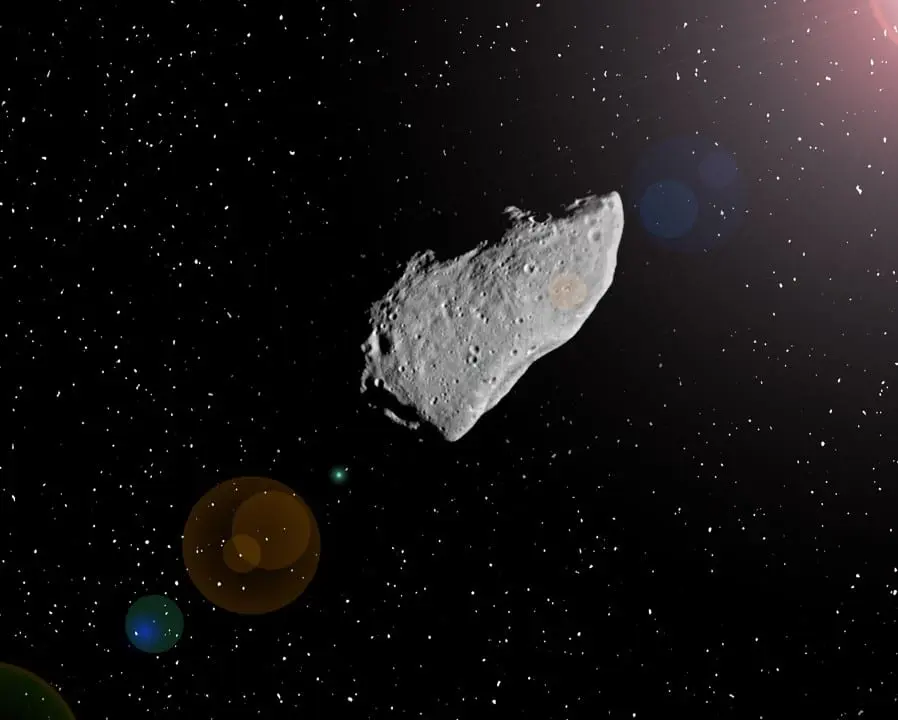
A space object monitored for almost three decades as an asteroid surprised the scientific community by revealing its true nature. Initially known as 1998 SH2, it was reclassified as a comet, a discovery made by NASA researchers that occurred on Tuesday, July 20, 2026, and could revolutionize the monitoring of celestial bodies close to Earth.
The new identification, led by scientists at NASA’s Jet Propulsion Laboratory (JPL), helps explain the celestial body’s atypical behavior, which has long intrigued astronomers. The reclassification not only solves a long-standing mystery, but also highlights the complexity in distinguishing between asteroids and comets, especially those with low activity.
How 1998 SH2 Remained a Mystery for Decades
Object 1998 SH2 was first spotted in 1998 and monitored in its orbit around the Sun for approximately four and a half years. During this period, it was categorized as an asteroid because it did not display the common visible features of comets, such as a bright tail or the cloud of gas and dust known as a coma.
The perplexity increased significantly in August 2025, when teams from NASA’s Deep Space Network attempted to track the object using calculations based on its known orbit. It was then observed that 1998 SH2 was not in the exact expected position, indicating a subtle external influence on its trajectory.
What caused the object to move irregularly?
After an in-depth analysis of all observations accumulated since 1998, the researchers came to the conclusion that the object suffered small variations in its route. These changes were caused by the discrete release of gases.
Learn more: NASA’s New Roman Telescope Sets to Uncover Billions of Galaxies and Dark Energy
The phenomenon occurs when the ice inside is heated by solar energy, transforming directly into a gaseous state. This process, known as sublimation, generates a slight impulse that changes the orbit of the celestial body. Due to its faint nature, this emission was almost imperceptible, making it impossible for conventional telescopes to detect the characteristic tail or coma of a comet.
Definitive confirmation: from asteroid to comet
The turnaround in the classification came with the obtaining of new images by highly sensitive observatories, capable of recording objects with extremely faint brightness. These observations allowed scientists to finally identify a faint but distinctive tail.
According to astronomer Olivier Hainaut, co-author of the study, the presence of this tail provided irrefutable proof that the then asteroid was, in reality, a comet. With the reclassification, the object received the official designation P/1998 SH2, used for periodic comets, confirming its nature and changing the understanding of its composition and behavior.
See Also


Why reclassification is critical for planetary defense and space science
The distinction between an asteroid and a comet goes far beyond nomenclature; it is crucial for planetary defense and understanding the composition of the Solar System. Asteroids are generally rocky and have more predictable orbits. Comets, on the other hand, are composed of ice, dust and rocks, and their ice sublimation can generate jets of gas that alter their trajectories in unpredictable ways.
The ability to accurately predict the path of near-Earth objects (NEOs) is essential to mitigating impact risks. If an object is misclassified as an asteroid and is actually a comet, projections of its trajectory may be incorrect, creating challenges for future tracking missions and potential defenses. This discovery improves identification techniques, ensuring that NASA and other agencies can monitor and categorize potential threats with greater accuracy.
Full coverage: Latest News (EN)
Dark comets: a category yet to be explored
The research reinforces the existence and importance of so-called dark comets, a category of celestial bodies that presents a challenge to observation. These objects exhibit orbital characteristics similar to those of traditional comets, but with extremely low visible activity, almost imperceptible to conventional telescopes.
The identification of P/1998 SH2 as a dark comet suggests that many celestial bodies currently classified as asteroids may actually belong to this category. The implications are vast for space science, indicating that the comet population in our Solar System may be much larger and more diverse than previously imagined, and that new observation techniques will be key to unraveling these mysteries.
- Discrete orbital changes:Subtle movements in the trajectory caused by minimal release of gases.
- Low visible activity:Extreme difficulty in detecting the tail or coma, even with advanced technology.
- Internal composition:Presence of ice that sublimates slowly under solar influence, without creating a visual spectacle.
Next steps in identifying celestial objects
The reclassification of 1998 SH2 marks a significant advance in near-Earth object observation strategies. From now on, scientists must adopt more sensitive and in-depth methods to differentiate comets from asteroids, especially those with “mixed” characteristics or limited activity.
This case serves as a reminder that space is full of surprises, and detection technology must continue to evolve so that humanity can better understand the celestial bodies that share our Solar System and thus improve planetary defense against any potential threats.