Egypt plans to reveal discovery in the Pyramid of Giza in 2026 that promises to rewrite history
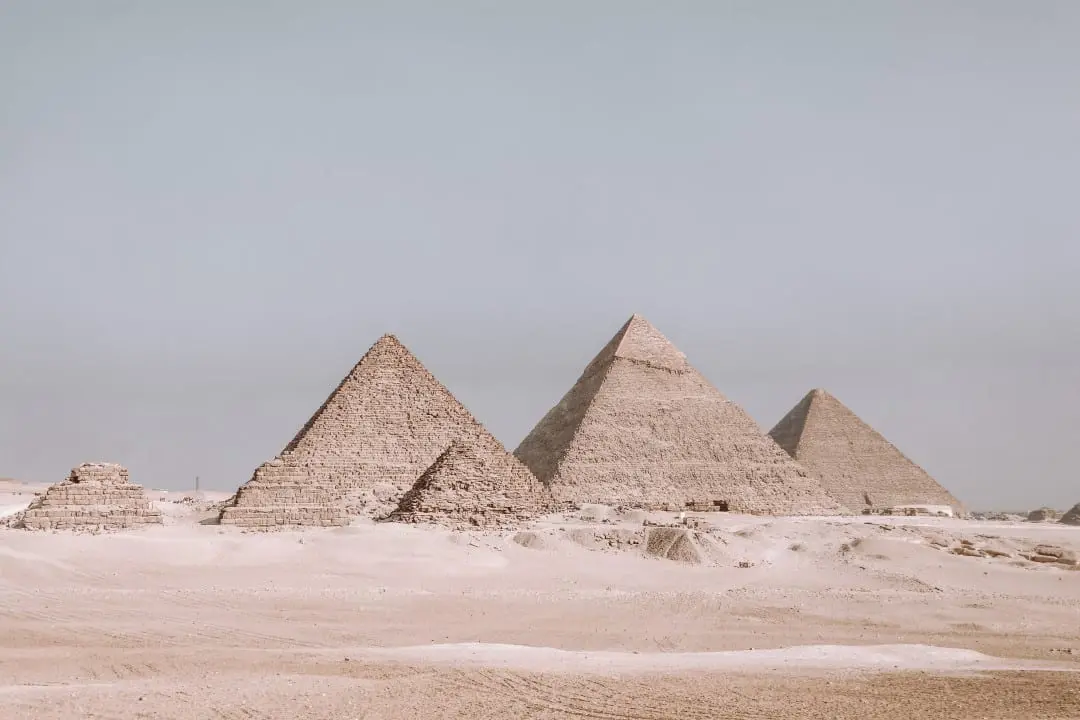
Egyptian authorities have indicated that a future communication, linked to the Great Pyramid of Giza, could transform the way the construction of the 4,500-year-old structure is understood. This expectation comes after a series of scientific discoveries that began with the identification of a hidden corridor in the Pyramid of Cheops, using images of cosmic ray muons, a non-invasive technique crucial for the preservation of historical heritage. This finding was reinforced by multiple instrumental confirmations. Archaeologist Zahi Hawass and then minister of antiquities Ahmed Eissa were the first to present the corridor publicly, interpreting it as evidence of unknown architectural planning. Egyptian officials have since positioned an announcement in 2026 as a continuation of that research.
Understand the importance of the promised revelation about the pyramid
The anticipation on the part of Egyptian officials is not just based on speculation. It is founded on a documented sequence of peer-reviewed research that has now confirmed at least one previously unknown internal feature of the Great Pyramid. A study published in Nature Communications detailed the detection of a corridor-shaped structure, about 9 meters long inside the Pyramid of Cheops, mapped by observing cosmic ray muons, which pass through the stone at speeds that vary with density. This measurement provided scientists with the first clear outline of a space that had remained undocumented for millennia.
Hawass and Eissa released the results, presenting the corridor as proof that the builders included design elements never before considered by academics. This interpretation is crucial, as it established the line of reasoning: Egyptian authorities chose to describe the feature not as a random void or structural gap, but as a deliberate construction choice. This distinction is the basis of the promise for 2026. If additional scans or limited excavations reveal more features on a similar or larger scale, the same officials will be ready to argue that the Great Pyramid has an entire construction phase that current models completely ignore.
On the same topic: Zahi Hawass promises archaeological announcement in Egypt that will rewrite history
For Egypt, interests go far beyond academic debate. The country’s tourism sector is heavily dependent on the Giza Plateau, and any credible claim that rewrites the history of the pyramid has direct economic value. A new chamber or verified passage would generate global media attention and could reshape the way Egypt markets its most celebrated monument to visitors and researchers.
Details about muon examinations and multi-instrument confirmation at the Pyramid of Cheops
The scientific basis for the 2026 expectation is a two-step verification process that establishes a high standard of credibility. The first phase used cosmic ray muon tomography, a technique that tracks subatomic particles created when cosmic rays hit the atmosphere. These muons lose energy as they pass through the stone, allowing detectors installed inside the pyramid to map density variations and reveal hidden voids. Research published in Nature Communications employed this method to describe the corridor-like structure and determine its approximate dimensions, which are about 9 meters long.
The second step incorporated three additional non-destructive testing techniques to validate the muon data. A subsequent paper published in Scientific Reports detailed how researchers applied ground-penetrating radar (GPR), ultrasonic testing (UST), and electrical resistivity tomography (ERT) to confirm the North Face corridor. The use of multiple independent methods for the same characteristic is relevant because it reduces the probability of a single instrument generating a false positive. Each technique measures different physical properties of stone and air, so the agreement between the three reinforces the evidence that the corridor is a real, delimited space, and not an artifact of measurement noise.
This layered approach also indicates that the same set of tools can be applied to other anomalies identified during the broader ScanPyramids project. If ongoing scans have flagged additional density variations elsewhere in the structure, the same combination of GPR, UST, and ERT could be used to check them before any physical excavation. This workflow — muon detection followed by confirmation with complementary instruments — is the likely model for what Egyptian officials plan to present.
More on this story: Archaeologists reveal 18 Egyptian tombs with ‘golden tongues’ on Mediterranean coast
See Also



What the Future 2026 Announcement Hasn’t Revealed Yet
Despite the strength of the underlying science, several crucial pieces of information about the promise of 2026 have not yet been released. No main Egyptian government document or official statement has detailed what the specific discovery will be, when it will be presented, or what evidence will accompany it. The peer-reviewed articles describe the known corridor in detail, but do not contain statements about planned future excavations or additional chambers. Additionally, direct quotes from Hawass and Eissa refer to the previous public presentation, not any confirmed event for 2026.
This gap between verified science and official communication creates a tension that readers must follow closely. The existence of the corridor is well established through independent measurements. However, the leap from “we found a 30-foot passage” to “this will rewrite history” requires evidence that has not yet been made public. A previously unknown construction phase, the strongest version of what Egyptian authorities have suggested, would need to demonstrate that the pyramid’s internal arrangement is more complex than any existing architectural model considers. A single runner, however surprising it may be, does not automatically reach this level.
The issue of access is also a relevant factor. Egypt has historically strictly controlled physical entry into the interiors of the pyramids, and any excavation or endoscopic exploration of the corridor would require approval from the Supreme Council of Antiquities. It remains unclear in public documentation whether international research teams will be allowed to use additional instruments, drill minimal access points or insert cameras into the void. Without this access, the 2026 announcement could end up relying significantly on image data rather than direct inspection.
There is also the issue of interpretation. Even if future scans reveal additional cavities or passageways, researchers will still need to determine whether they are functional corridors, symbolic architectural features, or structural devices such as stress-relieving spaces. Muon tomography and geophysical methods are effective at mapping shape and location, but cannot, by themselves, reveal inscriptions, artifacts, or construction marks that might shed light on purpose. Any claim that the new discoveries nullify ancient theories about pyramid building will therefore have to deal with the limits of what remote sensing can demonstrate.
Learn more: Ancient Egyptian princesses may have been warriors, research indicates
Balance between expectations and scientific evidence
For now, the most prudent reading of the expectation surrounding the 2026 pyramid is as a confluence of solid physics, cautious archeology, and an ambitious national narrative. The physics is consistent: Independent teams have proven that muon imaging can reveal hidden voids within massive stone structures, and multiple geophysical tools have converged on the same corridor in the Pyramid of Cheops. Archeology is prudent because, in the absence of direct access, experts are hesitant to assign definitive functions to newly identified spaces. And the narrative is ambitious because Egyptian officials have every incentive to frame incremental discoveries as part of a larger plot about rewriting history.
This does not mean that the promised revelation will be insignificant. Even modest additions to the Great Pyramid’s interior map could enhance models of how workers organized blocks, distributed weight and managed construction logistics more than four millennia ago. If additional scans uncover a network of previously unknown voids aligned with existing chambers, for example, this pattern could support new hypotheses about internal ramps or support areas used during construction. On the other hand, if the corridor turns out to be an isolated feature, it may highlight localized architectural experimentation rather than a complete redesign of the monument.
Until more data is released, the safest conclusion is that the Great Pyramid still holds structural secrets and that modern particle physics has become one of the most effective tools for unlocking them. The confirmed corridor is a rare case where cutting-edge instrumentation has literally opened up new space within one of the world’s oldest and most studied buildings. Whether this space ultimately forces historians to rewrite construction theories or simply supplement them will depend on what, if anything, lies beyond its sealed stone walls.