Artificial intelligence recreates the face of a victim in Pompeii who tried to escape Vesuvius
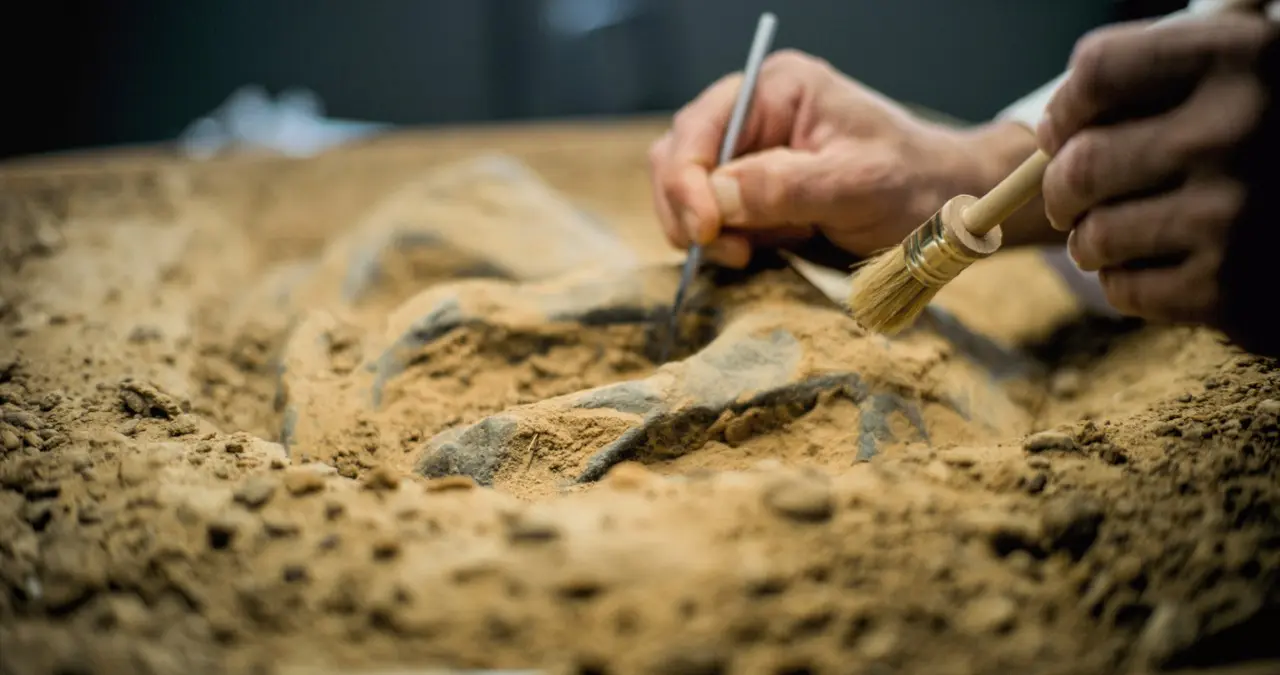
Archaeologists in Pompeii used artificial intelligence for the first time to digitally reconstruct the face of a victim of the eruption of Mount Vesuvius in AD 79. The revelation offers a new perspective on one of the most famous natural disasters in history and marks a breakthrough in the way archeology connects with the past.
The digital image brings to light the physiognomy of an elderly man, found among the ruins while trying to escape the city, heading towards the coast. Researchers believe he died during the initial phase of the catastrophe, hit by an intense rain of volcanic debris.
Details of the discovery and the victim’s last moments
The reconstruction was made possible thanks to the collaboration between the Archaeological Park of Pompeii and the University of Padua, based on data from excavations carried out near the necropolis of Porta Stabia, outside the city’s ancient walls. The site, recognized as a UNESCO World Heritage Site, was covered by ash and pumice stones almost two thousand years ago, preserving the city and its inhabitants in great detail.
More on this story: Researchers decipher ancient Herculaneum scrolls charred by Vesuvius eruption using AI
Archaeologists found the victim holding a terracotta mortar, interpreted as an improvised attempt to protect his head from lapilli, small volcanic stones that rained incessantly during the eruption. Ancient accounts, including those by Roman writer Pliny the Younger, describe how residents used a variety of objects to protect themselves as the city was buried. Additionally, the man carried an oil lamp, a small iron ring and ten bronze coins, personal objects that provide a glimpse of his last moments and daily life in Pompeii before the tragedy.
The innovation of artificial intelligence in the archeology of Pompeii
This is the first time that artificial intelligence has been used in Pompeii to recreate a face. The process involved advanced AI and photo editing techniques, translating skeletal and archaeological data into a realistic human representation. The application of technology goes beyond mere visualization, opening new doors for the protection and enhancement of a vast archaeological collection.
According to Gabriel Zuchtriegel, director of the Pompeii park, AI, if used well, can contribute to the renewal of classical studies, making research more accessible and emotionally engaging for the public, without losing scientific rigor. The vast amount of archaeological information currently requires the assistance of tools such as artificial intelligence for adequate and in-depth processing.
See Also

Horoscope of the week: Astrology points out paths and challenges for the signs between August 10th and 16th, 2026
Research reveals 5,000-year-old structure in England with possible link to Stonehenge

Casagrande compares Memphis Depay and Carlitos Tevez at Corinthians and points out differences in commitment
Human connection and the rescue of history
The facial reconstruction project has as one of its main objectives to bring the public closer to the history of Pompeii. By giving a face to one of the victims, the team seeks to create an emotional connection that transcends scientific data, making the tragedy of 79 AD more palpable and understandable. This approach aims to humanize the discoveries, allowing people to feel the reality of life and death in the ancient city.
Italy’s Minister of Culture, Alessandro Giuli, said that Pompeii is one of the most prestigious places in the world for archaeological research, where each new discovery enthusiastically illuminates the tapestry of ancient life. He highlighted that innovative methodologies, used carefully, can provide new historical perspectives.
Learn more: 3,600-year-old tomb discovered in Egypt reveals king of lost dynasty
Other discoveries and post-eruption life
Investigations at Pompeii continue to bring to light surprising aspects of Roman life. In 2025, archaeologists found evidence that the city was reoccupied after the devastating eruption. It is believed that some survivors were unable to restart their lives elsewhere and returned to the buried city.
In early 2026, new excavations revealed a two-thousand-year-old love note and an illustrated gladiator fight scene on a wall. These discoveries, along with AI facial reconstruction, reinforce Pompeii’s continued importance as a treasure trove of knowledge about Roman life and society.