Researchers decipher ancient Herculaneum scrolls charred by Vesuvius eruption using AI
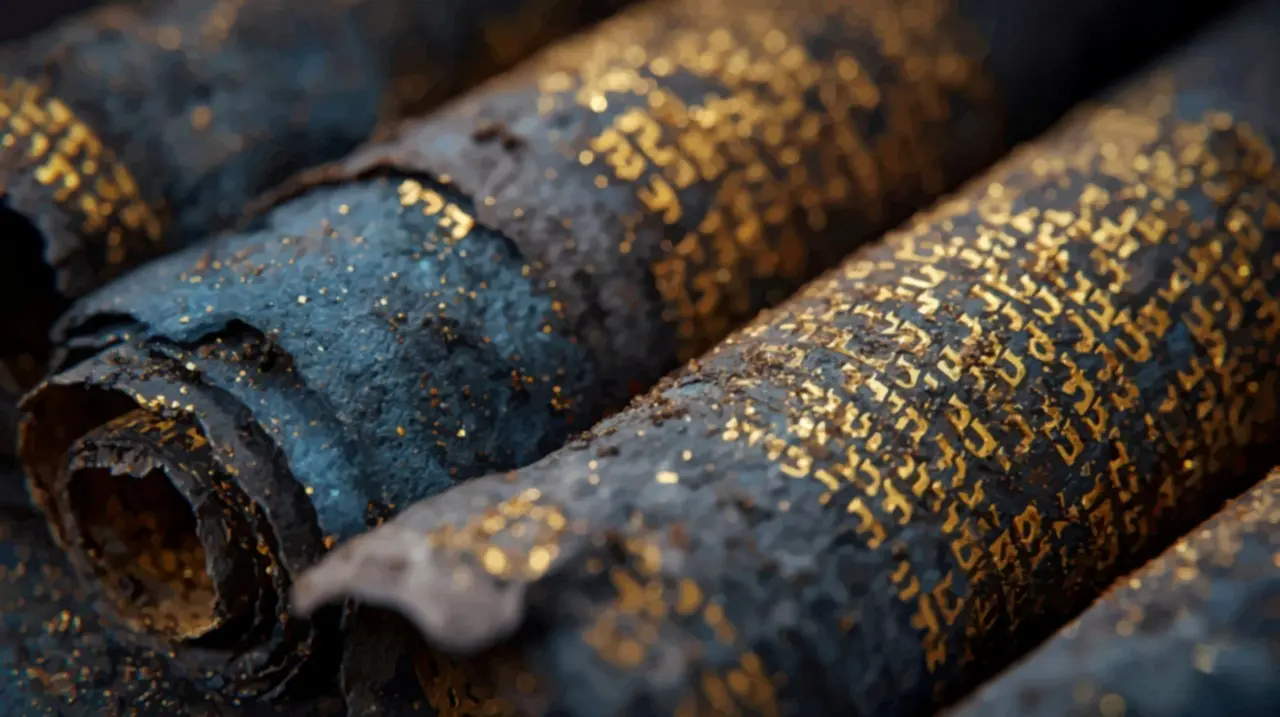
Scientists have achieved a historic milestone by being able to read a substantial portion of an ancient scroll, which remained destroyed and unreadable for nearly two millennia after the eruption of Mount Vesuvius. The discovery, driven by advanced machine learning methods, promises to open new doors to unravel the mysteries stored in historical documents.
The feat represents a significant advance, as the charred manuscripts, found in the Roman city of Herculaneum, are extremely fragile and disintegrate when touched. The new technique allowed the reading of a 1.5 meter long section of text, without the need to unwind or damage the artifact.
More on this story: Google launches Gemini 3.7 Flash with coding improvements and promotional price for developers
The power of artificial intelligence in the Vesuvius Challenge
The feat was made possible by the use of machine learning methods, a form of artificial intelligence that allows computers to learn from data. This technological advancement is at the heart of the “Vesuvius Challenge,” a global initiative seeking to decipher the contents of the ancient scrolls.
The innovative AI approach allowed researchers to view the interior of scrolls without physically touching them. Using scanning techniques and complex algorithms, the technology identified the tiny differences in density and texture caused by the ink on the papyri, making the text visible in a virtual environment.
Learn more: Artificial intelligence recreates the face of a victim in Pompeii who tried to escape Vesuvius
Historical challenges in trying to read the artifacts
The Herculaneum scrolls, buried under hot rocks, ash and lava from the eruption of Vesuvius in A.D. 79, have been an enigma to scholars since their discovery in 1752. Their charred and brittle nature has made accessing them nearly impossible.
Over the centuries, several attempts have been made to unravel them, but with catastrophic results. Among the methods used in the past are:
See Also



- Opening and scraping each piece with knives.
- Injecting mercury between the layers to separate them.
- Immersion in mixtures of gelatin and acetic acid to try to soften the material.
These efforts, unfortunately, resulted in the destruction or permanent illegibility of many of the valuable documents. The extreme fragility of the material has always been the biggest obstacle, with the parchments falling apart at the slightest contact.
On the same topic: Apple trains its own AI model for the China market in partnership with Alibaba
Revelations of excerpts deciphered in Pherc. 1667
With the application of new technology, a virtual visualization of one of the scrolls, known as Pherc. 1667, already allowed the reading of approximately 20 columns of text. This 1.5 meter excerpt of text is a sample of the vast knowledge that can be contained in these documents.
The ability to read these fragments without causing harm offers an unprecedented insight into the literature and philosophy of the Roman era. Researchers now hope that this technique can be applied on a large scale, to uncover the full contents of the Herculaneum collection.
The potential for new discoveries in the Papyrus Library
The Herculaneum Papyrus Library, one of the few surviving ancient Roman libraries, has hundreds of other undeciphered scrolls. Most of them are in a similar state to Pherc. 1667, completely charred and considered inaccessible.
The machine learning technique brings new hope to the study of ancient history, suggesting that many more texts may soon be read. Each new word revealed can rewrite or complement our understanding of the Roman world, its ideas and thinkers, bringing to light voices that had been silenced for millennia.