7.7 magnitude earthquake in Indonesia causes 47 deaths and leaves trails of destruction
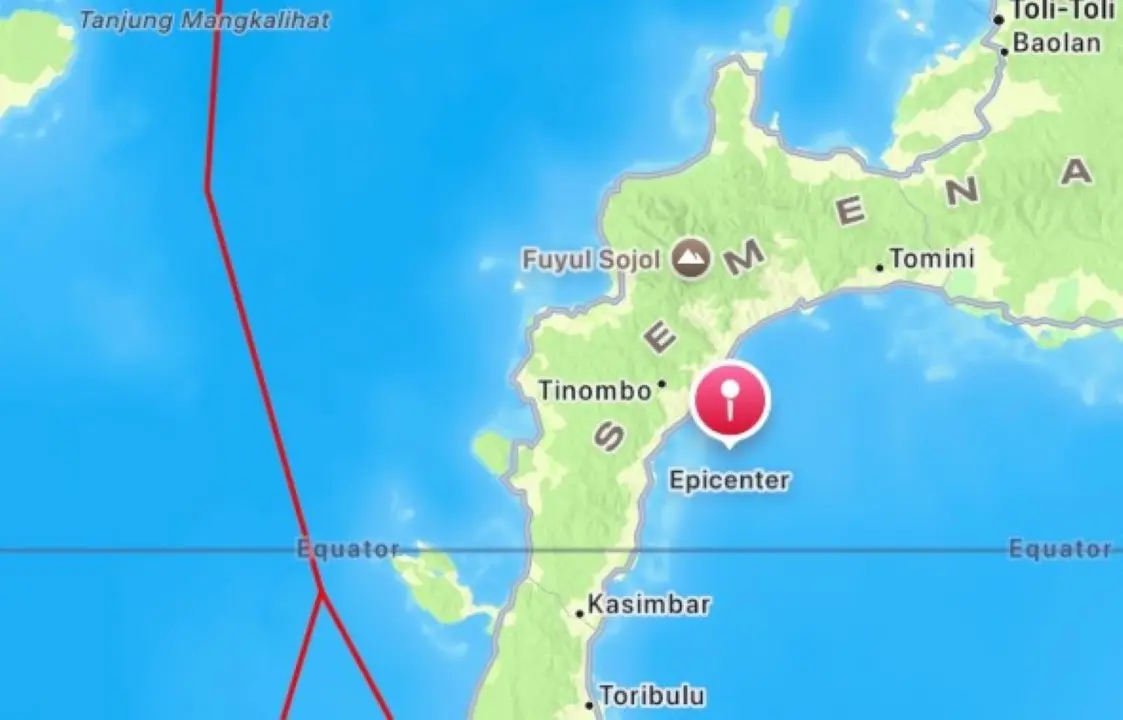
A powerful 7.7 magnitude earthquake shook Indonesia on August 15, 2026, raising the death toll to at least 47. The tremor, which had its epicenter at a depth of 15 kilometers, caused landslides in several areas and forced around 2,000 people to leave their homes. Search and rescue operations remain ongoing, with local authorities warning of a growing number of injuries of different levels of severity.
Details of the initial impact and depth of the tremor
The seismic shock was recorded at around 5:58 am local time. More shallow earthquakes tend to cause more destructive effects on the surface, and strong aftershocks were felt in the same region, including one of magnitude 6.1. A 6.4 earthquake also hit Sumatra in the west of the country later, but at a depth of 163 kilometers, which generally mitigates its effects.
More on this story: Videos of the 7.7 earthquake in Indonesia reveal damage and panic in Asia
Residents of the island of Flores were seen moving quickly away from the coast, while videos taken at the port of Maumere showed large chunks of concrete from the terminal building collapsing. Some passengers were thrown into the sea after the walkway leading to the boats collapsed. Lukas Lotar, a hospital worker, said: “Suddenly everything started to shake and I panicked. The patients also fled, the shaking was strong. Some walls had cracked.”
Tsunami warning and mass displacement
After the main tremor, a tsunami warning was issued for coastal areas, generating panic among the population. Arnold Welianto, a resident of Talibura, a coastal village in Sikka, said he was woken up by the tremor. He said other residents gathered on the side of the road because the sea had receded significantly, a phenomenon observed before a possible tsunami. “The water remained low for a long time, so everyone panicked and ran,” he said.
About three hours after the initial tremor, the warning was lifted as no significant sea level rise was detected. However, fear led a large number of people to head inland on motorcycles and seek higher ground. The national disaster management agency (BNPB) confirmed the displacement of 2,000 people from their homes.
See Also

Discover the differences between the Google Pixel 11 and the Samsung Galaxy S26: prices and specifications

Warmer water drives record stingray attacks on California beaches

Gold worth R$54 million found in wall of house in Belgium sparks legal dispute
Casualties and extent of structural damage
The governor of East Nusa Tenggara province, Emanuel Melkiades Laka Lena, reported that many victims died in their sleep, hit by debris from collapsed structures. The province of Manggarai is among the most affected regions, with a worrying death toll.
- 24 in Manggarai
- 17 in East Manggarai
- 3 in Sikka
- At least 1 in Ngada, Ende and Western Manggarai provinces
In total, more than 50 people were injured, and rescue teams continue to search for survivors amid the rubble. Yohanes Babo, 56, who was at the market at the time of the earthquake, said: “People panicked, they were running in all directions. For now, we are trying to reach higher areas. My family is safe and sound. No one was injured.”
Learn more: 7.7 magnitude earthquake shakes Indonesia and triggers tsunami warning in the east of the country
Preliminary reports indicate that more than 150 homes were severely damaged. Dozens of educational institutions, healthcare facilities, places of worship and public offices were also affected. Yulian Juita Ekalia, a university professor in Ruteng, a city west of the epicenter, said she had never felt such an intense tremor. “It felt like we were on a trampoline, it was really scary,” he said. Many residents chose to remain outdoors, cooking and sleeping outside their homes, due to fear of further aftershocks.
Indonesia’s Vulnerability in the Pacific Ring of Fire
Indonesia and its neighboring countries are located on the so-called Pacific Ring of Fire. This region, characterized by intense seismic activity, extends from Japan, through Southeast Asia and along the Pacific Ocean basin. The frequent occurrence of earthquakes and tsunamis in Indonesia is a direct consequence of this geographical location.
BNPB, the national disaster management agency, is sending aid to the affected areas. Authorities advise the population to remain calm and stay away from coastal areas and structures that were damaged, reinforcing the importance of safety amid the region’s geological instability.